
Dianthus moth
Hadena compta
Description
How to identify
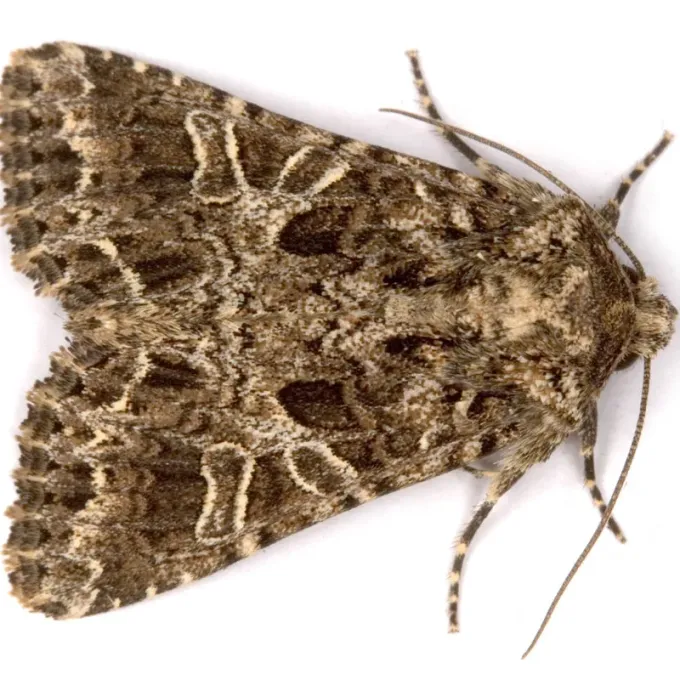
The Dianthus moth (Hadena compta) belongs to the order Lepidoptera and the family Noctuidae. It is a small moth with a wingspan ranging from 25 to 30 mm.
The forewings have a distinctive pattern of dark brown or black areas contrasted with white spots, providing excellent camouflage against foliage. The hindwings are generally greyish.
The larvae, or caterpillars, are typically brownish or dull green in color with longitudinal dark stripes along the back, which helps them blend into the flower buds.
The pupae are dark brown, shiny, and usually overwinter in the soil at a shallow depth, which protects them from extreme winter temperatures.
Adult moths are nocturnal, spending their days resting in dense vegetation or under soil clumps to avoid predation and desiccation.
What it damages
The primary food source for the larvae is plants in the Caryophyllaceae family, specifically targeting various species of cultivated and wild Dianthus (carnations).
The damage is primarily inflicted upon the reproductive organs of the plant. Caterpillars bore into the flower buds and seed capsules, consuming the developing tissues inside.
This feeding behavior leads to the destruction of the bud, causing it to fail to bloom and resulting in a significant loss of aesthetic value for ornamental flowers.
In cases of heavy infestation, larvae may also feed on leaves and stems, which stunts the plant's growth and makes it more vulnerable to other environmental stresses.
The boreholes created by the caterpillars provide entry points for secondary pathogens, such as fungi, which can lead to rapid decay of the entire flower head.
When it appears
Adult moths emerge in late spring or early summer, depending on the local climate and temperature trends, to begin their mating cycle.
The larval stage coincides with the peak blooming season of carnations, providing abundant resources for the caterpillars to complete their development.
Depending on regional weather conditions, the species can produce one or two generations per year, with the final generation transitioning to the pupal stage in autumn.
They are most active during warm, humid nights, which favor the survival of the larvae and ensure successful development in the field.
As temperatures drop in autumn, the mature caterpillars burrow into the soil to undergo pupation, remaining there until the following spring.
Signs of infestation
Small entry holes in the flower buds, often accompanied by frass (caterpillar excrement) on the petals or leaves below, are the most immediate sign of infestation.
Buds that appear deformed or suddenly wither before opening are common indicators that a larva is feeding inside the tissue.
Searching at night with a flashlight can reveal the presence of adult moths feeding on nectar, which signals that eggs may be laid nearby.
The presence of hollowed-out seed capsules at the end of the flowering season is a clear indication that caterpillars have completed their life cycle on the plant.
Observing nibbled leaf edges in the early stages of plant growth can help identify young larvae before they move on to the more destructive feeding phase in buds.
Control measures
Integrated pest management starts with cultural practices, such as removing weeds from the Caryophyllaceae family to eliminate alternative food sources.
Tilling the soil in late autumn or early spring can expose pupae to freezing temperatures and natural predators, effectively reducing the overwintering population.
Light traps can be used to monitor the arrival of adult moths and help determine the optimal timing for applying targeted insecticidal treatments.
When chemical intervention is necessary, systemic or contact insecticides should be applied before the larvae have a chance to penetrate the protective buds.
- Monitor crops regularly to detect early signs of larval damage.
- Hand-pick caterpillars from smaller garden patches when possible.
- Ensure healthy plant growth to improve natural resistance to minor infestations.
Taxonomy
- Latin name
- Hadena compta
- Order
- Lepidoptera (butterflies)
- Family
- Noctuidae
- EPPO code
- PARICO
Discussion
No discussions yet — be the first.