
Hadena bicruris
Hadena bicruris
Description
How to identify
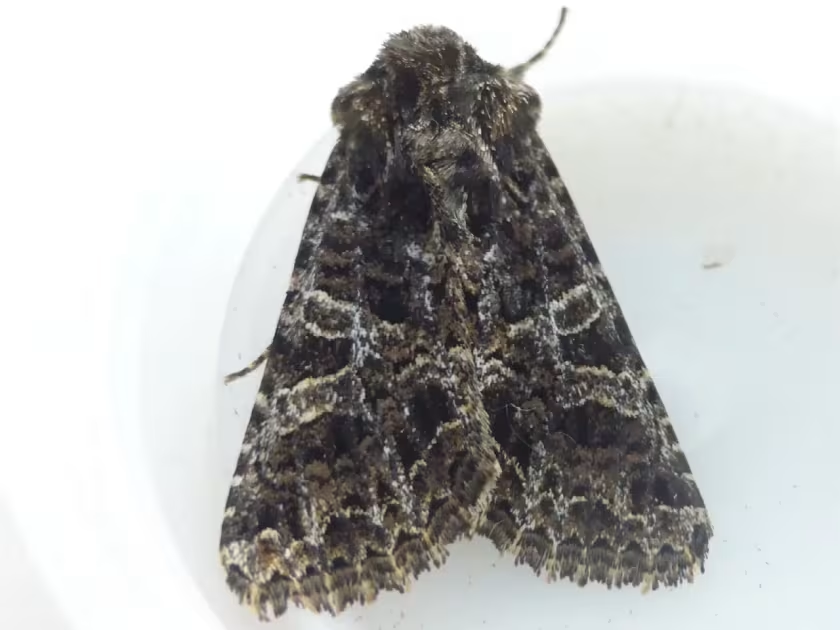
Hadena bicruris, commonly known as the Campion moth, belongs to the Noctuidae family within the Lepidoptera order. The adult moth has a wingspan of approximately 30–35 mm.
The forewings feature a mottled brown and grey pattern that closely mimics tree bark, providing excellent camouflage against predators while the moth rests during the day.
The larvae, or caterpillars, grow up to 40 mm in length. Their coloration ranges from light green to brownish, often adorned with darker longitudinal stripes along the body.
The pupa is reddish-brown and develops within a subterranean cocoon constructed from silk and soil particles, ensuring protection from environmental factors during the pupal stage.
This species typically undergoes one or two generations per year, depending on the climatic conditions of the region and the specific duration of the growing season.
What it damages
The larvae primarily feed on members of the Caryophyllaceae family, with a strong preference for various species of garden pinks and related ornamental flowering plants.
The caterpillar causes direct damage to the reproductive structures of the plant, specifically targeting buds, which disrupts flowering and future seed development.
As the larvae burrow into the buds, they consume the internal floral tissues, often causing the bud to abort or wither before it has the opportunity to bloom.
While the buds are the preferred food source, in instances of high population density, the larvae may also consume tender leaves and succulent stem tissue.
Significant economic loss can occur in ornamental production when these pests compromise the quality and aesthetic value of flowers destined for sale or display.
When it appears
The adult flight period typically occurs from late May through June, when environmental conditions become conducive to mating and oviposition activities.
Females lay their eggs individually on the sepals or inside the developing buds of host plants, ensuring an immediate food supply for the hatching larvae.
The larval feeding stage lasts approximately one month, after which the caterpillars descend into the soil to pupate, marking the transition to the next life stage.
A partial second generation may emerge in late summer, extending the pest activity window until early autumn in warmer temperate climates.
Overwintering occurs in the pupal stage within the soil, where the insect remains dormant until favorable temperatures trigger the emergence of adults the following spring.
Signs of infestation
A primary indicator of infestation is the presence of larval frass (excrement) deposited on the surface of the plant or around the base of the infected flower buds.
Careful inspection of the buds often reveals small entry holes bored by the larvae as they penetrate the protective outer layer to reach the internal organs.
Infested buds frequently display signs of physiological stress, including yellowing, drooping, or sudden shriveling, as the interior tissue is destroyed.
Upon opening a damaged bud, one may find the larva itself or evidence of internal tunneling where the floral parts have been consumed.
- Webbing material present near the calyx or floral stem.
- Deformation or asymmetrical growth of the opening flower.
- Premature abscission (dropping) of developing buds from the plant.
Control measures
Regular visual monitoring of ornamental beds during the budding season is critical for early detection and manual removal of infested plant parts.
Cultural practices, such as autumn soil cultivation or deep tilling, help destroy pupae overwintering in the upper soil layers, significantly reducing the next season's population.
The use of light traps during the evening hours can effectively capture adult moths, thereby reducing the number of fertile females laying eggs in the garden.
Biological control agents, such as formulations containing Bacillus thuringiensis, are highly effective against young larvae and represent an eco-friendly option.
If chemical interventions are necessary, apply selective insecticides during the early stages of bud development to protect pollinators while effectively managing the pest.
Taxonomy
- Latin name
- Hadena bicruris
- Order
- Lepidoptera (butterflies)
- Family
- Noctuidae
- EPPO code
- HARMBI
Discussion
No discussions yet — be the first.