
Double Dart
Graphiphora augur
Description
How to identify
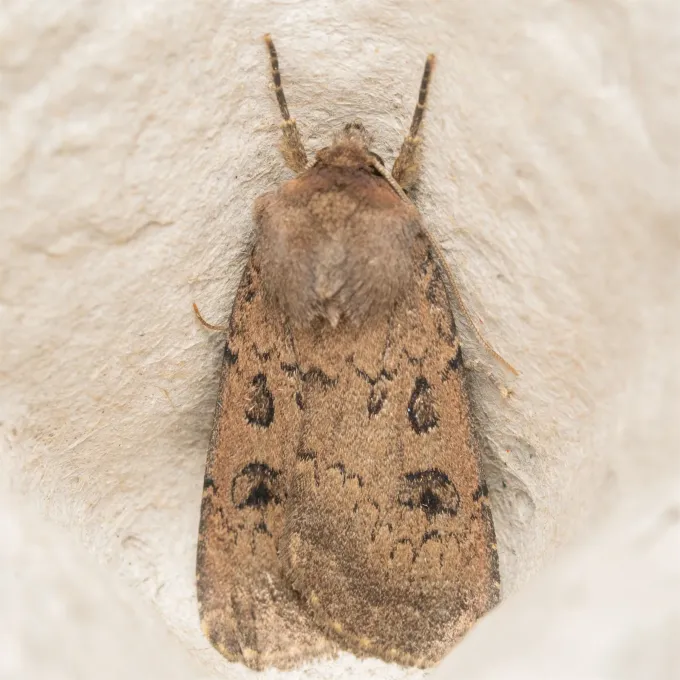
The Double Dart (Graphiphora augur) is a moth species belonging to the family Noctuidae. The adult moth has a wingspan of approximately 35–45 mm, characterized by brownish-gray to reddish-brown forewings with distinctive darker markings.
The larvae, or caterpillars, reach lengths of up to 40 mm. They possess a smooth body, ranging in color from grayish-brown to greenish, marked with a dark dorsal line and lighter lateral stripes that provide effective camouflage.
The pupae are shiny and dark brown, typically developing within the soil. The pupal stage is the primary method by which this species survives through the winter months.
The species completes one generation per year. Adult moths are typically active during mid-summer, after which they lay eggs on host plants that will sustain the emerging larvae.
This pest is naturally associated with forest edges and scrubland, from where it frequently migrates to cultivated fields and orchards to feed on available vegetation.
What it damages
The Double Dart is a polyphagous pest capable of inflicting significant damage on a wide array of horticultural and agricultural crops.
The larvae are the primary damaging stage, actively consuming leaves, buds, and fruit ovaries of berries such as currants, raspberries, and gooseberries.
In vegetable production, the pest poses a threat to leafy greens like lettuce and various Brassica crops, where they can cause severe defoliation if left unchecked.
The larvae may also damage young trees in nurseries by feeding on tender shoots and bark, which compromises the vitality and growth rate of the saplings.
The economic impact of this pest varies significantly, being highest during years with favorable climatic conditions that allow for rapid population growth.
When it appears
The life cycle of the Double Dart is strictly seasonal, with peak biological activity occurring during the summer months.
Adult moths typically emerge in June and are active through July, when they conduct mating and oviposition activities during the night.
Eggs are generally deposited on the undersides of leaves, providing a shielded environment for the developing embryos.
Larval emergence coincides with late summer, at which point the caterpillars begin intensive feeding to accumulate nutrient reserves for the upcoming overwintering phase.
By autumn, the larvae retreat into the soil or plant debris to pupate, entering diapause until the following spring season.
Signs of infestation
The earliest signs of an infestation include the appearance of irregular, skeletonized patches or holes in the leaf tissue of host plants.
As the larvae mature, the damage becomes more extensive, with caterpillars consuming large portions of the leaf blade, leaving only the tougher veins behind.
The presence of frass (larval droppings) on the leaves or at the base of the plant is a reliable indicator that an active infestation is underway.
Inspectors may observe damaged buds or partially consumed berries, which are particularly concerning for orchard and berry farm management.
Attraction of adult moths to artificial light sources during summer evenings is a strong indicator of population density in the surrounding area.
Control measures
Managing the Double Dart requires an integrated pest management (IPM) approach that combines cultural, biological, and chemical control methods.
- Performing deep autumn tillage to expose and destroy overwintering pupae in the soil.
- Maintaining clean fields by removing weeds that serve as alternative food sources for the larvae.
- Deploying light traps to monitor and potentially reduce the local population of adult moths.
- Applying biological insecticides containing entomopathogenic bacteria or fungi for targeted larval control.
- Utilizing systemic or contact insecticides when population levels exceed defined economic injury thresholds.
Taxonomy
- Latin name
- Graphiphora augur
- Order
- Lepidoptera (butterflies)
- Family
- Noctuidae
- EPPO code
- GRAHAU
Discussion
No discussions yet — be the first.