
Graphiphora alia
Graphiphora alia
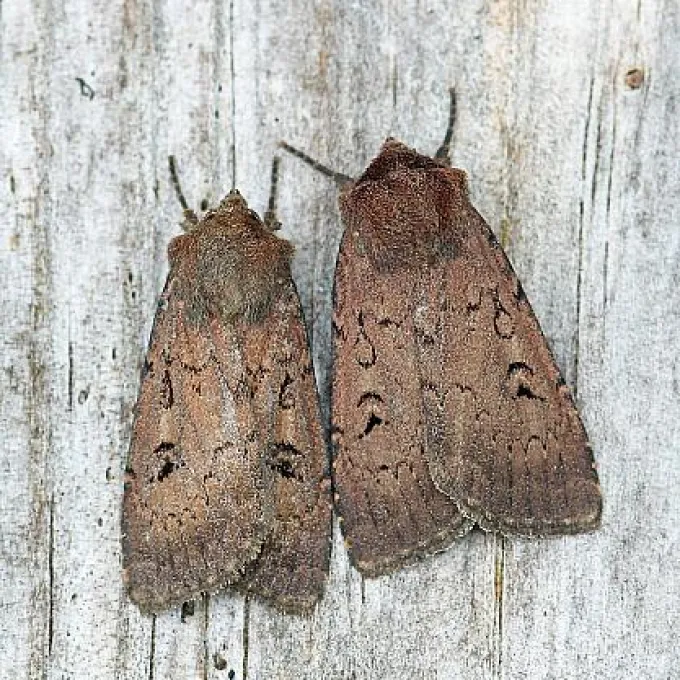
Description
How to identify
Graphiphora alia belongs to the Noctuidae family within the order Lepidoptera. This insect exhibits the typical structural characteristics of noctuid moths, featuring a robust body covered in fine hairs and broad wings that rest in a tent-like position over the body.
Adult moths typically have a wingspan ranging from 35 to 45 mm. Their coloration is generally cryptic, ranging from greyish-brown to ochre-brown, with patterns on the forewings that provide excellent camouflage against bark or leaf litter.
The larvae are classic noctuid caterpillars with well-developed chewing mouthparts. They are usually smooth-skinned, adapted for efficient feeding on various plant tissues during their active growth stages.
The life cycle involves complete metamorphosis, consisting of eggs, larvae, pupae, and adults. This developmental progression allows the species to persist through various environmental conditions.
Pupation typically occurs in the soil or within organic debris, where the insect enters a state of diapause to survive unfavorable weather, particularly during the winter months.
What it damages
This pest is known to affect a wide range of agricultural and ornamental crops, including cereals, vegetables, and fruit-bearing trees. The larvae are polyphagous, feeding on leaves, buds, and succulent young shoots.
Most significant damage occurs during the active vegetative growth phase, as the destruction of leaf tissue reduces photosynthetic capacity and hinders the overall development of the plants.
In high-density populations, the caterpillars can completely skeletonize foliage, leaving behind only the primary veins. Such heavy feeding weakens the plant significantly, affecting both yield and product quality.
Early-instar larvae often feed on the internal parenchyma of the leaves, a type of damage that can go unnoticed until a larger area of the crop is already heavily infested.
The economic impact of this species is largely due to its ability to thrive across diverse host plants, necessitating consistent monitoring and management efforts.
When it appears
Adult flight usually occurs during the spring and summer. Moths are primarily nocturnal, showing peak activity during twilight and night hours, which is typical for many members of the Noctuidae family.
Larval activity is most pronounced during the primary growing season of the host plants. The number of generations per year is largely dictated by local climatic conditions and temperature profiles.
During the winter, the pest survives as a pupa in the soil. As temperatures rise in the spring, the emergence of adults marks the beginning of a new infestation cycle.
Monitoring for the presence of the pest using light traps or pheromone traps is recommended early in the season. This helps determine the timing of the first flight and optimizes intervention strategies.
Environmental factors, particularly humidity and temperature fluctuations, play a critical role in larval survival rates and the overall population dynamics throughout the growing season.
Signs of infestation
The primary sign of infestation is the presence of irregular holes in the leaves and caterpillar frass on the leaf surfaces. Damage is often found concentrated in the lower canopy or near the base of the plant.
Visual inspection during the day may reveal larvae hiding in leaf axils, under soil clods, or within plant debris, as they avoid direct light and predation during the day.
Wilting of young shoots and stems can indicate internal feeding or damage to the growing point, which is a serious indicator requiring immediate field inspection and potential treatment.
Pheromone traps serve as an effective tool for species identification and population density assessment. Captured adults confirm the presence and activity level of the moth in the area.
Compromised plant tissues often serve as entry points for secondary pathogens, such as fungi or bacteria, which can exacerbate the overall damage caused by the larvae.
Control measures
Agrotechnical measures such as deep autumn plowing are essential for disrupting the pupation sites in the soil, effectively reducing the overwintering population for the next season.
Implementing crop rotation and rigorous weed management is crucial for removing alternative host plants and reducing the overall attractiveness of the field to the pest.
When the economic threshold of damage is exceeded, chemical control using contact or systemic insecticides may be necessary, provided they are authorized for use on the specific crop.
Biological control, including the application of Bacillus thuringiensis-based products, offers an effective way to target young larvae while maintaining safety for beneficial insects.
All pesticide applications must strictly adhere to label guidelines and pre-harvest intervals to ensure food safety and minimize the environmental footprint of the control program.
Taxonomy
- Latin name
- Graphiphora alia
- Order
- Lepidoptera (butterflies)
- Family
- Noctuidae
- EPPO code
- GRAHAL
Discussion
No discussions yet — be the first.