
Graphiphora
Graphiphora
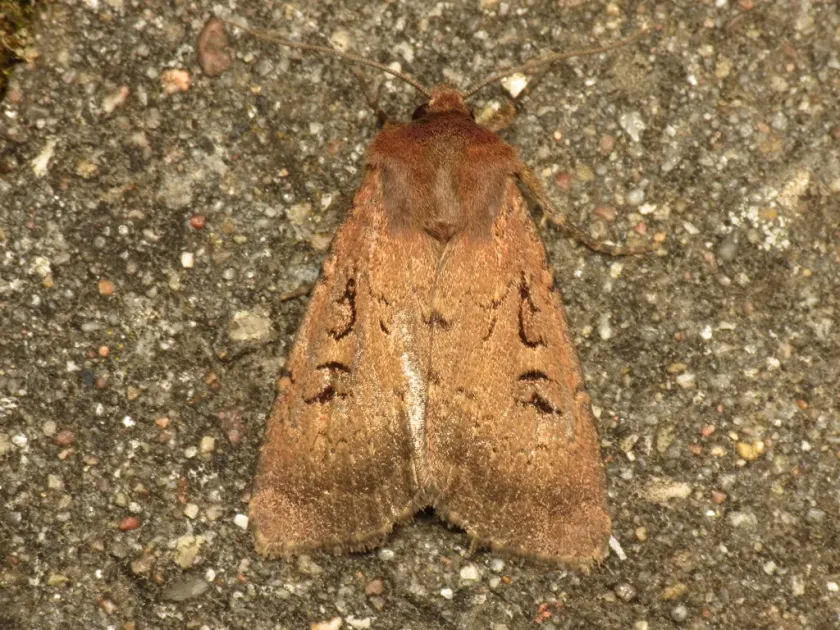
Description
How to identify
Graphiphora is a genus belonging to the Noctuidae family, commonly known as owlet moths or cutworms. These insects are primarily nocturnal, which makes them difficult to observe during standard daytime field scouting.
Adult moths typically possess a wingspan ranging from 30 to 45 mm, with forewings featuring brownish, grey, or mottled patterns. This coloration serves as excellent camouflage against soil, bark, or dry vegetation.
The larvae, or caterpillars, have a stout, cylindrical body with a variable color ranging from pale tan to dark brown. They often exhibit a smooth texture, distinguishing them from more bristly species of caterpillars.
The life cycle undergoes complete metamorphosis. Pupation generally occurs within the soil, where the insects construct small, earthen cells to protect themselves during the pupal stage and overwintering.
Biology of the genus is closely tied to environmental conditions, with moist but well-drained soils being preferred for oviposition. They thrive in areas with diverse vegetation, which supports their nutritional requirements.
What it damages
Graphiphora species are highly polyphagous, meaning they feed on a vast range of host plants. Major agricultural crops like maize, sunflower, sugar beet, and various cereals are frequently targeted.
The larvae are particularly notorious as "cutworms" because they often feed on the base of young stems. This feeding behavior can sever the plant entirely, leading to rapid wilting and seedling death.
As the larvae mature, their consumption rate increases significantly. They may cause irregular, large holes in the leaves or consume the foliage entirely, leaving behind only the tougher veins.
Beyond physical consumption, the damage caused by larvae creates entry points for secondary infections such as bacterial rots and fungal pathogens, which can exacerbate total yield loss.
Young, early-stage crops are most vulnerable to damage. If an infestation occurs shortly after emergence, entire fields may require reseeding, leading to substantial economic losses for farmers.
When it appears
Adult moth activity typically begins in late spring, following the accumulation of sufficient heat units. This period marks the start of the egg-laying phase on suitable host vegetation.
The most intensive feeding period for the larvae is during early to mid-summer, matching the rapid growth phase of most summer crops. This synchronization increases the risk of significant agricultural damage.
Depending on the specific geographic region and climate, Graphiphora may complete one or more generations per year, often overwintering as mature larvae deep in the soil profile.
Environmental triggers like heavy rainfall or unseasonably cold temperatures can affect larval survival rates, though the subterranean nature of the pest provides significant buffering against these extremes.
Regular scouting using light traps or pheromone lures is essential to monitor the timing of adult emergence, which allows for precise intervention before egg-laying reaches its peak.
Signs of infestation
The most indicative sign of a Graphiphora infestation is the presence of toppled or cut seedlings in a field. In many cases, the upper part of the plant may remain intact but completely detached from the root system.
Leaf tissue often shows irregular, scalloped edges or large, jagged holes. Because feeding primarily occurs at night, damage is often discovered in the early morning hours.
Accumulation of larval frass (droppings) near the base of the plant provides a visual confirmation that caterpillars are actively feeding in the immediate vicinity.
Dug-up soil patches around the base of affected plants often reveal the presence of larvae hiding just below the surface during the daytime to escape heat and predators.
Small, wilted patches in a crop field that do not show signs of nutrient deficiency or drought are classic indicators of localized cutworm presence.
Control measures
Effective management of Graphiphora relies on an integrated strategy that combines cultural, biological, and chemical control methods to maintain low populations.
- Tillage practices, especially fall or early spring plowing, to disturb soil and expose pupae to predators.
- Elimination of weeds around field margins, which serve as alternate hosts and bridges for the pest to move into crops.
- Encouragement of natural enemies, including ground beetles, birds, and parasitic wasps, that prey on larval stages.
- Application of selective insecticides during the evening when larvae emerge from the soil to feed.
- Monitoring with pheromone traps to optimize the timing of applications and reduce chemical usage.
Chemical control should be implemented only after scouting indicates that the threshold of larvae per square meter has been exceeded, preventing unnecessary environmental impact.
Rotating crops to non-host plants in subsequent years is a highly effective way to break the life cycle of localized populations and reduce future infestation pressure.
Taxonomy
- Latin name
- Graphiphora
- Order
- Lepidoptera (butterflies)
- Family
- Noctuidae
- EPPO code
- GRAHSP
Discussion
No discussions yet — be the first.