
Graphania
Graphania
Description
How to identify
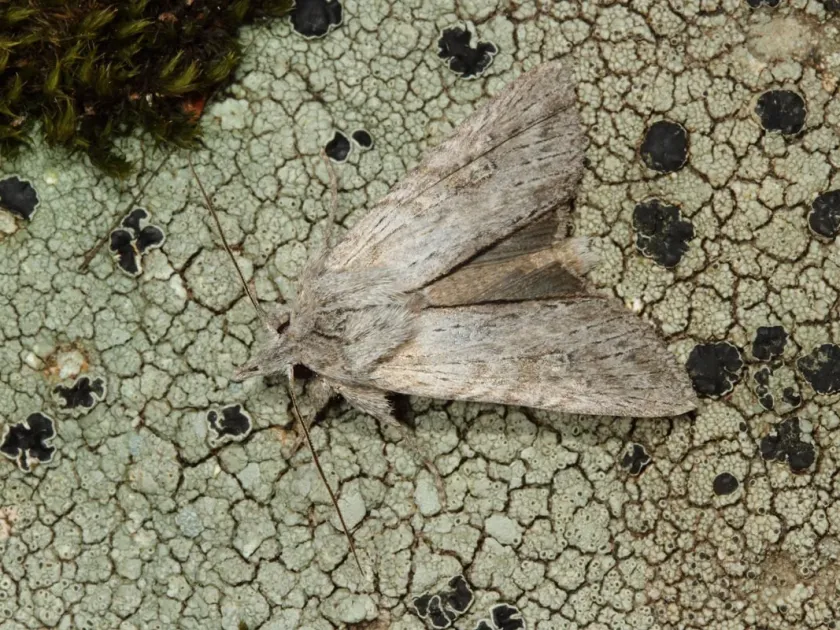
The genus Graphania belongs to the family Noctuidae within the order Lepidoptera. These nocturnal moths often exhibit cryptic coloration, which serves as camouflage when resting on tree bark or dry vegetation during the day.
Adult moths are generally robust with well-developed sensory organs. The larvae, or caterpillars, represent the primary destructive stage, usually showing green, brown, or grayish patterns to blend into the host plants' foliage.
Precise identification of Graphania species typically requires the examination of the moth's genitalia, as many species are visually similar. In the field, agronomists focus on specific larval damage patterns to identify the presence of these pests.
Monitoring efforts often utilize pheromone traps and light traps, which are essential for tracking the population dynamics and flight periods of the adults, enabling timely management interventions.
The life cycle follows complete metamorphosis: egg, larva, pupa, and adult. The number of generations per year is highly dependent on regional climate conditions and the duration of the growing season.
What it damages
This pest affects a wide range of agricultural and ornamental crops. Particularly susceptible are cereal crops, legumes, and various vegetables during their active growth phases.
Younger larvae feed predominantly on the underside of leaves, consuming the parenchyma. Older larvae transition to devouring entire leaf blades, often leaving only the skeletal veins behind.
Beyond leaf consumption, these larvae are capable of damaging reproductive structures, including buds, flowers, and developing fruit, which leads to direct yield losses and reduced crop quality.
Under high population pressure, this pest can cause total destruction of crops in specific field areas. Damage during the early vegetative stages is particularly detrimental, as plants lack the energy reserves to recover.
Feeding damage often creates pathways for secondary infections, including fungal and bacterial pathogens, which further exacerbate the overall damage to the crop throughout the season.
When it appears
The emergence of adults from overwintering sites depends on soil and air temperature. Mass flight typically begins in late spring or early summer, coinciding with the active growth of many host plants.
Pupation primarily occurs in the soil, often at depths of 5 to 10 centimeters. This stage provides a protective mechanism that allows the pest to survive harsh winter conditions or periods of drought.
The peak feeding activity of larvae usually occurs during the first half of summer. This is the most critical time for agronomists to perform regular field inspections to estimate population density.
By autumn, the final generation of larvae retreats into the soil for pupation or diapause. Understanding this seasonal timing is essential for planning agronomic practices like deep plowing.
Environmental factors, especially high humidity and moderate temperatures, often favor faster development cycles, potentially leading to rapid population growth during the mid-summer period.
Signs of infestation
The first sign of infestation is the presence of irregular holes on leaf surfaces. Frass (larval excrement) is often found in the leaf axils or on the soil surface near the base of the plant.
Since the larvae are nocturnal, they are difficult to spot during the day, often hiding under soil clumps or near the plant roots. Daytime inspections require careful searching of these hiding spots.
Stunted growth or wilting of plants, coupled with missing leaf area, serves as a strong indicator of heavy infestation. Severe defoliation significantly reduces the plant's photosynthetic capacity.
Damage to buds or developing fruit often results in premature drop, which is a significant indicator for legume and flowering crops, necessitating immediate intervention to prevent further loss.
- Presence of skeletonized leaves.
- Accumulation of larval frass on soil or leaves.
- Damaged buds, flowers, or developing fruit.
- Visible wilting or stunted development.
Control measures
Deep autumn plowing is a primary agronomic control method. It disturbs the soil, exposing pupae to mechanical damage and natural predators, and disrupts the development cycle.
Implementing crop rotation is highly effective in preventing the buildup of Graphania populations. Avoiding the planting of susceptible crops in sequence helps break the pest's life cycle.
Chemical control involves the application of insecticides, such as pyrethroids or organophosphates, specifically during the period of mass larval hatching to maximize effectiveness.
Biological control methods, including preparations based on Bacillus thuringiensis, offer an eco-friendly approach to managing populations when the pest is detected in early stages.
Continuous monitoring using light traps allows for precise timing of interventions, ensuring that control measures are triggered only when the economic threshold is reached, thereby minimizing environmental impact.
Taxonomy
- Latin name
- Graphania
- Order
- Lepidoptera (butterflies)
- Family
- Noctuidae
- EPPO code
- GRAFSP
Discussion
No discussions yet — be the first.