
Artichoke moth
Gortyna xanthenes
Description
How to identify
The Artichoke moth (Gortyna xanthenes) is a member of the Noctuidae family. The adult moth typically has a wingspan of 40–50 mm, featuring ochre-yellow forewings with a distinct pattern of darker lines and spots that provide camouflage against dried stems.
As a member of the order Lepidoptera, this moth undergoes a complete metamorphosis. Its lifecycle is strictly synchronized with the phenology of its host plants, primarily the globe artichoke, within which the larvae complete their development.
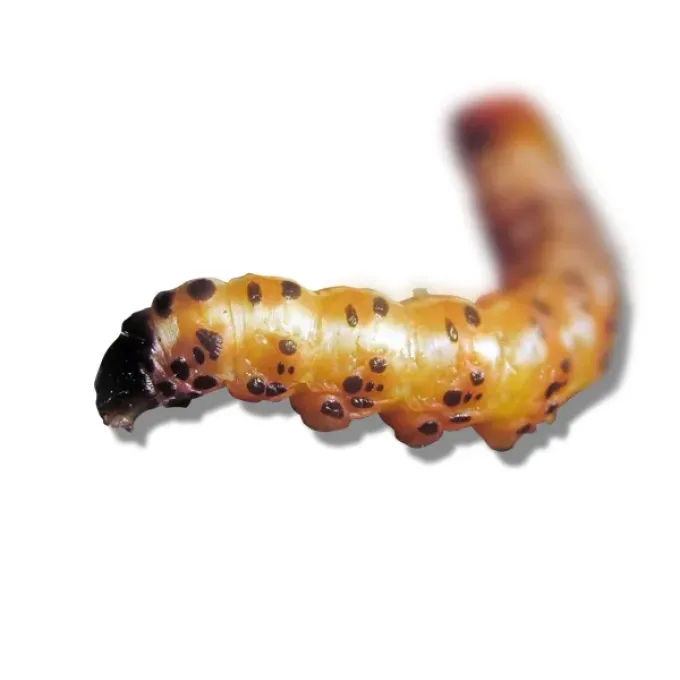
The larvae, or caterpillars, are the most recognizable stage in terms of damage. They are cylindrical, reaching up to 50 mm in length, and vary in color from whitish to pale yellow, featuring dark, distinct pinacula on each body segment.
Pupation occurs in a chamber created within the host's stem or sometimes in the soil near the plant base. The pupa is brown, robust, and remains protected until the adult moth emerges in late summer.
The adults are nocturnal and are primarily active in late August and September, which corresponds with the mating season and the time for egg-laying on the bases of host plants.
What it damages
The primary host for this pest is the globe artichoke (Cynara cardunculus). The larvae are internal feeders, tunneling directly into the central stem or the succulent flower stalks, causing severe structural damage.
The tunneling activity disrupts the plant's vascular system, preventing the proper translocation of nutrients and water. This results in stunted growth, leaf wilting, and often the death of the main flower head.
Secondary damage is highly prevalent, as the moth's larval galleries provide an entry point for various pathogenic fungi and bacteria, leading to tissue rot that accelerates the decline of the plant.
In infested plantations, the economic impact is significant because damaged flower buds become unmarketable, and the structural integrity of the plant is compromised, making it prone to breakage.
Younger plants are at a higher risk of being killed outright by a single larval infestation, as they lack the biomass to withstand the extensive internal feeding of the caterpillar.
When it appears
The species overwinters in the egg stage. Eggs are deposited by the females in late autumn, typically at the base of the plant or within the crevices of old stalks, where they remain dormant throughout the winter.
Larvae hatch in the spring, usually coinciding with the onset of warmer temperatures in April. They immediately seek out the tender parts of the artichoke plant to bore into the succulent tissues.
The larval development period lasts throughout the spring and into early summer. During this time, the larvae stay hidden inside the plant, growing and molting, which makes them very difficult to target with contact insecticides.
Pupation takes place throughout the mid-summer period. The duration of the pupal stage is influenced by soil temperature and humidity, usually lasting a few weeks before the emergence of the adults.
There is typically one generation per year, which is a key factor in designing integrated pest management programs, as it limits the critical time window for effective intervention.
Signs of infestation
The most reliable sign of an Artichoke moth infestation is the sudden wilting of the central leaves or the primary flower stalk, which occurs even when soil moisture is adequate for the plant.
Entry holes made by the larvae are visible on the stalks. These are often surrounded by granular frass (excrement), which accumulates at the base of the plant or near the point of entry into the stem.
Internal damage can be verified by splitting the stem longitudinally, which reveals long, hollow galleries filled with decaying plant material and dark larval waste.
Deformed or underdeveloped flower heads are a secondary indicator, often resulting from the disruption of sap flow to the apical meristem caused by the larval feeding below.
In late summer, one may observe circular exit holes on the stems, indicating that the adult moths have emerged, confirming that the pupation cycle has been completed successfully.
Control measures
Sanitation is the most effective management strategy. After the harvest, all crop residues should be removed and destroyed by burning or deep burial to eliminate the overwintering egg population.
Implementing a rigorous crop rotation plan is essential. Moving artichoke cultivation away from previously infested fields for at least three seasons significantly reduces the local pest pressure.
Systemic insecticides can be applied during the early larval stage; however, timing is critical, as treatment must be performed before the larvae bore deep into the protective stem tissues.
Pheromone traps are highly recommended for monitoring adult moth flight. This data helps farmers determine the precise moment for intervention, ensuring that insecticides are used only when necessary.
- Regular field scouting to identify and remove infested stalks early.
- Encouraging natural predators such as parasitic wasps and carabid beetles.
- Ensuring good soil fertility and water management to help plants tolerate minor infestations.
- Using biological control agents like Bacillus thuringiensis sprays during the hatching period.
Taxonomy
- Latin name
- Gortyna xanthenes
- Order
- Lepidoptera (butterflies)
- Family
- Noctuidae
- EPPO code
- GORTXF
Discussion
No discussions yet — be the first.