
Frosted Orange moth
Gortyna
Description
How to identify
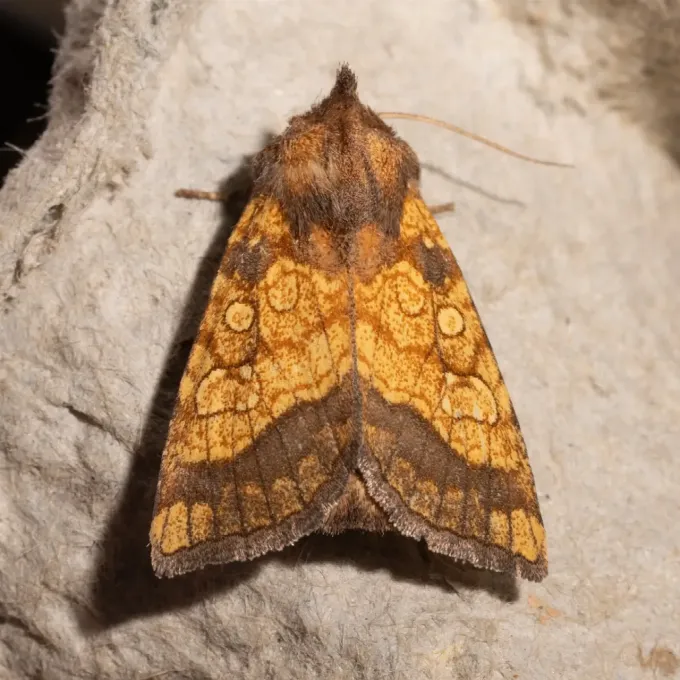
The Frosted Orange moth (Gortyna flavago) is a species of moth belonging to the Noctuidae family. The adult moth has a wingspan of approximately 40 mm, with forewings displaying a distinct ochre-yellow color characterized by brown markings, allowing for effective camouflage among foliage.
The larva of this species grows up to 50 mm in length. Its body color is yellowish-white, punctuated by prominent dark brown tubercles on each segment. The head is typically dark brown, reflecting the robust nature of the larva as a stem borer.
What it damages
This pest is a polyphage, known to attack various agricultural and ornamental crops, including potatoes, tomatoes, corn, and sunflowers. It also thrives on various wild plants, such as burdock and thistles, which serve as alternative hosts during the early stages of the season.
The primary damage occurs when larvae bore into the stems of the plants. By hollowing out the stem, the larva interrupts the plant's nutrient and water transport, causing stunted growth, rapid wilting, and in many cases, the eventual death of the affected plant.
When it appears
The Frosted Orange moth completes one generation per year. It typically overwinters as an egg laid on the stems of host plants or common weeds near the field margins.
Eggs hatch in the spring, typically around May. Young larvae initially feed on wild vegetation before migrating to agricultural crops as they grow. Pupation usually takes place in late summer, either inside the damaged plant stems or within the surrounding soil.
Signs of infestation
The most noticeable sign of an infestation is the sudden wilting of plant tops or entire stalks. Close inspection of the lower stem will reveal small entry holes often surrounded by frass (larval excrement).
Infested stems become weak and prone to breaking during windy conditions. Cutting open an infested stalk will typically reveal the larva or evidence of internal tunneling and shredded plant tissue.
Control measures
Cultural control is the most effective approach, focusing on the rigorous removal of host weeds from around the field perimeters. Deep plowing of fields after harvest helps destroy overwintering eggs located in the soil and crop debris.
In cases of high infestation, systemic insecticides can be applied during the early larval stage before they penetrate deep into the stems. Regular monitoring of crops for early signs of wilting is essential to minimize overall yield loss.
Taxonomy
- Latin name
- Gortyna
- Order
- Lepidoptera (butterflies)
- Family
- Noctuidae
- EPPO code
- GORTSP
Discussion
No discussions yet — be the first.