
Common clubtail
Gomphus vulgatissimus
Description
How to identify
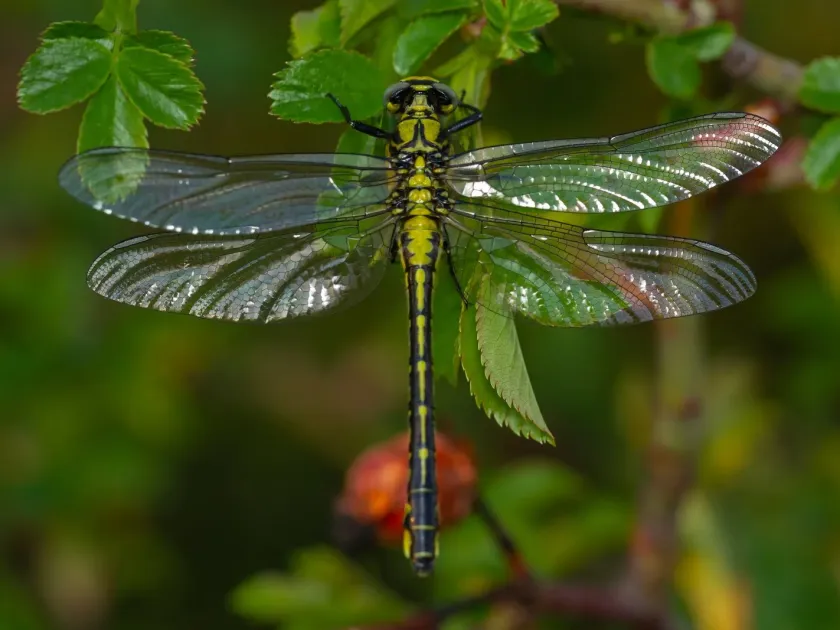
The Common clubtail (Gomphus vulgatissimus) is a member of the Gomphidae family, belonging to the Odonata order. It is a medium-sized dragonfly with a distinct black and yellow color pattern.
The head is broad with eyes that are clearly separated and do not touch in the middle, which is a primary diagnostic feature for this family.
The wings are clear with well-defined venation. The abdomen features prominent yellow spots against a dark background, making the species easily recognizable.
Nymphs live in the silty bottoms of water bodies and possess a flattened body shape, which allows them to burrow into the substrate effectively.
Adults are active during the day, commonly found near slow-flowing rivers or lakes, where they hunt for smaller insects in the vicinity.
What it damages
It is important to clarify that the Common clubtail is not a crop pest. It acts as a predatory insect that helps regulate other insect populations.
This species does not feed on agricultural crops, nor does it damage plant tissues, roots, or fruits, meaning it poses no threat to farming operations.
The nymphs are aquatic predators that consume various small organisms, including mosquito larvae, which provides a natural control service in water ecosystems.
From an agronomical perspective, this species is considered a beneficial entomophagous insect that contributes to a healthy agro-ecosystem.
The presence of these dragonflies indicates a balanced ecosystem and serves as a natural indicator of water quality in the surrounding areas.
When it appears
The flight period for adult Common clubtails typically occurs from late spring through the summer months, primarily from May to July.
The life cycle is quite long and complex, usually lasting between three and four years depending on environmental conditions and food availability.
Females lay eggs directly into the water, and the developing nymphs spend most of their life cycle buried in the sediment of water bodies.
The final metamorphosis involves the nymph emerging from the water to reach maturity, shedding its skin to become an aerial adult.
Their activity levels are highly dependent on weather conditions, as they prefer warm, sunny days for hunting and social behavior.
Control measures
No control measures are needed for the Common clubtail as it does not cause any harm to crops or agricultural infrastructure.
Indiscriminate use of broad-spectrum insecticides should be avoided in areas where these dragonflies are present to preserve local biodiversity.
Maintaining clean water sources and healthy riparian zones is sufficient to support the natural population of these beneficial insects.
Integrated Pest Management (IPM) practices prioritize the protection of such beneficial species, as they assist in the natural suppression of actual pests.
There is no economic justification for attempting to reduce the population of this species, as it provides ecological services free of charge.
Taxonomy
- Latin name
- Gomphus vulgatissimus
- Family
- Gomphidae
- EPPO code
- GOPHVU
Discussion
No discussions yet — be the first.