
Glyptotermes iridipennis
Glyptotermes iridipennis
Description
How to identify
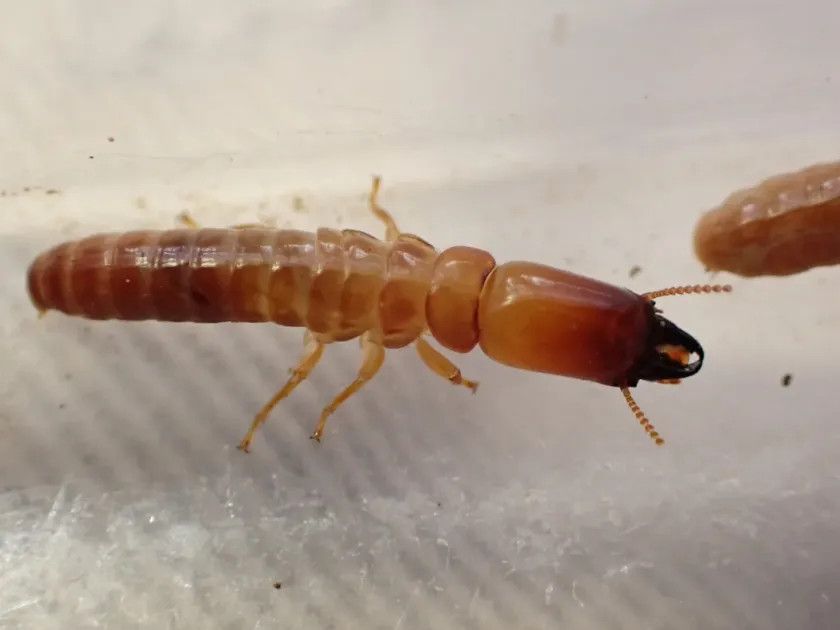
Glyptotermes iridipennis is a species of drywood termite belonging to the family Kalotermitidae. Unlike subterranean termites, this species does not require soil contact, living entirely within the wood it consumes.
The colony structure is strictly hierarchical, consisting of workers, soldiers, and reproductive castes. The soldiers are characterized by heavily sclerotized heads, used to block tunnels against invaders.
Adults possess iridescent wings, which is a key identification feature. After the nuptial flight, they shed their wings and locate a suitable wood crevice to initiate a new colony.
The termites thrive in stable environments within the wood, carefully controlling internal humidity and temperature by sealing their gallery openings with fecal pellets and debris.
Development is hemimetabolous, with nymphs gradually assuming different roles within the colony as they mature, ensuring the continuous survival and expansion of the internal gallery network.
What it damages
This pest attacks various woody plant species, including both forest and ornamental trees. It is particularly adept at colonizing trees that have pre-existing damage or areas of decay.
The termites excavate complex galleries deep within the heartwood. This activity significantly weakens the tree's structural integrity, making it susceptible to wind-throw and mechanical breakage.
In mature trees, the damage is often hidden from view, progressing slowly until the structural damage becomes severe enough to affect the tree's vascular system and nutrient transport.
Economic damage occurs when the pest infests high-value timber trees, rendering the wood unusable for commercial purposes due to extensive internal channeling.
The presence of these termites often accelerates the decline of weakened trees, acting as a secondary agent that hastens the death of a stressed or dying host plant.
Signs of infestation
The most diagnostic sign of infestation is the presence of fecal pellets (frass) pushed out from small holes in the bark or wood surface, often resembling sand or fine sawdust.
Tunnels and gallery openings are often plugged with a hardened mixture of waste and debris. Close inspection may reveal these subtle surface alterations on the bark or wood.
Auditory evidence can sometimes be detected; soldiers produce a drumming sound by tapping their heads against gallery walls when they detect vibrations in the surrounding environment.
During the swarming season, the discovery of discarded wings around the base of a tree is a primary indicator of a reproductive flight and a potential nearby colony.
Visible changes in bark morphology, such as localized depressions or exit points filled with sealing material, often suggest deeper internal colonization by the termite colony.
Control measures
Integrated Pest Management starts with sanitation. Removing dead, dying, or decaying timber from the vicinity eliminates potential nesting sites and reduces the risk of infestation.
Chemical control can be difficult due to the cryptic nature of the colony. Targeted insecticide injections into detected galleries provide the most effective treatment for localized infestations.
Biological control agents, such as entomopathogenic fungi, are being explored as sustainable alternatives to synthetic pesticides, proving effective in suppressing colony growth.
For high-value ornamental trees, protective coatings or chemical barriers can be applied to bark to discourage the establishment of new colonies by swarming pairs.
Continuous monitoring using passive traps can help detect the early stages of an infestation, allowing for rapid intervention before significant structural damage occurs.
Taxonomy
- Latin name
- Glyptotermes iridipennis
- Family
- Kalotermitidae
- EPPO code
- GLYMIR
Discussion
No discussions yet — be the first.