
Glyphipteryx simpliciella
Glyphipteryx simpliciella
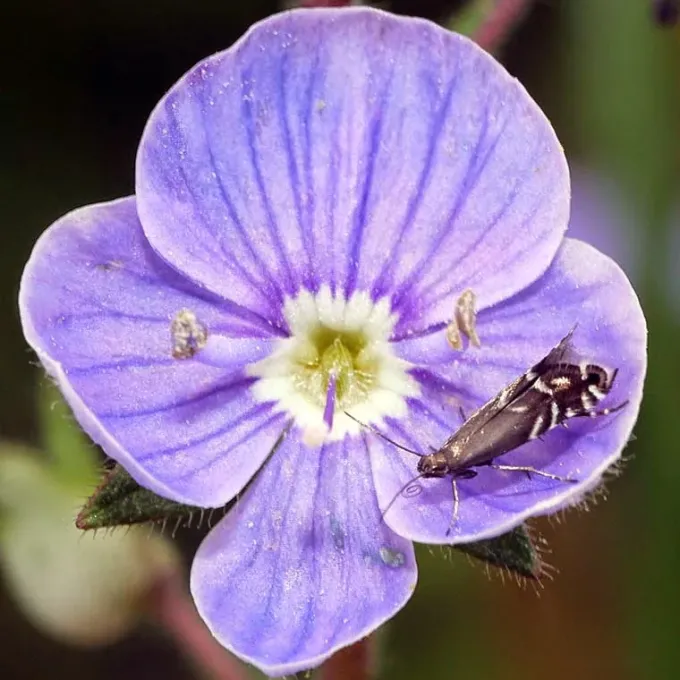
Description
How to identify
Glyphipteryx simpliciella is a small moth species belonging to the family Glyphipterigidae, commonly known for its larvae feeding on seeds of various grasses.
The adult moth has a wingspan of approximately 8–10 mm, with dark, metallic-bronze forewings featuring white or silver streaks near the wing edges.
The larvae are typically whitish or pale yellow with a dark-colored head, adapted to living within the confined space of a seed husk.
The life cycle consists of complete metamorphosis, moving through egg, larval, pupal, and adult stages within a single season.
These moths are diurnal, meaning they are active during the day, which makes them easier to spot in flight during sunny, warm weather.
What it damages
The primary damage is caused by larvae that infest the seeds of grasses, such as Dactylis glomerata (cocksfoot) and other related Poaceae species.
Larvae bore into the developing seeds and consume the endosperm, leaving behind hollow husks that fail to germinate or grow properly.
Because the larvae reside inside the seed structures, the damage is often internal and not immediately visible to the naked eye during field inspections.
Severe infestations can lead to significant reductions in seed yield, which poses a major economic risk for commercial seed production fields.
Secondary damage often occurs when fungal spores enter through the larval entrance holes, leading to rot or disease in the inflorescence.
When it appears
The flight period for adult Glyphipteryx simpliciella typically occurs in late spring to early summer, coinciding with the flowering stages of their host plants.
Eggs are deposited directly onto the young inflorescence to ensure that the larvae have immediate access to food upon hatching.
Larval development occurs throughout the summer months, with caterpillars feeding inside the seeds until they reach maturity.
The species overwinters in the pupal stage, usually inside a protective cocoon hidden in the soil or within dry plant debris near the base of the stems.
Emergence of the next generation of moths is heavily dependent on spring temperature accumulation, marking the beginning of the annual cycle.
Signs of infestation
Infestation is first indicated by small, clean-cut holes in the seed husks, which represent the entry or exit points of the larvae.
The yellowing or premature wilting of individual spikelets within an otherwise healthy seed head is a classic sign of internal feeding activity.
Presence of fine, silken webbing between the florets of a seed head often points to the active presence of moth larvae.
When samples of seeds are examined, the presence of dark granular frass inside the husk is a definitive sign of larval feeding.
A noticeable drop in seed weight and a lack of filling in the heads at harvest time are common indicators of a heavy infestation.
Control measures
Cultural control measures, such as the early harvesting or mowing of grass stands, can effectively remove larvae before they leave the seeds to pupate.
Sanitation of field borders and the removal of wild grass weeds are critical to eliminating alternative habitats for the moth population.
Monitoring using pheromone traps can provide data on adult population density and help time insecticide applications for maximum efficiency.
Chemical control, if necessary, should be applied during the egg-laying period to prevent larvae from boring into the seeds.
Maintaining proper field spacing and utilizing crop rotation can interrupt the life cycle and reduce the build-up of moth populations over time.
Discussion
No discussions yet — be the first.