
Red wood ant
Formica truncicola
Description
How to identify
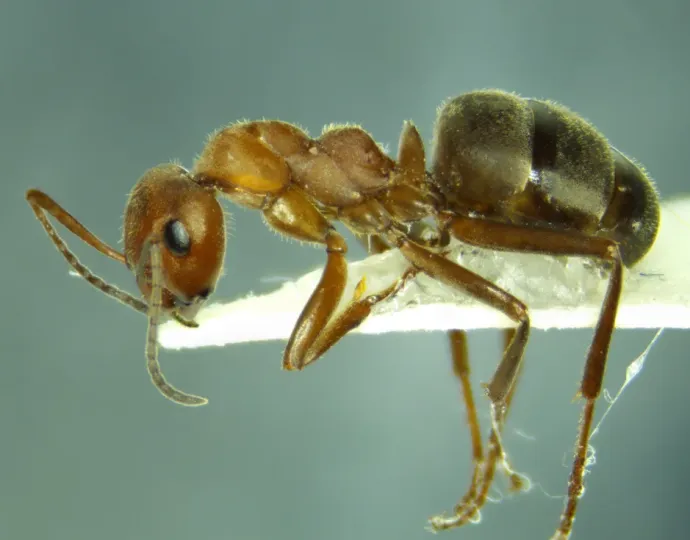
The red wood ant (Formica truncicola) is a species of ant from the Formicidae family. Worker ants typically measure between 4 and 9 mm in length.
They are characterized by a reddish-brown coloration and the presence of distinct hairs on their body, which helps in identifying this specific species.
They are well-known for building large, conspicuous mound-shaped nests constructed from twigs, pine needles, and other vegetation, which can rise significantly above the soil.
These ants are highly social insects, with colonies containing hundreds of thousands of individuals that maintain complex pheromone trails for communication.
The queen of the colony possesses a high reproductive rate, ensuring that the nest can survive and recover even after sustaining partial structural damage.
What it damages
In agricultural settings, the red wood ant is considered a pest primarily because of its mutualistic relationship with aphids and other sap-sucking insects.
Ants actively "farm" aphids by providing them with protection against natural predators such as ladybugs, lacewings, and hoverflies, which are essential for biological control.
The cultures most affected by this behavior include fruit trees like apple, pear, and plum, as well as various berry bushes prone to aphid infestations.
The unchecked growth of aphid populations under ant protection leads to stunted plant growth, leaf curling, and the premature shedding of fruit buds.
Additionally, ants may cause physical damage to the bark of young saplings while creating their trails or gnawing on soft buds, which hampers tree development.
When it appears
Red wood ant activity begins in early spring, as soon as the soil temperatures rise above 8–10 degrees Celsius, often coinciding with the start of bud break.
The peak of their activity occurs during the blossoming of fruit trees, when aphids are busy colonizing the tender new growth on branches.
During the summer months, worker ants are highly active, constantly patrolling trees and bushes to collect honeydew, the sugary byproduct of aphids.
As autumn approaches, their activity decreases significantly, and the colony prepares for hibernation by moving deeper into the mound below the frost line.
Throughout the growing season, successive generations of workers ensure that aphid colonies are guarded and maintained consistently until the end of summer.
Signs of infestation
The most visible sign of an ant presence is the existence of busy, constant "trails" on tree trunks where ants move up and down in large numbers.
The presence of dense clusters of aphids on the tips of shoots, untouched by beneficial insects, is a clear indicator of ant protection.
A sticky residue known as honeydew on the leaves and branches is a sign of high aphid activity, which often facilitates the growth of sooty mold.
The accumulation of small soil mounds around the base of trees or shrubs often indicates that a nest or a secondary station is nearby.
One might also notice a distinct smell of formic acid when approaching areas with high ant traffic or when disturbing their trails.
Control measures
The use of sticky glue traps applied to tree trunks is a very effective way to create a physical barrier and prevent ants from reaching the canopy.
Insecticidal gels containing fipronil can be used to control the population, as worker ants will carry the bait back into the nest to the queen.
Regular management of aphid populations using biological or chemical sprays reduces the food source for ants, causing them to abandon the infested trees.
Planting repellent plants such as mint, garlic, or wormwood around the base of trees can help discourage ants from establishing trails.
- Pruning branches that touch the ground to eliminate ant access points.
- Encouraging native predator insects in the garden.
- Keeping the area around tree bases clean of dense vegetation.
Discussion
No discussions yet — be the first.