
Japanese ant
Formica japonica
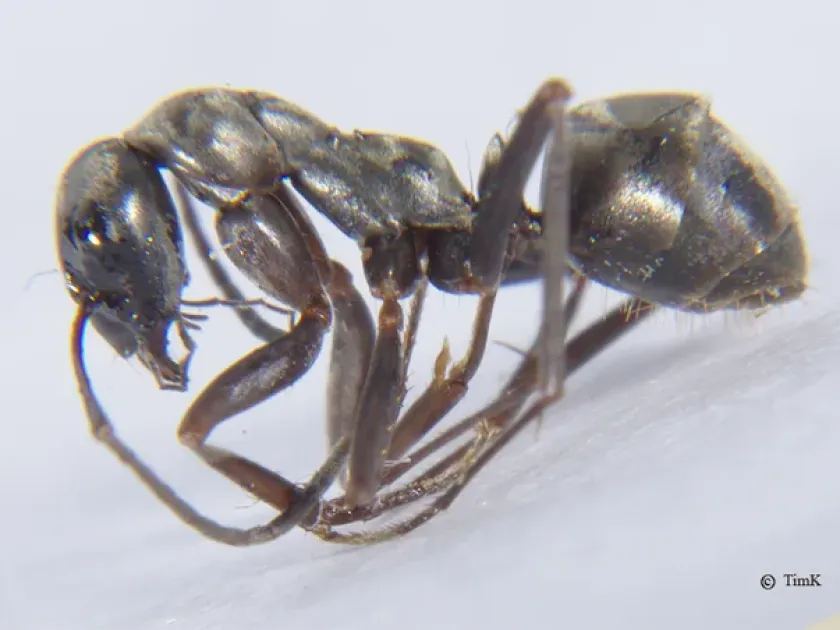
Description
How to identify
The Japanese ant (Formica japonica) is a member of the Hymenoptera order, specifically the Formicidae family. These ants are medium-sized, typically dark brown or black in color, displaying the typical morphological features of the Formica genus, including a distinctively narrow waist.
They are known for their complex social structure and their ability to build intricate nests, which can be found in soil, beneath stones, or within decomposing wooden debris. Worker ants are highly mobile and industrious.
The species exhibits aggressive territorial behavior and maintains large, stable colonies. Their high level of activity on both the ground and the surface of vegetation makes them a significant factor in any garden's ecosystem.
Their life cycle includes complete metamorphosis: egg, larva, pupa, and adult. The success of a colony is highly dependent on environmental temperatures, as they thrive and reproduce most effectively in warm conditions.
While they play a role as natural scavengers in wild habitats, their presence in managed landscapes is often considered detrimental due to their strong symbiotic relationship with sap-sucking pests.
What it damages
The primary damage caused by Japanese ants is indirect. They act as "farmers" for aphids, scale insects, and mealybugs, protecting these pests from natural predators to ensure a steady supply of honeydew, a sugary substance secreted by the pests.
The cultures most at risk include fruit trees (apples, pears, plums), various berry bushes, and certain vegetable crops. High concentrations of aphids on these plants can significantly impair their health and growth.
As aphids drain sap from young shoots and leaves, the host plants suffer from nutrient depletion, leading to stunted growth, distorted leaf development, and poor fruit production.
Furthermore, the honeydew excreted by the aphids encourages the growth of sooty mold, a black fungus that covers the leaves and hinders photosynthesis, eventually reducing the overall vitality of the plant.
Additionally, the ants' habit of excavating tunnels in the root zone of young seedlings can lead to soil drying and mechanical root damage, which can weaken or even kill vulnerable young plants.
When it appears
Activity for the Japanese ant begins in early spring as soil temperatures rise, typically starting in April. This marks the beginning of their foraging season as they look for food sources to support the colony.
Their population and foraging activity reach a peak during the summer months of June and July, coinciding with the rapid reproduction of aphid colonies. This is the period of maximum risk for garden crops.
As autumn approaches in September, the ants' activity levels begin to decline. The colony shifts its focus toward preparing for the upcoming winter, moving deeper into the soil for protection.
During the winter, Formica japonica enters a state of diapause within their deep underground nests, where stable temperatures protect the queen and developing brood from freezing conditions.
The total active period usually spans five to six months in temperate climates, necessitating a proactive approach to pest management starting in the early spring months.
Signs of infestation
One of the first signs of infestation is the appearance of distinct ant trails moving from the nest toward fruit trees or shrubs. Workers can be observed moving rhythmically up and down the stems.
Large aphid colonies on young shoots are often accompanied by ant "guards." Observing ants densely surrounding a cluster of aphids is a clear indicator that they are actively farming the pests.
Sticky honeydew buildup on the upper surfaces of leaves is a significant warning sign. This residue is highly attractive to ants and serves as the perfect substrate for black sooty mold to grow.
Leaf curling, yellowing, and general deformation of terminal shoots indicate that the plant is under stress from high aphid pressure, which is actively sustained and protected by the ants.
Small piles of loose soil or entrance holes found at the base of plants or within the root zone are signs of nest proximity or established foraging routes that may be damaging root structures.
Control measures
The most effective strategy is to control the aphid population first. Once the honeydew source is removed, the ants will typically abandon the plant to seek food elsewhere.
- Apply sticky traps or adhesive bands to tree trunks to physically prevent ants from accessing the crown of the tree.
- Regularly till or stir the soil around the base of plants to disrupt nesting sites and foraging tunnels.
- Use professional-grade bait gels designed for ants; these are carried back to the nest to eliminate the queen.
- Use horticultural soaps or biocontrol agents to manage aphid populations on leaves, breaking the symbiosis.
Physical barriers like trunk bands are the safest and most efficient method for protecting garden plants without relying on heavy chemical interventions, allowing natural aphid predators to return.
If chemical pesticides are deemed necessary, they must be used strictly according to label directions and applied outside of flowering periods to avoid harming pollinators like bees.
Taxonomy
- Latin name
- Formica japonica
- Order
- Hymenoptera
- Family
- Formicidae
- EPPO code
- FORMJA
Discussion
No discussions yet — be the first.