
Granulate cutworm
Feltia subterranea
Description
How to identify
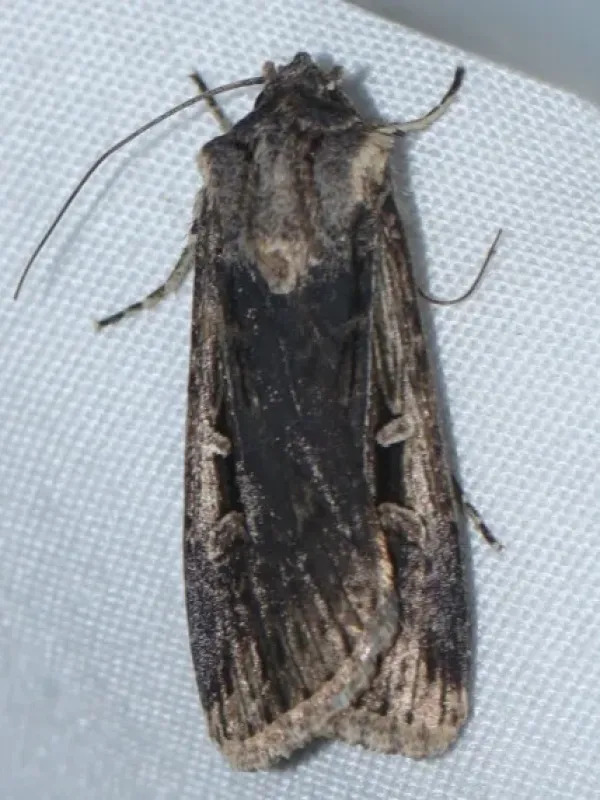
The granulate cutworm (Feltia subterranea) is a member of the Noctuidae family within the order Lepidoptera. Adult moths typically have a wingspan of approximately 35 to 40 mm, featuring brownish-grey forewings with distinct dark markings.
Larvae are the damaging stage of this pest. They possess a dull, granular skin texture and vary in color from pale grey to dark brown, often with a lighter dorsal stripe, providing excellent camouflage in the soil.
The life cycle consists of four stages: egg, larva, pupa, and adult. Pupation occurs within earthen cells in the soil, which serves as a protective chamber during the dormant winter months.
These pests are nocturnal, making them elusive to spot during daytime field surveys. Their activity is primarily concentrated in the upper layers of the soil and at the base of host plants.
Correct identification often requires the use of pheromone traps to monitor adult flight patterns, which helps agronomists predict periods of peak egg-laying and potential larval outbreaks.
What it damages
This species is a highly polyphagous pest capable of infesting a wide range of agricultural crops, including tomatoes, peppers, potatoes, cotton, corn, and various legumes.
Young larvae feed primarily on leaves, creating small holes or skeletonizing them. However, older larvae are significantly more destructive, often severing stems at the soil surface.
This cutting action, common to cutworms, leads to the rapid wilting and death of young seedlings, which can cause significant stand loss in commercial vegetable and row crop fields.
By consuming the crown or roots, the granulate cutworm not only destroys the plant directly but also provides entry points for various soil-borne pathogens, including bacteria and fungi.
In cases of severe infestation, growers can lose a substantial percentage of their yield, necessitating early detection and proactive intervention to protect the planting stock.
When it appears
The developmental rate of Feltia subterranea is highly dependent on ambient temperature and soil moisture levels. In warmer regions, it can produce multiple generations within a single growing season.
Adult flight usually commences in the spring once soil temperatures reach levels sufficient to support the emergence of pupae that overwintered in the field.
The peak activity of larvae typically occurs during the warmer summer months, when conditions are optimal for rapid growth and frequent feeding cycles on available host plants.
As temperatures drop during the autumn, the larvae retreat deeper into the soil profile to pupate, ensuring their survival through the colder months before the next generation emerges.
Monitoring seasonal trends is essential, as peak larval activity can fluctuate significantly based on annual climatic shifts and irrigation practices in the production area.
Signs of infestation
The most prominent sign of a granulate cutworm infestation is the sudden wilting of previously healthy-looking seedlings in a field, which may appear to occur overnight.
Careful inspection of the soil near the base of affected plants often reveals small entrance holes or tunnels where the larvae have retreated during the heat of the day.
Larval frass (excrement) is another indicator of their presence; it can often be found scattered on the soil surface near the crown of the damaged plants.
Sparse stands and missing plants in specific localized areas of the field suggest the presence of larval clusters that move from plant to plant as they feed.
Leaf feeding symptoms, while less severe than stem cutting, provide an early warning signal of a potential population build-up that should be addressed before larvae reach maturity.
Control measures
Managing the granulate cutworm requires an integrated approach that combines cultural practices, biological controls, and judicious chemical applications to minimize crop damage.
- Implementing deep tillage practices to disturb the soil and expose overwintering pupae to predators and environmental extremes.
- Rigorous weed management, as host weeds provide essential shelter and food sources for early larval stages.
- Application of biological insecticides containing Bacillus thuringiensis during the early larval feeding stages.
- Use of soil-incorporated insecticides at planting or broadcast treatments when scouting thresholds are exceeded.
- Crop rotation with non-host species to break the pest's developmental cycle and reduce pressure on the next planting season.
Chemical applications are most effective when applied in the evening, as this is when larvae migrate to the surface to feed, increasing their exposure to the insecticide.
A consistent scouting program, combined with the use of pheromone traps, remains the most effective strategy for making informed management decisions and reducing economic loss.
Taxonomy
- Latin name
- Feltia subterranea
- Order
- Lepidoptera (butterflies)
- Family
- Noctuidae
- EPPO code
- FELTSU
Discussion
No discussions yet — be the first.