
Gothic dart
Feltia subgothica
Description
How to identify
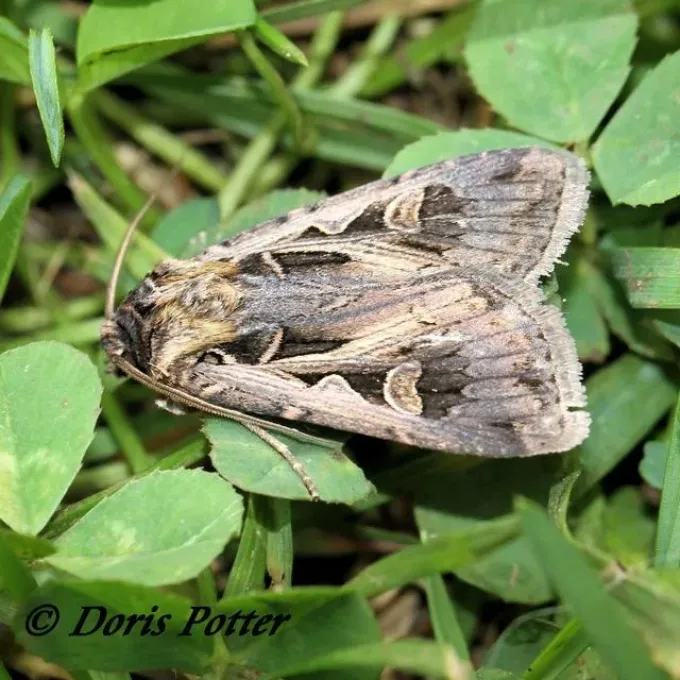
The Gothic dart (Feltia subgothica) is a nocturnal moth species belonging to the Noctuidae family. Adults are characterized by their muted, grey-brown forewings featuring intricate, darker markings that provide excellent camouflage against tree bark and soil surfaces.
The larvae, known as cutworms, pass through six instars. Early-stage larvae are pale, while later instars exhibit a dull, brownish or greyish appearance with a grainy texture. They are rarely seen during the day as they spend their time buried in the upper soil layers.
The species completes its life cycle through complete metamorphosis. The adults are nocturnal fliers that rely on nectar for nutrition. Females deposit eggs in clusters, primarily on the undersides of leaves or directly onto the soil near the host plants.
Winter is typically passed in the larval stage. When soil temperatures rise in the spring, the larvae become active and move toward the surface to resume feeding, which often coincides with the germination and early growth stages of agricultural crops.
The distribution of this species is widespread, and its population dynamics are highly responsive to local agricultural practices. Understanding the peak emergence periods is crucial for effective management and preventive field applications.
What it damages
The Gothic dart is a polyphagous pest capable of causing extensive damage to various economic crops, including tomatoes, cabbage, peppers, and cereal grains. The damage is most acute during the seedling phase of plant development.
The most distinctive form of injury is the severing of stems near the soil line. This behavior causes the plants to topple over and die abruptly. In many cases, a single larva can destroy multiple seedlings in a single night.
For root crops like carrots and potatoes, the larvae may burrow into the edible portions. These excavations significantly reduce the market value of the produce and increase susceptibility to rot during post-harvest storage.
Drought conditions typically exacerbate the level of infestation. When soil moisture is low, larvae seek out the succulent stems of crops to obtain the necessary water, leading to higher mortality rates among the affected plant stands.
The economic impact of this pest can be severe, often resulting in patchy stands and the need for costly reseeding of affected areas. Detecting the damage early is critical to preventing large-scale crop failure within a field.
Control measures
The cornerstone of management is cultural control, specifically deep autumn tillage. Turning the soil brings larvae to the surface, exposing them to predators such as birds and to extreme weather conditions, which significantly reduces the over-wintering population.
Strict weed control is vital because weeds serve as alternative hosts during the early stages of the larvae's life. Eliminating weeds on field margins prevents the migration of pests from these reservoirs onto the main crop.
Monitoring using pheromone traps is highly effective for timing chemical applications. By capturing adult males, farmers can estimate population density and decide whether intervention is necessary before eggs are laid.
When infestation levels exceed the economic threshold, insecticides may be required. These are typically applied as soil treatments or nocturnal foliar sprays to maximize effectiveness against the larvae when they are most active on the surface.
Integrated Pest Management (IPM) strategies should be prioritized, incorporating the use of beneficial nematodes or microbial-based biopesticides. These alternatives provide control without disrupting the delicate balance of soil health.
Taxonomy
- Latin name
- Feltia subgothica
- Order
- Lepidoptera (butterflies)
- Family
- Noctuidae
- EPPO code
- FELTSG
Discussion
No discussions yet — be the first.