
Dingy cutworm
Feltia jaculifera
Description
How to identify
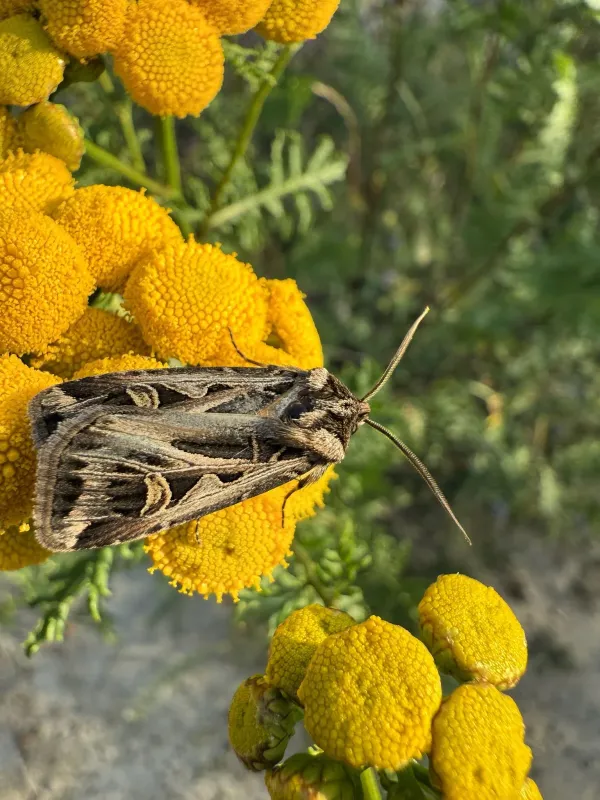
The adult moth has a wingspan of 35–40 mm and features mottled gray-brown forewings with distinct kidney and orbicular spots. These patterns provide excellent camouflage against soil surfaces and vegetation during the day.
Larvae, known as cutworms, grow up to 40 mm in length. Their skin is characteristically granular, colored in shades of dull gray or brown, and they instinctively curl into a tight ball when disturbed or touched.
The pupae are brown and smooth, usually formed within a small earthen cell beneath the soil surface. This shelter protects them from desiccation and various environmental stressors throughout the pupation stage.
Eggs are typically deposited singly or in small clusters on host plants or moist soil. They are hemispherical and pale, gradually darkening as the embryo develops within the chorion.
Feltia jaculifera belongs to the Noctuidae family within the order Lepidoptera. It is recognized as one of the most widespread and damaging cutworm species in North American agriculture.
What it damages
This species is a generalist feeder that impacts a wide range of crops, including corn, soybeans, sunflowers, tobacco, and various vegetables. Their broad host range makes them a persistent threat to diverse agricultural systems.
Young larvae feed primarily on leaves, causing small holes and ragged edges. However, older larvae are significantly more destructive, as they typically sever stems at or just below the soil line.
Severed stems cause the plant to wilt and die rapidly, leading to significant thinning of stands. In extreme cases, widespread infestations can necessitate replanting of entire fields.
Besides stem cutting, larvae may occasionally feed on underground plant parts, including roots and tubers, which weakens the plant and increases its vulnerability to soil-borne diseases.
The economic impact is highest during early growth stages when plants are most susceptible to damage and lack the biomass to compensate for tissue loss.
When it appears
Larvae overwinter in the soil and resume activity as soon as temperatures rise in the spring. They emerge from dormancy to begin feeding on emerging seedlings or winter annual weeds.
Depending on the latitude and climate, this species may complete one or two generations per year. The adult flight period is generally prolonged, spanning from early summer through late autumn.
Cutworms are nocturnal feeders, remaining hidden in the soil or under debris during daylight hours to avoid predators and desiccation. This behavior is a key factor in their survival strategy.
Environmental conditions, particularly soil moisture, heavily influence population dynamics. Increased rainfall in the spring often favors larval survival and higher infestation levels.
Pupation takes place in the soil, followed by the emergence of adults that continue the reproductive cycle. Continuous monitoring is essential throughout the season to track these developmental stages.
Signs of infestation
The most reliable sign of an infestation is the presence of wilting or toppled plants in an otherwise healthy field. Upon inspection, the stem is often found partially or completely severed at the base.
Small, irregular holes in the foliage of young plants suggest the presence of early-instar larvae. These initial signs are often overlooked but indicate the potential for upcoming damage.
Digging near the base of damaged plants usually reveals the culprit, especially in the morning. Larvae will often be found coiled just beneath the soil surface near the last point of feeding.
The presence of adult moths in light traps or pheromone traps provides early warning of population trends, allowing producers to prepare for potential larval outbreaks.
Areas of sparse plant stands or "gaps" in crop rows that appear suddenly are clear indicators of cutworm activity, requiring immediate scouting of the surrounding area.
Control measures
Tillage is a highly effective cultural control method. Deep plowing disrupts larval habitats, exposes them to predators, and buries pupae, reducing the population before the next growing season.
Effective weed management is crucial, as early-season weeds provide essential food sources for young larvae. Clearing fields prior to planting minimizes the attraction for egg-laying females.
Chemical control involving insecticides is most effective when applied in the evening, coinciding with the peak nocturnal feeding activity of the larvae.
Pheromone traps are excellent tools for monitoring adult activity, which helps determine the timing of insecticide applications to maximize efficacy against the larval stage.
- Implement crop rotation to disrupt the life cycle of the pest.
- Use biological control options, such as insecticidal bacteria or fungi, which are effective against young larvae.
- Ensure rapid plant growth through optimal fertilization to help crops outgrow the vulnerable stage.
Taxonomy
- Latin name
- Feltia jaculifera
- Order
- Lepidoptera (butterflies)
- Family
- Noctuidae
- EPPO code
- FELTDU
Discussion
No discussions yet — be the first.