
Wheat dart moth
Euxoa tritici
Description
How to identify
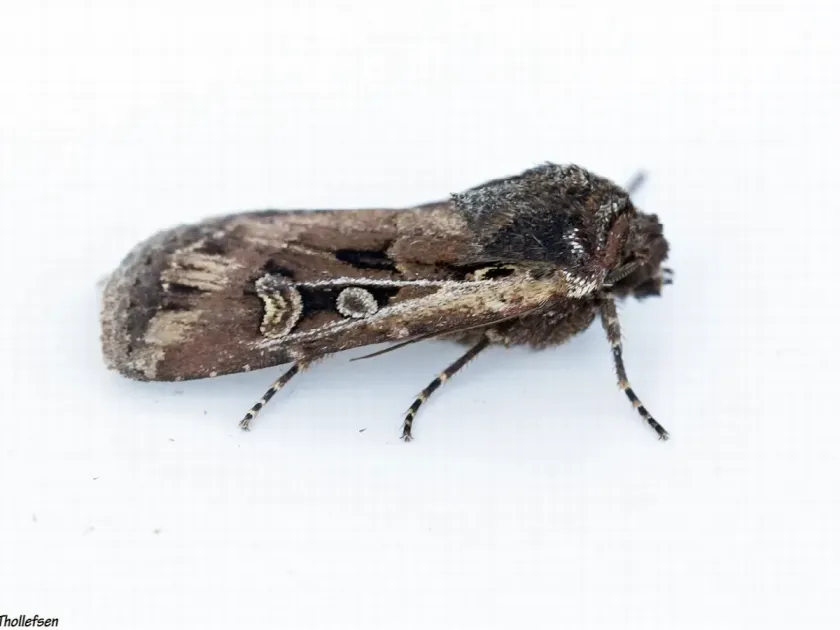
The wheat dart moth (Euxoa tritici) belongs to the order Lepidoptera and the family Noctuidae. The adult moth has a wingspan of approximately 35–40 mm.
The forewings feature a brownish-gray to yellowish-brown coloration with intricate dark markings and transverse lines, providing excellent camouflage against soil backgrounds.
The larvae, known as cutworms, can grow up to 40 mm in length. They have an earthy gray color, and their bodies are covered with small black tubercles, with a light stripe along the back.
The pupa is chestnut-brown in color with a smooth surface and two distinctive spikes at the tip of the abdomen, allowing it to anchor securely in a soil chamber.
Females typically deposit eggs directly into the upper soil layer or on the base of host plants, which makes detection challenging during routine field surveys.
What it damages
This pest is highly polyphagous, though it causes the most significant damage to cereal crops, including wheat, rye, barley, and millet.
Young larvae feed on the leaf epidermis, but as they mature, they shift their feeding habits to the underground stems and the root systems of the plants.
Damage to the root system causes the plant to weaken significantly, often leading to the death of seedlings or causing major gaps in the crop stand.
In addition to cereals, the pest can attack vegetables, root crops, and various weeds that act as reservoir hosts for the population during the off-season.
The economic impact is most severe during dry springs, when the weakened crops struggle to regenerate after sustaining damage from the larvae.
When it appears
The wheat dart moth typically undergoes one generation per year. The pest overwinters primarily as a larva within the soil at depths of up to 20 cm.
In the spring, as soil temperatures rise above 10–12°C, the larvae move toward the surface to resume feeding, which continues until the beginning of summer.
Pupation occurs in mid-June, followed by the flight of adult moths from July through August, when mating and egg-laying take place.
The flight period for the moths is often extended due to variations in larval development and differences in soil temperature across various field zones.
The egg stage lasts approximately two weeks, after which the young larvae hatch and continue to feed until the onset of late autumn frosts before overwintering.
Signs of infestation
The initial sign of infestation is the appearance of hollowed-out areas on the base of stems, leading to wilting and premature drying of the plants.
Field surveys often reveal patches of stunted or yellowing plants where groups of larvae have been active in the soil, causing localized crop failure.
Digging into the soil around damaged plants often reveals the larvae, which typically hide in the ground during the day and emerge at night to feed.
The presence of adult moths near light sources in the evening is a strong indicator of an active population and the beginning of the breeding cycle.
An increased presence of insectivorous birds and predatory insects on the field during tillage operations can serve as a secondary indicator of high larval density.
Control measures
Effective agrotechnical measures include deep autumn plowing, which destroys overwintering sites and exposes larvae to predators and unfavorable environmental conditions.
Maintaining a strict crop rotation and implementing consistent weed control are essential, as weeds provide secondary food sources for the larvae.
When infestation thresholds are reached, contact-stomach insecticides should be applied, ideally during the evening hours for maximum efficacy.
- Use pheromone and light traps to monitor population levels and flight timing.
- Encourage natural enemies and biological control agents within the field ecosystem.
- Ensure optimal fertilization to boost the plant's regenerative capacity after root injury.
Consistent field monitoring and proactive management of soil moisture levels can further mitigate the risks associated with this destructive cutworm species.
Taxonomy
- Latin name
- Euxoa tritici
- Order
- Lepidoptera (butterflies)
- Family
- Noctuidae
- EPPO code
- EUXOTR
Discussion
No discussions yet — be the first.