
Euxoa tristicula
Euxoa tristicula
Description
How to identify
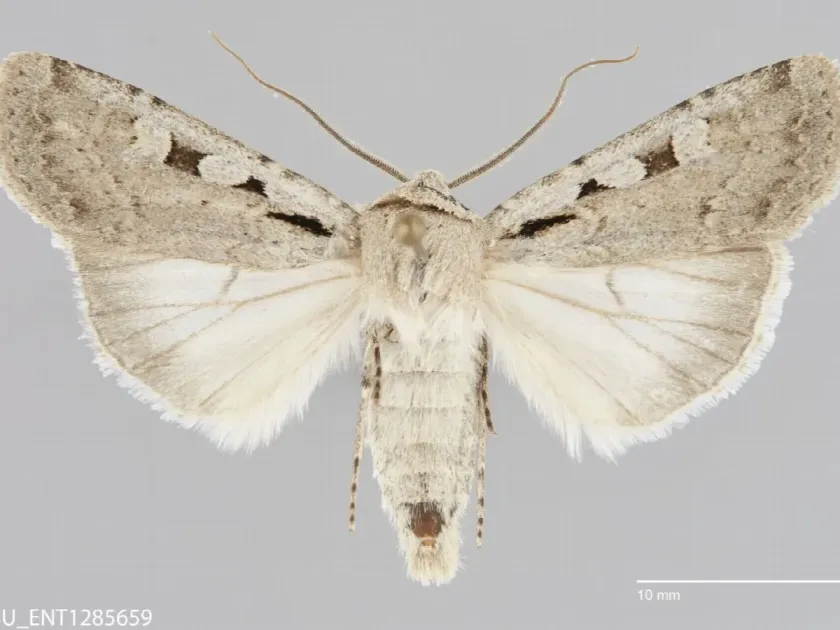
Euxoa tristicula belongs to the family Noctuidae within the order Lepidoptera. The adults are nocturnal moths, typically possessing a wingspan of 35-40 mm, with earthy-brown or greyish coloration that provides camouflage against the soil and foliage.
The larvae, commonly referred to as cutworms, have a robust, cylindrical body structure. Their color varies from light grey to dark brown, often featuring a grainy skin texture that helps them blend in with soil particles.
The life cycle involves complete metamorphosis: egg, larva, pupa, and adult. The larval stage is the most prolonged, as they spend a significant amount of time in the soil during both their active feeding phases and winter diapause.
Pupation occurs in the soil, usually within a protective earthen cell constructed by the larva prior to transformation, which offers protection from both predators and environmental extremes.
The species is univoltine, meaning it completes one generation per year, though larval development can be influenced significantly by environmental temperature and moisture availability.
What it damages
Euxoa tristicula is a polyphagous pest, meaning it feeds on a wide range of botanical hosts. Primary agricultural targets include cereal crops like wheat, barley, and oats, as well as various vegetable crops during their seedling stages.
The primary damage is caused by larvae cutting through the stems of young plants at or just below the soil surface. This leads to the sudden wilting and death of the plant, often causing gaps in crop stands.
Young larvae feed on leaf tissue, while older larvae move to the underground or surface-level stems. This behavior allows them to destroy entire rows of plants in a relatively short period, especially during favorable environmental conditions.
In addition to cutting stems, larvae can consume root systems, weakening older plants and reducing their nutrient uptake, which ultimately stunts growth and reduces overall harvest yield.
High infestation levels in dry regions can be particularly devastating, as crops are already under moisture stress and cannot recover from the physical damage inflicted by the cutworms.
- Cereal grains
- Root vegetables
- Forage legumes
- Weed species
- Young transplants
When it appears
The activity of Euxoa tristicula larvae is most pronounced in early spring, following winter diapause. As temperatures rise and the soil begins to warm, larvae emerge to feed on sprouting crops.
Adult moths are typically active during mid-summer. This is when the reproductive phase occurs, with females searching for suitable sites to deposit their eggs on soil or host plants.
Autumn marks a secondary peak in larval activity, as newly hatched caterpillars feed intensively to accumulate the necessary fat reserves required to survive the upcoming winter months.
Monitoring the moth population through light traps or pheromone traps during summer provides essential data for predicting the potential damage that may occur during the following spring.
Environmental conditions such as drought during the egg-laying period are critical factors, as moisture is often necessary for egg survival; excessively dry conditions can sometimes limit the population growth.
Signs of infestation
The most recognizable sign is the presence of wilting plants that collapse at the base. Field inspections usually reveal that these plants have been severed cleanly at the soil line.
Observing patches of missing or dead seedlings in an otherwise healthy field is a strong indicator of cutworm presence. These patches often expand as the larvae move to adjacent plants.
Soil disturbance at the base of damaged plants often reveals the larvae resting just beneath the surface. They are usually curled in a characteristic C-shape when disturbed during the daytime.
Increased bird activity, particularly crows or other ground-feeding birds congregating in specific areas of the field, can sometimes serve as an indirect sign of a subterranean pest infestation.
Stunted growth or chlorosis in seedlings that have not yet been fully cut can indicate root feeding or partial stem damage, suggesting a lower-level larval presence.
Control measures
Deep plowing in the autumn is a highly effective control measure, as it physically destroys larvae, disrupts their winter cells, and exposes them to the surface, making them vulnerable to birds and climatic conditions.
Implementing a rigorous crop rotation strategy helps break the pest life cycle, preventing the buildup of larval populations that occur when the same host crop is planted consecutively.
Chemical control involving insecticide application is generally reserved for situations where the population density exceeds the established economic threshold for the specific crop.
Biological control, such as the use of parasitic wasps (e.g., Trichogramma), can be employed during the egg-laying season to naturally reduce the number of viable larvae without resorting to broad-spectrum pesticides.
Keeping fields free of weeds throughout the growing season and in the autumn is essential to remove alternative food sources that support cutworm survival and development.
Taxonomy
- Latin name
- Euxoa tristicula
- Order
- Lepidoptera (butterflies)
- Family
- Noctuidae
- EPPO code
- EUXOTC
Discussion
No discussions yet — be the first.