
Euxoa tessellata
Euxoa tessellata
Description
How to identify
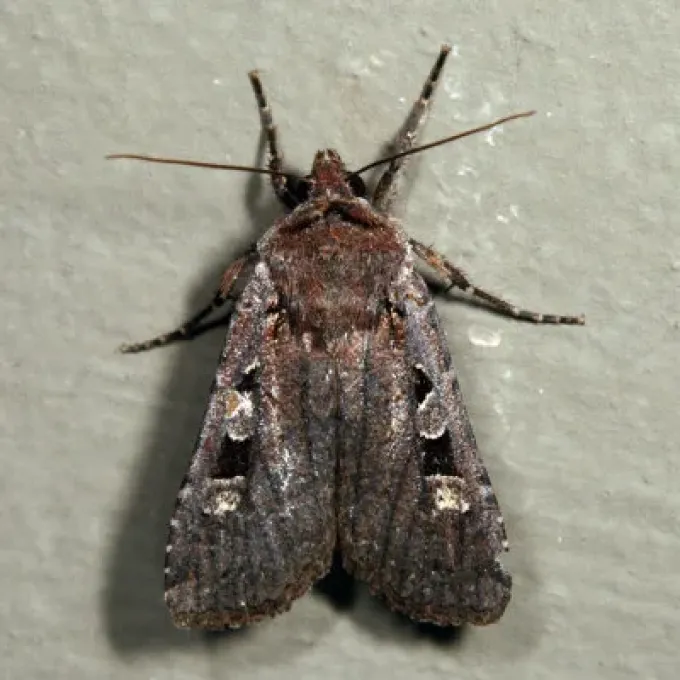
Euxoa tessellata, commonly known as a species of cutworm, belongs to the family Noctuidae. The adult moth is characterized by its nocturnal behavior and cryptic coloration, which helps it blend into its environment during daylight hours.
The larvae, or caterpillars, are typically cylindrical and greyish-brown, reaching lengths of up to 40 mm. They are known for their habit of feeding on plant stems at ground level, hence the name "cutworm."
The life cycle encompasses four distinct stages: egg, larva, pupa, and adult. The insect typically overwinters as a larva in the soil, protected from extreme temperatures until spring arrives.
Pupation occurs in a soil cell prepared by the mature larva. After metamorphosis, the adult moth emerges to mate and lay eggs, continuing the cycle for the next generation.
This species is highly adaptable, often found in various types of cultivated fields and meadows. Its ability to remain buried in the soil is its primary defense against natural predators.
What it damages
Euxoa tessellata is a polyphagous pest, meaning it attacks a wide variety of crops including vegetables, cereals, and legumes. The primary damage is caused by the larvae feeding on young plant stems.
By cutting through the stem at the soil line, the larvae cause the plant to fall over and die almost immediately. This is particularly devastating to young seedlings, leading to significant stand losses.
Besides stems, older larvae may move to the roots and tubers, causing secondary damage that allows diseases and rot to enter the plant tissue, further decreasing crop quality.
The severity of the damage is often correlated with the population density of the larvae. In high-density areas, entire rows of crops can be wiped out in a matter of days.
Early-season infestations are the most problematic, as they often require replanting and disrupt the uniformity of the field, causing long-term management challenges.
When it appears
Larval activity begins in early spring as the soil warms up. This is when the overwintered larvae emerge from their resting state to start feeding on available vegetation.
The most critical window for surveillance is from late spring to early summer, covering the period when seedlings are most susceptible to cutting damage.
Adult moths are typically active in mid-to-late summer. Monitoring their flight patterns using light or pheromone traps helps forecast potential outbreaks for the following season.
The autumn period involves the final maturation and egg-laying processes. Managing field conditions before winter can help reduce the number of surviving larvae for the next spring.
Weather patterns significantly influence the pest's development. Warm, dry springs may accelerate the life cycle, while excessive moisture can negatively impact larval survival.
Signs of infestation
The most obvious sign of an infestation is the sudden wilting or lodging of young plants. Affected plants appear healthy one day and collapsed on the soil the next.
Inspecting the soil near the base of the wilting plant often reveals a "cut" stem or a hole in the stem tissue near the root zone, indicating larval feeding.
Careful excavation of the soil around the affected plant (up to 5-10 cm deep) during the daytime will frequently reveal the curled-up larva hiding from the sun.
Presence of increased adult moth activity in the evening hours is a strong indicator of an upcoming larval surge in the immediate vicinity.
Patchy stands in fields, where growth is uneven and gaps are appearing, should always be examined for the presence of subterranean cutworms.
Control measures
Integrated Pest Management (IPM) is the best approach for controlling Euxoa tessellata. Combining cultural and chemical measures ensures effective long-term results.
Cultural control includes tillage practices such as plowing in the autumn, which disturbs the soil and exposes larvae to birds and extreme winter temperatures.
Chemical control usually involves applying granular or liquid insecticides as a preventative measure or at the first signs of damage, preferably during evening hours.
Biological control, using entomopathogenic nematodes or fungi, can be an effective way to manage populations without leaving harmful chemical residues on edible crops.
- Maintaining clean fields free of dense weed cover to discourage egg-laying.
- Using pheromone traps for accurate monitoring of adult populations.
- Applying insecticidal seed treatments to protect young seedlings.
- Rotating crops to break the life cycle of the pest.
Taxonomy
- Latin name
- Euxoa tessellata
- Order
- Lepidoptera (butterflies)
- Family
- Noctuidae
- EPPO code
- EUXOTS
Discussion
No discussions yet — be the first.