
Radiant cutworm
Euxoa radians
Description
How to identify
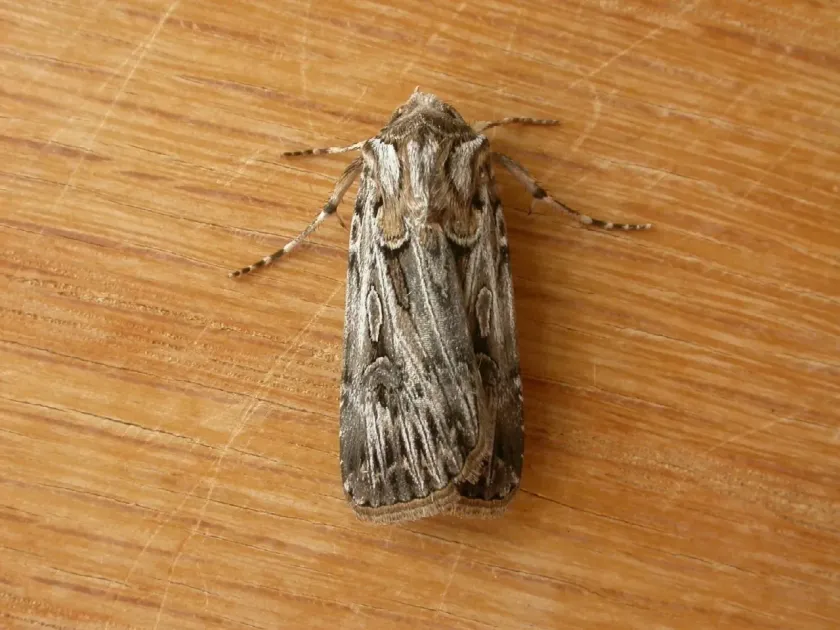
The radiant cutworm (Euxoa radians) belongs to the order Lepidoptera and the family Noctuidae. The adult moth is a nocturnal insect with a wingspan of approximately 35–40 mm, featuring cryptic coloration in shades of brown and grey.
The larvae, or cutworms, have earthy-coloured bodies that allow them to blend into the soil environment. Their skin is covered in fine granulations, with faint dorsal stripes that are characteristic of the species.
Eggs are typically laid by females near the base of host plants or directly onto the soil surface, ensuring that the neonate larvae have immediate access to food upon hatching.
Pupae are reddish-brown and develop within earthen chambers located up to 10 cm below the soil surface, providing them with protection against environmental stressors and predators.
The life cycle encompasses four distinct stages: egg, larva, pupa, and adult. Depending on the climatic region, this pest can complete one or more generations within a single growing season.
What it damages
This species is a polyphagous pest capable of causing severe damage to a wide range of agricultural crops, including wheat, barley, corn, and sunflowers, particularly during the seedling stage.
The larvae are particularly destructive because they feed on the roots and the stems of plants at or just below the soil surface. This feeding behavior often causes the total collapse of seedlings.
Affected fields often show characteristic bare patches where the stand density has been significantly reduced, which necessitates replanting and leads to economic losses for the farmer.
Drought conditions often exacerbate the damage, as the larvae move to the underground parts of the plants in search of moisture, increasing the severity of the plant mortality rate.
Even small populations of larvae can cause disproportionate damage if they are concentrated in specific areas of the field, leading to uneven crop development and poor harvest yields.
When it appears
Adult moths are primarily active during the summer months and are strictly nocturnal, which makes them difficult to observe during daylight hours without specialized monitoring equipment.
Egg-laying periods are often extended, which results in multiple cohorts of larvae appearing throughout the growing season. This requires ongoing surveillance to manage the infestation properly.
Larval feeding is most intense during the warmer months, coinciding with the rapid growth stages of crops. It is during this time that the pest is most vulnerable to intervention strategies.
Pupation typically occurs in the late summer or autumn. Many individuals overwinter in the soil as larvae or pupae, remaining dormant until the return of favorable spring temperatures.
Environmental factors, especially soil moisture and winter temperatures, play a crucial role in the survival rate of the overwintering population and the subsequent pest pressure in the following spring.
Signs of infestation
The first sign of an infestation is often the sudden wilting of otherwise healthy-looking plants. If tugged gently, these plants will easily pull out of the soil due to severed roots.
Careful excavation of the soil around affected plants during the day will reveal the larvae, which typically hide just a few centimeters below the surface to avoid heat and light.
Early leaf feeding, characterized by small, irregular holes or notched edges on the foliage of young plants, is a key indicator of young larvae starting their life cycle on the host.
The appearance of patchy, thin areas in the field where seedlings are absent is a definitive indicator of significant cutworm activity and warrants immediate scouting and control actions.
The detection of adult moths using light traps or pheromone traps during the evening serves as an early warning system for farmers to prepare for potential larval emergence.
Control measures
Integrated Pest Management (IPM) is essential. Deep autumn plowing (tillage) is a primary cultural control method that exposes pupae to harsh weather conditions and surface predators.
Weed management in and around fields is critical, as weeds provide secondary food sources and egg-laying sites for the moths, thereby maintaining the pest population throughout the year.
Chemical control via insecticides should be applied in the evening, as this is when the larvae are most active on the soil surface, maximizing the contact with the applied pesticide.
Biological control, including the use of entomopathogenic fungi or bacterial agents, offers an environmentally friendly alternative to chemical pesticides, particularly in sensitive cropping areas.
- Crop rotation to disrupt the cutworm life cycle.
- Use of insecticidal seed treatments.
- Regular field scouting and monitoring with traps.
- Mechanical cultivation to disturb larval shelters.
Taxonomy
- Latin name
- Euxoa radians
- Order
- Lepidoptera (butterflies)
- Family
- Noctuidae
- EPPO code
- EUXORA
Discussion
No discussions yet — be the first.