
Dark Arches (Cutworm)
Euxoa nigricans
Description
How to identify
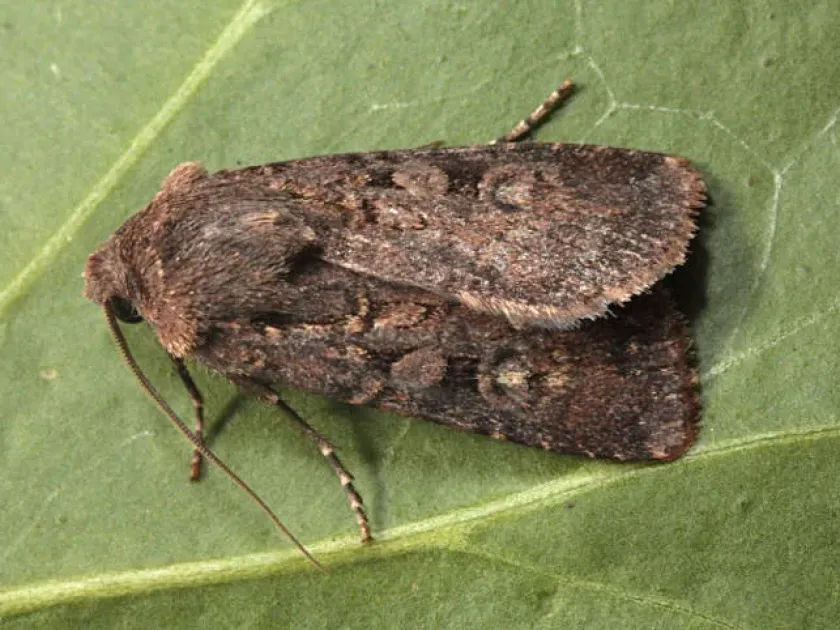
The Dark Arches (Euxoa nigricans) is a moth of the Noctuidae family. Adults typically have a wingspan ranging from 30 to 40 mm with dark, brownish-black forewings.
The larvae, known as cutworms, grow up to 40 mm in length. Their body is earthy grey or brown with a granular texture, allowing them to blend perfectly with soil.
Pupation occurs in a subterranean chamber made of soil. The pupa is reddish-brown, and the transformation stage is protected by a compact earthen cocoon.
The species completes one generation per year. Its life cycle is deeply tied to the soil environment, where both larval and pupal stages remain hidden.
The moth is a nocturnal flyer, which makes it less visible during the day, significantly complicating the monitoring of adult populations in open fields.
What it damages
This species is a polyphagous pest, meaning it attacks a wide range of crops including cereals, maize, beet, and various horticultural vegetables.
The primary damage is caused by late-instar larvae that feed at night. They chew through the base of young plant stems, causing the plant to collapse and die.
Large infestations can lead to significant thinning of crop stands, often appearing as patches of dying plants across the field during the early growth season.
Besides stems, larvae may target roots and root crops, making the plants highly susceptible to secondary pathogens, fungal diseases, and soil-borne infections.
Economic damage is most severe when larvae are present in high densities at the seedling stage, potentially forcing the need for reseeding entire sections.
When it appears
The flight period of adult moths usually begins in mid-summer, spanning from July to August, during which mating and egg-laying processes take place.
Eggs are typically deposited in soil or near weeds. After hatching, the young larvae feed on weeds before preparing for hibernation in deeper soil layers.
Overwintering takes place at the larval stage within the soil. As temperatures rise in spring, the larvae resume feeding, becoming a significant threat to crops.
Active feeding continues throughout the spring until the larvae reach maturity and initiate pupation in the soil to restart the annual cycle.
Environmental factors, particularly soil moisture and spring temperature, determine the rate of larval development and the duration of the critical feeding window.
Signs of infestation
The most common sign of infestation is the sudden wilting of seedlings in a field that is otherwise well-irrigated and managed for health.
Close observation of the ground near damaged plants often reveals slight soil disturbances or small pellets of frass left behind by the feeding cutworms.
Digging around the base of a damaged plant, just below the soil surface, usually uncovers the curled-up, greyish larva hiding from daylight.
Uneven crop establishment with localized dead spots is a classic indicator that soil-dwelling larvae have been active during the critical seedling growth period.
Monitoring the adult population using pheromone or light traps during the summer helps in predicting the potential pressure for the next season.
Control measures
Effective management begins with thorough soil cultivation, particularly autumn plowing, which exposes larvae to predators and unfavorable weather conditions.
Managing weed populations on field borders and within the fields is crucial, as weeds serve as essential host plants for larvae during the late summer.
Chemical control involving insecticide application should be performed in the evening when cutworms come to the surface, increasing the contact efficacy.
Biopesticides utilizing entomopathogenic fungi or specific bacteria are effective tools within an integrated pest management (IPM) framework.
Maintaining a regular scout schedule is essential to identify threshold levels and apply interventions before significant crop damage occurs across the farm.
Taxonomy
- Latin name
- Euxoa nigricans
- Order
- Lepidoptera (butterflies)
- Family
- Noctuidae
- EPPO code
- EUXONI
Discussion
No discussions yet — be the first.