
Dark-sided cutworm
Euxoa messoria
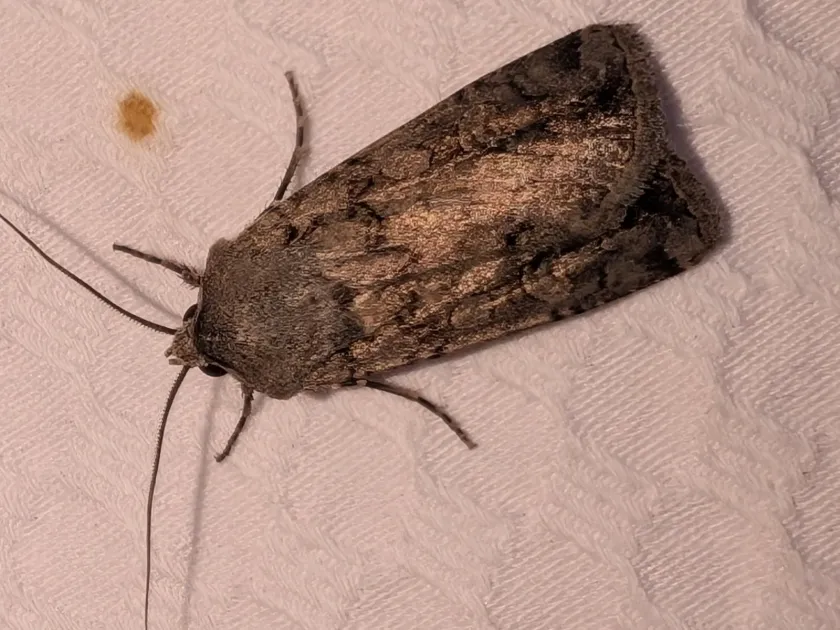
Description
How to identify
The dark-sided cutworm, scientifically known as Euxoa messoria, belongs to the Noctuidae family of the order Lepidoptera. Adult moths are medium-sized with grey-brown forewings featuring intricate, darker markings that allow them to blend into soil and bark surfaces.
The larvae are dull grey or brownish-grey caterpillars with a granular texture. They often feature a light-colored dorsal stripe and dark spots along the side of the body. When disturbed, these larvae typically curl into a tight ball, a characteristic behavior for many species in this genus.
What it damages
This species is a significant pest of various agricultural crops, including tobacco, vegetables, grains, and some ornamentals. It is particularly noted for its ability to devastate seedling stands in a short period of time.
Damage is exclusively caused by the larval stage, which feeds on the stems of young plants. By severing the stems at or just below the soil surface, the larvae cause immediate wilting and death, leading to significant stand reduction and potential crop failure.
When it appears
Euxoa messoria generally completes one generation per year. The overwintering stage typically involves eggs or early-instar larvae buried in the soil. Development resumes in the spring as soon as soil temperatures reach favorable levels.
Larval activity peaks during late spring and early summer when susceptible crops are at the tender seedling stage. By mid-summer, larvae reach maturity and burrow deeper into the soil to pupate, emerging as adults in late summer or autumn.
Signs of infestation
The primary symptom is the sudden wilting of young plants. Growers often observe that seedlings appear perfectly healthy one day and are lying severed on the ground the next, with the root system remaining intact in the soil.
Evidence of infestation includes small, irregular entry holes in the soil near the base of damaged plants. A nocturnal inspection of the field can reveal the larvae on the soil surface, actively seeking fresh plant material to feed upon.
Control measures
Management begins with cultural practices, such as the removal of weeds which serve as alternate hosts for young larvae. Deep tillage in the autumn or spring can disrupt pupation sites and expose larvae to environmental stresses and natural predators.
Chemical control can be implemented using targeted soil applications or surface spraying with insecticides during the evening hours when larvae are most active. Monitoring with pheromone traps for adult activity is recommended to time treatments effectively.
Taxonomy
- Latin name
- Euxoa messoria
- Order
- Lepidoptera (butterflies)
- Family
- Noctuidae
- EPPO code
- EUXOME
Discussion
No discussions yet — be the first.