
Icelandic dart moth
Euxoa islandica
Description
How to identify
The Icelandic dart moth (Euxoa islandica) belongs to the Noctuidae family, representing a group of soil-dwelling pests often referred to as cutworms due to their feeding behavior.
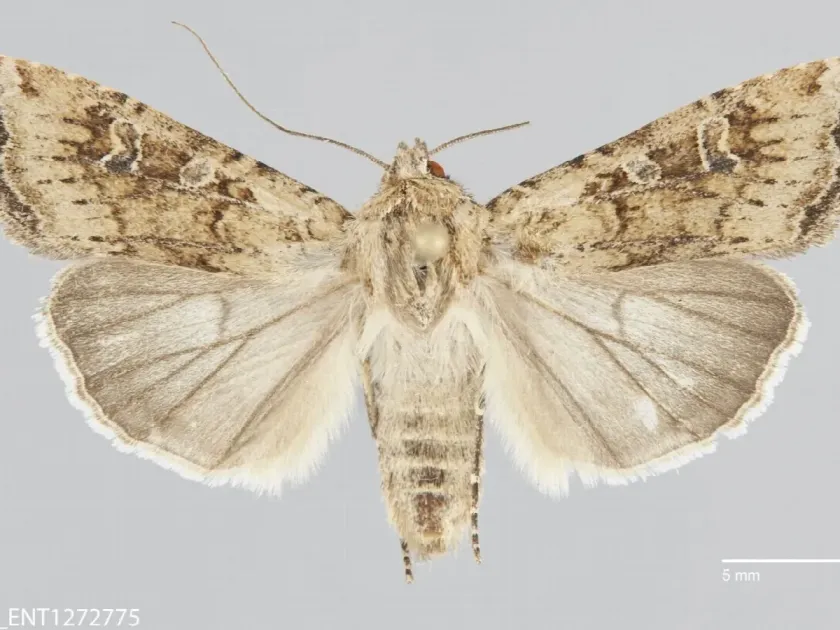
Adult moths exhibit cryptic coloration, usually shades of grey and brown, which provides excellent camouflage against soil and organic matter, making them hard to spot in field surveys.
The life cycle includes four distinct stages: egg, larva, pupa, and adult. The larval stage is the most critical in terms of agricultural impact, characterized by several instars.
These insects are highly adapted to colder climates, often overwintering as larvae or pupae within the soil, which enhances their survival rates across different growing seasons.
Identification of the larval stage is essential for timely intervention, as mature larvae cause the most damage to emerging seedlings during the spring growth phase.
What it damages
This pest affects a wide range of agricultural crops, including cereals, sunflowers, corn, and various vegetables, posing a serious threat to crop establishment.
The larvae are nocturnal and feed on the stems of young plants at or just below the soil surface, resulting in immediate wilting and death of the plant.
This feeding behavior creates patchy stands, reducing overall plant density and necessitating potential replanting if the population density reaches economic thresholds.
Beyond physical destruction, the damage caused by larvae creates entry points for secondary pathogens, potentially leading to root diseases and further crop stress.
- Severing of young seedling stems.
- Significant reduction in crop stand density.
- Lower yields due to premature plant death.
- Economic losses requiring mitigation efforts.
Signs of infestation
The primary sign of infestation is the sudden wilting of individual plants or small groups of plants, which remains unexplained by water deficiency or other factors.
Closer examination of the base of the wilted plants usually reveals small entry holes in the soil, which serve as access points for the larvae during their night-time feeding activity.
The presence of larval frass on the soil surface near the affected plants is a definitive indicator of an active population inhabiting the soil profile.
In cases of severe infestation, patches of dead or dying seedlings will appear throughout the field, clearly showing the pattern of the larvae moving between host plants.
Observation of adult moth activity using light traps provides an early warning system, allowing agronomists to predict the peak egg-laying period and prepare accordingly.
Control measures
Deep autumn plowing is a fundamental mechanical control method that exposes overwintering pupae and larvae to predators and harsh environmental conditions.
Weed management is critical, as wild host plants provide essential sustenance for early-stage larvae before the main crops emerge in the field.
Chemical control involving systemic or contact insecticides should be applied during evening hours to target the larvae when they are actively feeding on the surface.
Integrated Pest Management (IPM) incorporates biological agents, such as beneficial insects or microbial pesticides, to manage populations without relying solely on synthetic chemicals.
Regular field scouting and the use of monitoring tools like pheromone traps enable precision in timing applications, thereby reducing pesticide usage and environmental impact.
Taxonomy
- Latin name
- Euxoa islandica
- Order
- Lepidoptera (butterflies)
- Family
- Noctuidae
- EPPO code
- EUXOIS
Discussion
No discussions yet — be the first.