
Euxoa excellens
Euxoa excellens
Description
How to identify
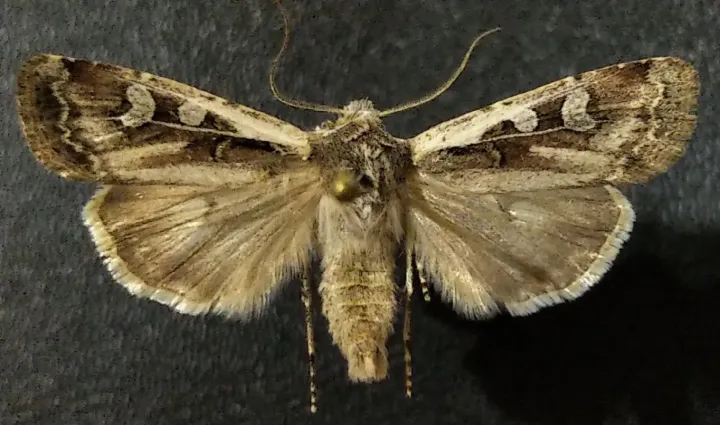
Euxoa excellens is a species of moth belonging to the Noctuidae family within the order Lepidoptera, commonly recognized as a type of cutworm.
The adult moth features a robust body with a wingspan typically ranging from 35 to 45 mm, adapted for night-time activity and nocturnal migration.
Its forewings display cryptic coloration, usually varying shades of grey and brown with distinct wavy lines, serving as camouflage against bark or soil surfaces.
The larvae, known as cutworms, are smooth-skinned with colors ranging from earthy grey to brownish, allowing them to blend seamlessly into the soil environment.
Pupation occurs within a subterranean earthen cell, where the pupa, appearing as a glossy reddish-brown object, remains until the moth emerges.
What it damages
The primary damage caused by Euxoa excellens occurs at the larval stage, as they feed on the subterranean parts and stems of young host plants.
Crops such as maize, potatoes, sugar beets, and various cereals are highly susceptible, especially when the seedlings are in their early growth stages.
Larvae often sever the plant stem at or just below the soil line, leading to the sudden wilting and eventual death of the entire plant structure.
Heavy infestations can lead to significant thinning of crop stands, requiring replanting and causing substantial economic losses for the farmer.
Beyond lethal stem cutting, larvae may feed on roots, which weakens the plant's overall vigor and makes it susceptible to secondary pathogens and wilting diseases.
When it appears
The life cycle of Euxoa excellens is generally univoltine, meaning it typically completes one generation per year under standard field conditions.
Overwintering takes place primarily in the larval stage, with the insects burying themselves deep into the soil to survive harsh winter temperatures.
With the arrival of spring and rising soil temperatures, the larvae move to the upper soil layers to resume feeding on germinating seeds and young seedlings.
Pupation usually occurs during the late spring or early summer, followed by the emergence of adults who mate and lay eggs throughout the summer months.
The peak activity of the larvae in the field aligns closely with the early planting season of main row crops, creating a high risk for early-stage damage.
Signs of infestation
The most noticeable sign of a Euxoa excellens infestation is the presence of wilting or toppled plants in sections of the field without obvious leaf damage.
Closer examination of the plant base reveals characteristic ragged feeding marks or a clean cut near the soil surface, indicating cutworm presence.
Searching the soil within a 5–10 cm radius of a damaged plant, especially during the early morning hours, often reveals the curled-up larvae hiding in the dirt.
Patches of missing plants or irregular gaps in crop rows suggest a localized colony of larvae moving through the field during the night.
Presence of excrement or small holes in the soil near the stems also serves as an indicator of recent larval activity and feeding patterns.
Control measures
Integrated pest management (IPM) for Euxoa excellens focuses on cultural practices that disrupt the life cycle of the pest before significant damage occurs.
Deep autumn plowing is a highly recommended practice, as it exposes overwintering larvae to adverse weather and natural predators like birds.
Effective weed management is crucial throughout the season, as dense weed patches provide ideal food sources and sheltered egg-laying sites for adult moths.
Chemical control measures, such as soil-applied insecticides or seed treatments, are necessary when pest populations exceed the economic injury threshold.
- Monitoring adult activity using pheromone traps to time preventive applications.
- Encouraging natural biological control agents and beneficial insects in the field.
- Ensuring optimal planting depth and soil conditions to promote rapid seedling emergence.
- Applying granular or liquid insecticides as a rescue treatment if outbreaks occur.
Taxonomy
- Latin name
- Euxoa excellens
- Order
- Lepidoptera (butterflies)
- Family
- Noctuidae
- EPPO code
- EUXOEX
Discussion
No discussions yet — be the first.