
Coast Dart
Euxoa cursoria
Description
How to identify
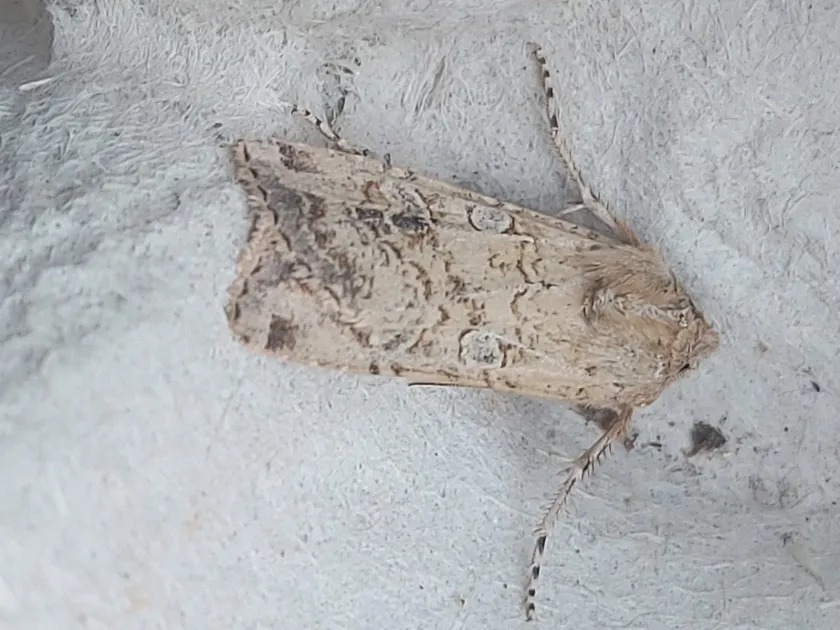
The Coast Dart (Euxoa cursoria) is a moth belonging to the family Noctuidae. The adult moth has a wingspan of 30 to 40 mm, with forewings varying from grey to sandy-brown, featuring intricate patterns that allow for excellent camouflage in sandy environments.
The larvae, known as cutworms, reach a length of up to 40 mm. They are typically earth-coloured or greyish-brown with a smooth, velvety texture. These larvae are specialized for living in loose, sandy substrates, which is essential for their development.
The life cycle involves complete metamorphosis, including egg, larval, pupal, and adult stages. The pupae are formed in soil cells, usually buried 10 to 15 cm deep, providing protection against environmental fluctuations.
This species is widely distributed in areas with sandy soils, including coastal regions and dry grasslands. They are highly adapted to environments where they can easily burrow into the ground during the day.
Development is heavily influenced by soil moisture and temperature. Stable, sandy environments provide the perfect habitat for the overwintering of eggs, which is the primary survival stage for the species.
What it damages
The Coast Dart larvae are polyphagous, meaning they feed on a wide variety of plants. They primarily act as cutworms, severing the stems of young plants just above or below the soil surface.
Key crops at risk include cereal grains, root vegetables, and various legumes. Young seedlings are particularly vulnerable, and even a small number of larvae can cause significant thinning of a crop field.
The damage is primarily nocturnal. The larvae emerge from the soil at night to feed, which makes them difficult to monitor during daylight hours without digging up the soil around damaged plants.
High infestation levels result in patchy fields with large areas of wilting or dead plants. This damage is especially severe in the spring when plants are young and have limited ability to recover from stem severance.
In addition to surface damage, the larvae may feed on roots and underground storage organs of crops like potatoes, which can introduce secondary infections and promote decay throughout the harvest.
When it appears
Adult moths are typically active from mid-summer through late summer. During this time, they are nocturnal and focus on mating and searching for suitable sites to deposit eggs.
Egg-laying preference is for dry, loose soil, especially in areas with sparse vegetation or field edges. A single female can lay hundreds of eggs, ensuring the persistence of the population.
Larval activity peaks in the spring as temperatures rise, matching the timing of seedling emergence for many agricultural crops. This is the most crucial period for field monitoring.
Environmental conditions such as drought can influence the larvae's movement. They may travel longer distances through the soil looking for moisture or healthy plant tissue when topsoil is dry.
After the larval stage is complete, the caterpillars move deeper into the soil to pupate. The duration of the pupal stage varies depending on climatic conditions, often lasting several weeks before the emergence of adults.
Signs of infestation
The most obvious sign of an infestation is the presence of wilted or severed seedlings that appear perfectly healthy at the base but are easily detached from the root system.
Small exit holes on the soil surface around plants are clear indicators that larvae are present in the soil. These holes are usually found near the root zone of the damaged plants.
Monitoring for adults can be done using light traps or pheromone traps. A surge in trap catches usually indicates the onset of the breeding season and a need to watch for future larval generations.
Presence of larval frass, which appears as small dark pellets, in the root zone is a definitive sign of feeding activity. Careful inspection of the top few centimetres of soil often reveals the larvae.
Localized patches of dying plants that gradually spread are characteristic of a growing population. These patches should be marked and treated before the infestation covers the entire field.
Control measures
Cultural control, such as autumn ploughing, is the most effective management tool. It exposes the pupae to predators and adverse weather, significantly reducing the overwintering population.
Effective weed management is essential. Since young larvae often start by feeding on weeds before moving to crops, maintaining clean fields is a primary defence against population buildup.
Chemical control should be applied in the evening, coinciding with the peak nocturnal activity of the larvae. Products with contact and ingestion activity are preferred for better control of these soil-dwelling pests.
Integrated pest management (IPM) using pheromone monitoring allows growers to target their insecticide applications only when necessary, which preserves beneficial insects and reduces overall chemical usage.
Biological controls, such as the release of egg parasitoids (e.g., Trichogramma species), can be highly effective in reducing the total number of larvae if timed correctly with the moth's egg-laying period.
Taxonomy
- Latin name
- Euxoa cursoria
- Order
- Lepidoptera (butterflies)
- Family
- Noctuidae
- EPPO code
- EUXOCU
Discussion
No discussions yet — be the first.