
Conspicuous cutworm
Euxoa conspicua
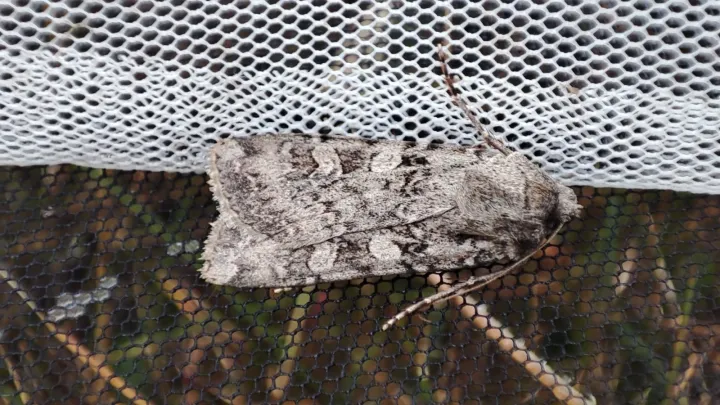
Description
How to identify
The Conspicuous cutworm (Euxoa conspicua) is a moth belonging to the Noctuidae family. The adult moth features a wingspan of 35-40 mm and exhibits a cryptic color pattern in shades of grey and brown, providing excellent camouflage.
The larvae, known as cutworms, are the primary damaging stage. They are typically earth-grey in color, smooth-skinned, and reach lengths of up to 45 mm when fully developed.
Their life cycle includes egg, six larval stages (instars), pupa, and the adult moth stage. These insects usually overwinter as late-stage larvae deep within the soil profile.
Pupation occurs in the spring, with the insects forming earthen cells in the soil. This phase typically lasts several weeks before the emergence of the adults.
Adult moths are nocturnal and active during the night, feeding on nectar. While adults do not damage crops, they are responsible for laying the eggs that lead to infestations.
What it damages
The Conspicuous cutworm is a polyphagous pest, meaning it attacks a wide range of agricultural crops, including cereals, corn, sugar beets, and sunflowers.
Young larvae initially feed on the undersides of leaves, causing minor damage that often goes unnoticed until the population density reaches significant levels.
As the larvae reach later instars, they exhibit the characteristic "cutworm" behavior by severing the stems of young plants just at or below the soil surface.
This damage leads to rapid wilting and plant death, resulting in sparse plant stands and significant yield losses if left unmanaged.
Under heavy infestation conditions, the cutworms can clear large patches of crops, making re-seeding necessary and increasing overall production costs.
When it appears
Pest activity typically begins in early spring, as rising soil temperatures trigger the resumption of larval feeding after the winter dormant period.
The flight of adult moths usually takes place between late spring and early summer, coinciding with the flowering of various weed species.
Eggs are deposited in the soil or on lower leaves of host plants, providing the larvae with an immediate food source upon hatching.
While larval development continues throughout the warmer months, peak damage to crops is usually seen during the early vegetative growth stages of the plants.
As autumn approaches, the larvae seek deeper layers of the soil to prepare for overwintering, completing their annual biological cycle.
Signs of infestation
The most prominent sign of an infestation is the sudden wilting of seedlings in the field, which appear healthy until they are cut at the base.
Small holes or notches in the leaves of younger plants are early indicators that larvae are present and feeding in the vicinity.
Searching the soil around the base of damaged plants usually reveals the presence of larvae, which typically curl into a characteristic "C" shape when disturbed.
Fine, granular frass (excrement) found around the base of the plants is a clear diagnostic sign of active feeding by the cutworm larvae.
- Wilting and falling of young seedlings.
- Stem damage at the soil surface.
- Leaf feeding symptoms (windowing or holes).
- Presence of larvae in the soil around roots.
Control measures
Effective management begins with thorough soil cultivation, such as deep autumn plowing, which exposes larvae and pupae to predators and harsh conditions.
Weed control is essential, as many weed species serve as host plants for egg-laying and early-stage larval development before crops are established.
Biological control methods, including the use of pheromone traps for monitoring and the encouragement of natural predators, help maintain low pest populations.
Chemical control involving systemic or contact insecticides is recommended when larval threshold levels are exceeded, typically applied in the evening.
Precision farming techniques, such as targeted insecticide application, can minimize environmental impact while effectively controlling hot spots within the field.
Taxonomy
- Latin name
- Euxoa conspicua
- Order
- Lepidoptera (butterflies)
- Family
- Noctuidae
- EPPO code
- EUXOCO
Discussion
No discussions yet — be the first.