
Euxoa aquilina
Euxoa aquilina
Description
How to identify
Euxoa aquilina is a moth species belonging to the Noctuidae family within the order Lepidoptera. It is recognized as a significant agricultural pest that affects a wide range of crops globally.
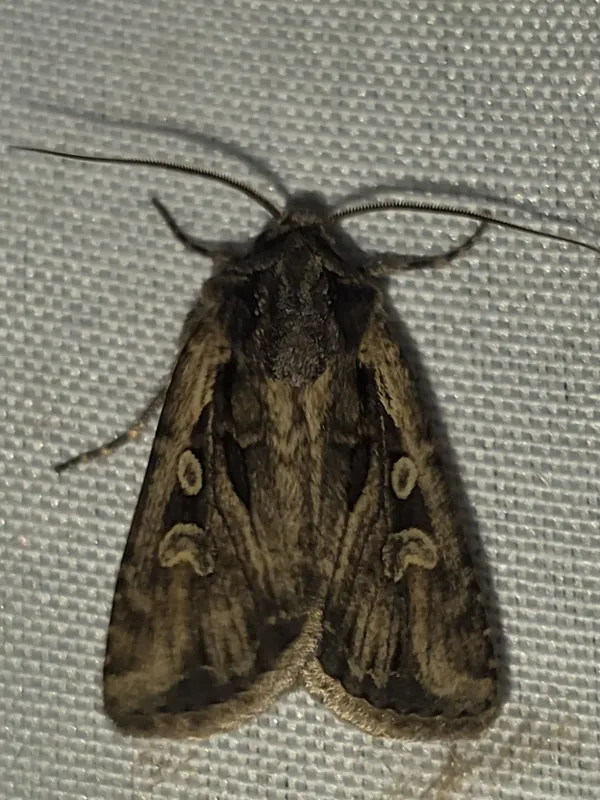
The adult moth has a wingspan of approximately 40–45 mm. The forewings display a varied color palette, ranging from greyish-brown to dark, almost black shades, marked with distinct lines and spots.
The larvae, commonly known as cutworms, reach a length of 40–50 mm. They possess a characteristic earthy-grey color with a darker longitudinal stripe on the dorsal side of the body.
The pupae are typically brownish and have a polished, shiny surface. They dwell within the soil, usually at a depth of 5 to 10 cm, protected by a temporary soil chamber or cocoon.
This species exhibits a life cycle strongly adapted to temperate climates. Development is heavily influenced by soil moisture levels and the accumulation of heat units throughout the season.
What it damages
Euxoa aquilina is highly polyphagous, meaning it feeds on a vast array of host plants. Major affected crops include cereals, maize, sugar beet, sunflower, and various vegetable species.
Early-stage larvae typically feed on the underside of foliage, creating irregular holes and consuming leaf tissue. As they mature, their feeding habits shift to a more destructive pattern.
The most severe damage occurs when larvae sever the stems of young plants just below or at the soil surface. This leads to rapid wilting and the death of entire plants overnight.
In cereal crops, cutworm activity is particularly devastating during the emergence phase. The loss of plants in early stages can significantly reduce stand density and overall yield potential.
In dry conditions, the impact is intensified as plants lack the vigor for compensatory growth, and cutworms move more actively through the soil profile to reach succulent root tissues.
When it appears
Adult moths emerge in late spring and remain active throughout the summer. They are nocturnal insects, preferring to mate and lay eggs during the night in sheltered areas.
Eggs hatch within 1–2 weeks, and the young larvae begin feeding on weeds or low-growing vegetation. The larval stage spans several months, passing through multiple molting phases.
Overwintering occurs in the larval stage, primarily in the late instars. The larvae bury themselves deep into the soil profile to avoid freezing temperatures during the winter months.
As spring approaches, the overwintered larvae move to the upper soil layers to resume feeding. This coincides with the emergence of young crop shoots, making them highly vulnerable.
Pupation takes place in the soil during late spring. The entire cycle, from egg to adult, is completed in a single year, though seasonal variations can impact the exact timing.
Signs of infestation
The primary visual indicator of an infestation is the presence of patches where plants are wilting and dying. Affected plants often fall over easily because their stems have been gnawed.
Digging around the base of a damaged plant usually reveals the culprit. Cutworms are often found curled into a tight coil within the loose soil near the roots of the damaged plant.
Fields with high weed density often serve as primary nesting sites. The presence of common field weeds provides both a food source for young larvae and camouflage for egg-laying moths.
Patches of sparse or missing plants are common signs of established populations. These damaged areas often increase in size if weather conditions remain dry and favorable for the larvae.
Monitoring using pheromone traps is the most reliable way to track adult activity and predict potential population surges before significant larval damage occurs.
Control measures
Cultural control is paramount, specifically autumn plowing. This disrupts the overwintering chambers, exposing larvae and pupae to predators, birds, and harsh weather conditions.
Maintaining a weed-free field is critical. Eliminating alternate host plants reduces the moth population's ability to successfully establish and lay eggs during the early season.
Chemical control is effective when timed correctly, usually during the night when the larvae are actively feeding on the surface of the soil or on plants.
Biological controls, including the release of parasitic wasps like Trichogramma, are used to manage populations by targeting the egg stage and preventing larval emergence.
Integrated Pest Management (IPM) practices, including crop rotation and regular field scouting, are essential for keeping cutworm populations below the economic injury level.
Taxonomy
- Latin name
- Euxoa aquilina
- Order
- Lepidoptera (butterflies)
- Family
- Noctuidae
- EPPO code
- EUXOAQ
Discussion
No discussions yet — be the first.