
Cutworms
Euxoa
Description
How to identify
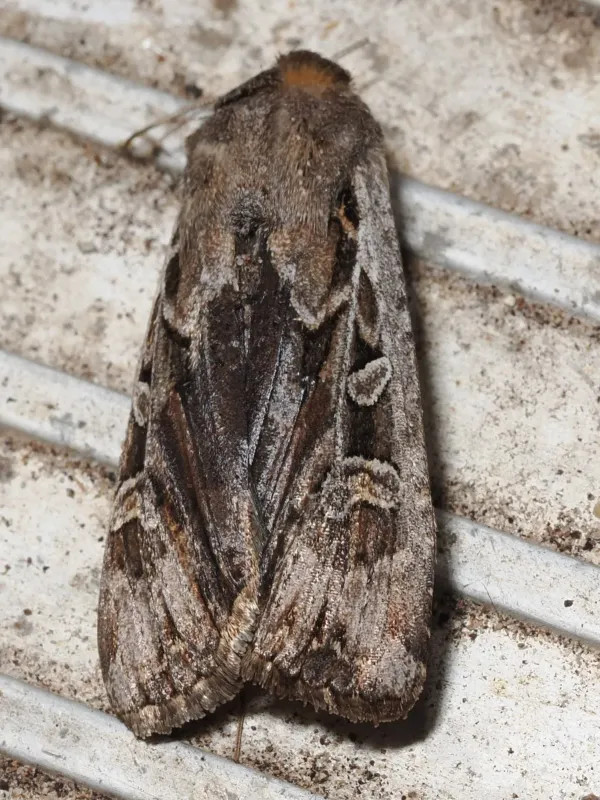
The genus Euxoa belongs to the family Noctuidae, order Lepidoptera. These nocturnal moths have a wingspan of up to 40 mm, with cryptic coloration ranging from light gray to dark brown, which helps them blend perfectly with the soil or bark surfaces during the day.
The larvae, commonly known as cutworms, have a robust, cylindrical body growing up to 40–50 mm. Their appearance is generally dull, with earth-toned colors, making them highly camouflaged within the topsoil or organic debris where they reside.
Their life cycle includes complete metamorphosis. Pupation typically occurs in the soil within a small earthen cell, constructed by the mature larva at a depth of 10–15 centimeters, providing a protective environment for the transformation process.
Most species in this genus complete one generation per year. Winter is usually spent as an egg in the soil or as a partially developed larva, which allows them to withstand various climatic conditions and emerge early in the season.
Identification often relies on the observation of larval behavior and the specific damage pattern they leave behind. Due to their secretive, subterranean nature, direct observation requires careful examination of the soil around affected plants.
What it damages
Euxoa larvae are significant polyphagous pests, capable of damaging a wide array of crops including winter cereals, corn, sunflower, sugar beets, and potatoes. They are especially notorious for their feeding habits during early growth stages.
The primary damage occurs when larvae sever the stems of young plants at or just below the soil surface, causing the plants to wilt and die suddenly. This often leads to severe stand reduction and necessitates replanting large field sections.
In later stages of plant development, the larvae may feed on roots or tunnel into tubers and taproots. Such physical damage not only reduces yield directly but also invites secondary infections from soil-borne pathogens and fungi.
Young seedlings are particularly vulnerable during the spring season when overwintering larvae resume feeding. Even a relatively low density of larvae can cause widespread devastation in young, tender crops during favorable weather conditions.
Economic impact is highly dependent on crop density and environmental factors. Monitoring the fields during the emergence of seedlings is crucial, as the damage can escalate rapidly before it becomes noticeable to the grower.
When it appears
The flight period for Euxoa moths generally occurs from mid-summer through autumn. The adults are active during the night, feeding on floral nectar and ovipositing their eggs into loose, moist soil or onto dense weed cover.
Overwintering strategies vary, but most species survive as eggs deposited in the soil or as larvae in a state of diapause. This enables them to survive harsh winters and synchronize their emergence with the appearance of spring crops.
Springtime activity is the most critical phase for agriculture. As temperatures rise, larvae begin to feed aggressively, which corresponds with the emergence of young sprouts and the tillering stage of cereals.
By mid-summer, larvae stop feeding and descend deeper into the soil to pupate. The duration of this pupal stage is influenced by soil moisture and temperature, eventually leading to the emergence of the next generation of moths.
Environmental conditions, particularly moisture levels during the egg-laying period, significantly dictate the population size for the following year. Drought can lead to high mortality rates for first-instar larvae, while mild, moist autumns often favor pest outbreaks.
Signs of infestation
The most prominent sign of a cutworm infestation is the appearance of wilted plants scattered throughout the field. Upon inspection, the stem will appear neatly cut or gnawed near the base, often with the plant toppled over.
If you suspect an infestation, gently excavate the soil around the base of the affected plant. You will often find the larva curled into a tight "C" shape, which is a classic diagnostic behavior for many Euxoa species.
Thinning or patchy spots in a field that occur shortly after emergence can also indicate cutworm damage. While other pests might feed on leaves, the sudden loss of entire seedlings is highly characteristic of cutworms.
Evidence of larval activity can also be seen in the form of small piles of frass (excrement) around the base of the plant. During nighttime or after heavy rainfall, larvae may move onto the soil surface, making them visible to nocturnal monitoring.
The presence of predators, such as ground beetles, can serve as a biological indicator of larval presence. However, reliance on natural enemies is rarely sufficient to prevent economic damage in high-density infestation scenarios.
Control measures
The most effective strategy against Euxoa is deep autumn plowing. This mechanical disruption brings larvae and pupae to the surface, exposing them to predators, desiccation, and freezing temperatures, which drastically reduces the population for the next season.
Weed management is a fundamental preventive measure. Since these moths prefer laying eggs on weedy fields, maintaining clean fallows and controlling weeds along field borders is essential for disrupting the pest's life cycle.
Chemical control involving insecticides is most effective when applied in the evening. As the larvae are nocturnal, applying treatments when they are active on the surface ensures better contact and faster knockdown.
Farming operations, such as inter-row cultivation, can help reduce larval numbers by disturbing their habitat and exposing them to natural enemies, especially during the early stages of larval development.
- Rotate susceptible crops with non-host varieties.
- Use high-quality insecticidal seed treatments for early protection.
- Monitor moth flights using pheromone traps to time treatments.
- Apply microbial insecticides, such as Bacillus thuringiensis, when larvae are small.
Taxonomy
- Latin name
- Euxoa
- Order
- Lepidoptera (butterflies)
- Family
- Noctuidae
- EPPO code
- EUXOSP
Discussion
No discussions yet — be the first.