
Eurydice pulchra
Eurydice pulchra
Description
How to identify
Eurydice pulchra is a species of isopod crustacean belonging to the family Cirolanidae, commonly found in sandy intertidal habitats.
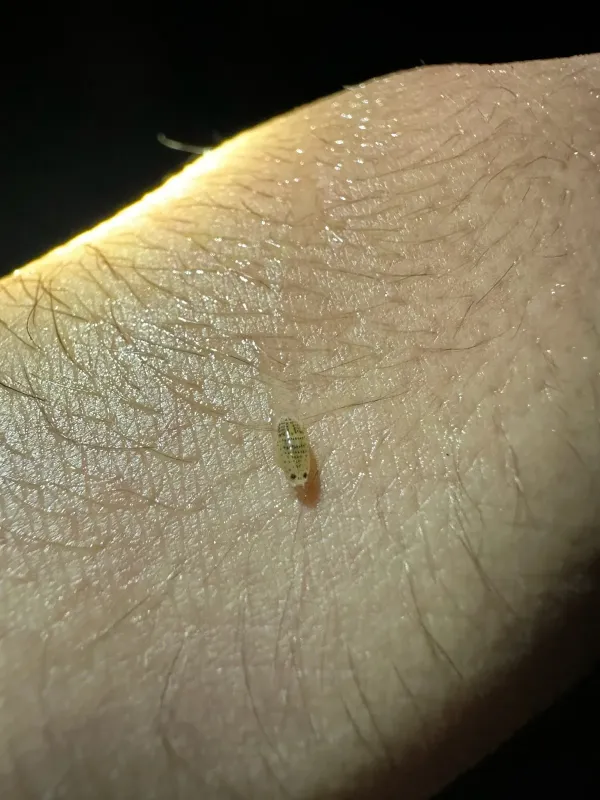
The organism is characterized by an elongated, streamlined body, optimized for rapid movement through interstitial spaces in wet sand.
Adults typically reach a length of approximately 7 to 8 mm, often displaying a translucent or pale greyish coloration with distinct mottled patterns.
These isopods possess well-developed swimming appendages and specialized mouthparts, enabling them to scavenge effectively in dynamic tidal zones.
Identification is best achieved by sifting wet sand during low tide or observing swarming behavior in the water column during high tide.
What it damages
Eurydice pulchra is not considered an agricultural pest, as it strictly inhabits marine and brackish coastal environments far from commercial crops.
Potential damage is restricted to marine vegetation and specific shoreline flora, where the isopods may occasionally feed on sensitive plant tissues.
In highly specific aquaculture or coastal restoration projects, high concentrations of these crustaceans can cause minor surface grazing on young seedlings.
They generally function as scavengers, consuming decaying organic matter, which contributes positively to the nutrient cycling of the coastal beach zone.
Overall, they are regarded as an integral component of the marine food web rather than a destructive organism requiring mitigation.
When it appears
Activity levels of Eurydice pulchra are heavily governed by seasonal temperature fluctuations and tidal cycles in their native environment.
They are most active during the warmer spring and summer months when metabolic rates are high and reproductive activities peak.
During the winter, populations move into deeper layers of the sand or migrate offshore to escape lower water temperatures and environmental instability.
Their daily behavior is strictly tied to lunar phases, which dictate the extent of the intertidal zone they colonize throughout the month.
Environmental stability, particularly sand moisture and grain size, remains the primary year-round requirement for maintaining their population.
Signs of infestation
The primary sign of their presence is the appearance of small, transient holes in the sand after the tide retreats, indicating where they burrowed.
High population densities can be detected by examining the surface of the intertidal zone, where visible movement occurs just beneath the sand layer.
Sampling via sieving techniques is the standard method for ecological surveys to determine the population distribution across the beach.
Night-time observations using artificial light often reveal swarms of individuals as they emerge from the sand to feed in the incoming tide.
Grazing marks on coastal plants, though rare, appear as microscopic pits or minor epidermal damage on the stems and leaves.
Control measures
Due to their ecological role, there is no formal agricultural control strategy developed for Eurydice pulchra in conventional settings.
Mechanical barriers, such as fine-mesh netting, are the most effective way to prevent localized damage to sensitive marine plant cultivation areas.
Maintaining a clean habitat by removing excess decomposing organic matter can reduce local population spikes by limiting their primary food source.
Conservation of natural predators, such as small fish and shorebirds, serves as the most effective biological management for these isopods.
The use of chemical pesticides is strictly discouraged to avoid irreversible contamination of the fragile intertidal marine ecosystem.
Taxonomy
- Latin name
- Eurydice pulchra
- Family
- Cirolanidae
- EPPO code
- EWRYPU
Discussion
No discussions yet — be the first.