
Satellite moth
Eupsilia transversa
Description
How to identify
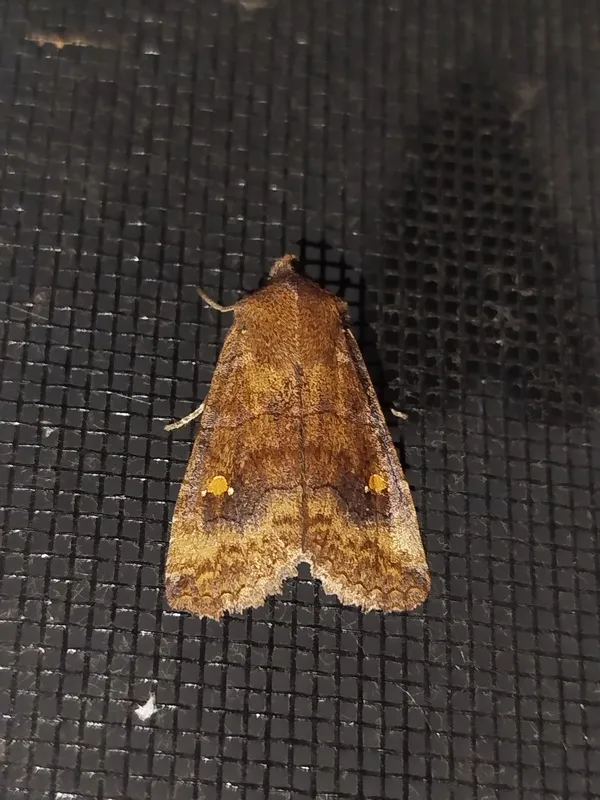
The Satellite moth (Eupsilia transversa) is a moth of the family Noctuidae. It is a common insect across Europe and parts of Asia, known for its cryptic appearance.
The forewings are brown with a pattern that mimics dead leaves, allowing the moth to blend perfectly into its surroundings during the resting phase.
Larvae are typically greyish-brown with white spots along their bodies, often growing up to 40 mm in length during their developmental stages.
Unlike many other moths, the Satellite moth overwinters in its adult stage, hiding under bark or in thick layers of leaf litter during cold months.
Adult moths are quite hardy and emerge early in the spring, often when temperatures are barely above freezing, to begin their feeding and mating cycle.
What it damages
The primary damage is caused by the caterpillars, which feed aggressively on the buds and early leaves of various fruit and forest trees.
Common hosts include apple, pear, plum, and cherry trees. The caterpillars are particularly destructive during the critical bud-burst stage.
When food is scarce, they may feed on young blossoms and flower buds, significantly reducing the potential yield of the affected orchard.
While the initial damage is localized to buds, in high-density populations, they can strip large portions of a branch, affecting the tree's health.
This early-season feeding causes the plant to expend energy on regrowing foliage, leading to delayed development and overall stress for the tree.
When it appears
The annual cycle begins with adults emerging in late winter or early spring, typically starting in March, to mate and lay eggs.
The larval stage occurs between April and June. During this time, the caterpillars are most active and responsible for the majority of agricultural damage.
By mid-summer, the larvae descend to the ground and pupate in the soil, where they remain dormant during the heat of the summer months.
A new generation of adults emerges in late autumn, around October or November, to prepare for their winter hibernation.
The species completes one generation per year, with the adult phase lasting for a significant portion of the annual biological calendar.
Signs of infestation
Visible signs of infestation include hollowed-out buds or buds that show ragged, torn edges as if they have been partially consumed.
Small, dark fecal pellets left on the leaves or stems are a clear indication of feeding activity in the upper canopy of the trees.
Stunted growth or complete failure of blossoms to develop into fruits are common indicators that the buds were compromised by larvae earlier in the season.
If you inspect the tree at night with a flashlight, you may spot the caterpillars themselves, as they prefer to feed after sunset.
Significant webbing or slight skeletonization of the emerging leaves near the feeding sites is often associated with these larvae.
Control measures
Sanitation is key; clearing leaf litter and pruning dead bark removes the primary overwintering sites for the adult moths.
Cultivating the soil around the base of the trees during the pupation period can expose pupae to predators and environmental stress.
Early season application of approved insecticides can effectively target young larvae before they cause widespread damage to the buds.
Biological control agents, such as specific viral or bacterial sprays, are effective when applied at the first signs of larval emergence.
Pheromone traps are excellent tools for monitoring the population levels of adult moths and determining the optimal timing for protective measures.
Taxonomy
- Latin name
- Eupsilia transversa
- Order
- Lepidoptera (butterflies)
- Family
- Noctuidae
- EPPO code
- EUPSSA
Discussion
No discussions yet — be the first.