
Eupsilia
Eupsilia
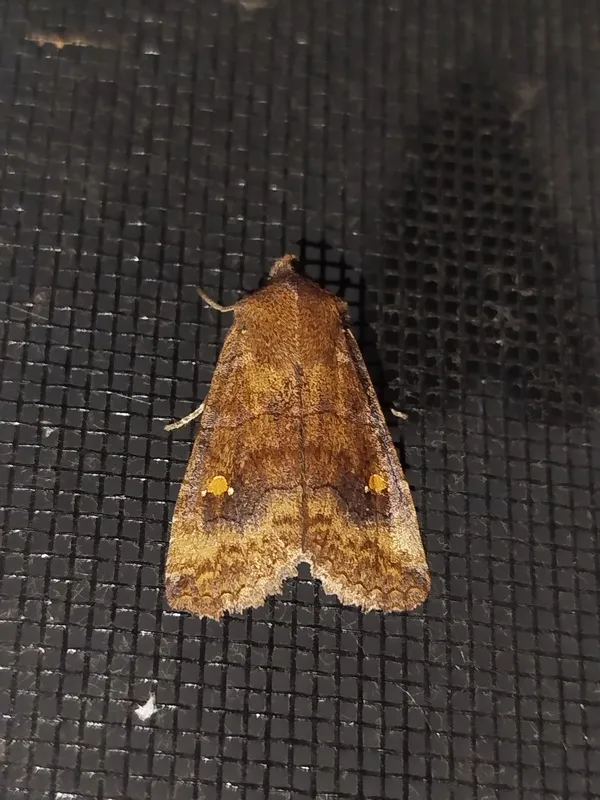
Description
How to identify
Eupsilia is a genus of moths belonging to the family Noctuidae, often referred to as winter moths due to their unique life cycle. These are nocturnal insects with a wingspan of approximately 30-40 mm, exhibiting cryptic coloration that provides excellent camouflage against tree bark.
The adult moths have a robust body covered in fine hairs, allowing them to remain active in cool temperatures. Their wing patterns often display shades of brown, gray, or reddish-brown, effectively mimicking dead leaves or weathered wood.
The larval stage, commonly known as a caterpillar, undergoes several instars. Early instars are smaller and lighter in color, while later stages become significantly larger, reaching sizes that can inflict substantial damage to plant tissues.
Eupsilia species typically have a univoltine life cycle, meaning they produce only one generation per year. Unlike many other moths, they overwinter as adults, finding shelter in bark crevices, hollows, or leaf litter.
Their survival strategy relies on their ability to withstand winter frosts, allowing them to emerge from hibernation early in the spring, often coinciding with the first signs of plant development.
What it damages
These moths are recognized as significant pests in orchards, primarily targeting pome and stone fruit trees such as apples, pears, cherries, and plums. Their main feeding activity is directed towards the swelling buds during early spring.
Larvae feed by boring into the buds, consuming the inner reproductive tissues, which leads to the immediate destruction of flowers and future fruit potential. A single larva can destroy multiple buds in a short time.
Severe infestations result in heavy bud drop and the appearance of leafless twigs, which significantly reduces the photosynthetic area and weakens the overall vitality of the fruit tree.
Beyond buds, the caterpillars may also consume young leaves and developing shoots, causing stunted growth and increased susceptibility to other environmental stressors or diseases.
In nurseries or young plantations, the damage caused by Eupsilia can be particularly detrimental, affecting the structural formation of saplings and leading to long-term productivity losses.
When it appears
Adult moths emerge very early in the year, often in February or March, once temperatures rise above the freezing point. They become active at night, mating and searching for suitable sites to deposit eggs.
Larval emergence is highly synchronized with the budding phase of host trees. This ensures that the caterpillars have immediate access to highly nutritious plant material as soon as they hatch.
The larval feeding period lasts for several weeks throughout the spring. Once development is complete, the caterpillars migrate into the soil to pupate, spending the summer months in a dormant state.
New adults appear in the autumn, usually around September or October. During this time, they feed on plant secretions and aphid honeydew to build up energy reserves before entering their winter hibernation period.
Monitoring the adult population in the autumn via light traps is crucial for orchard managers, as it helps forecast potential larval pressure for the upcoming spring season.
Signs of infestation
The most distinctive sign of Eupsilia infestation is the presence of hollowed-out buds with small entry holes. These buds often wither and turn brown shortly after the larvae have moved to the next feeding site.
Frass (larval excrement) found at the base of branches or near bud clusters is a clear indication that caterpillars are present in the canopy, even if they remain hidden during daylight hours.
Massive bud drop in early spring, combined with the presence of "empty" twigs, provides strong evidence of an active pest problem that requires immediate diagnostic action.
During the night, using a flashlight to inspect tree branches can reveal the nocturnal larvae as they emerge from their diurnal hiding spots to feed on the foliage.
The presence of adult moths in autumn can be confirmed using pheromone or light traps. Increased trap counts during this season strongly correlate with higher pest incidence in the following spring.
Control measures
Effective management of Eupsilia requires a multipronged approach that integrates cultural, biological, and chemical methods throughout the insect’s life cycle.
- Cultivating the soil under trees in the autumn to disturb and destroy pupae residing in the upper soil layers.
- Applying sticky bands to tree trunks in early spring to prevent larvae from climbing into the canopy.
- Using biological insecticides, such as Bacillus thuringiensis, during the early larval development stage.
- Applying registered chemical insecticides specifically at the bud-burst stage, while ensuring safety for beneficial pollinators.
- Removing debris and loose bark from older trees to reduce available overwintering niches for the moths.
Chemical control should be applied judiciously, focusing on the period before the buds open to flowers, thereby minimizing the impact on non-target species such as honeybees.
Regular orchard hygiene, including weed control and the removal of secondary hosts, helps minimize the environment suitable for the adult stage of the pest.
Integrating these strategies into a broader IPM (Integrated Pest Management) plan is the most sustainable way to keep Eupsilia populations below the economic threshold.
Taxonomy
- Latin name
- Eupsilia
- Order
- Lepidoptera (butterflies)
- Family
- Noctuidae
- EPPO code
- EUPSSP
Discussion
No discussions yet — be the first.