
Euplexia benesimilis
Euplexia benesimilis
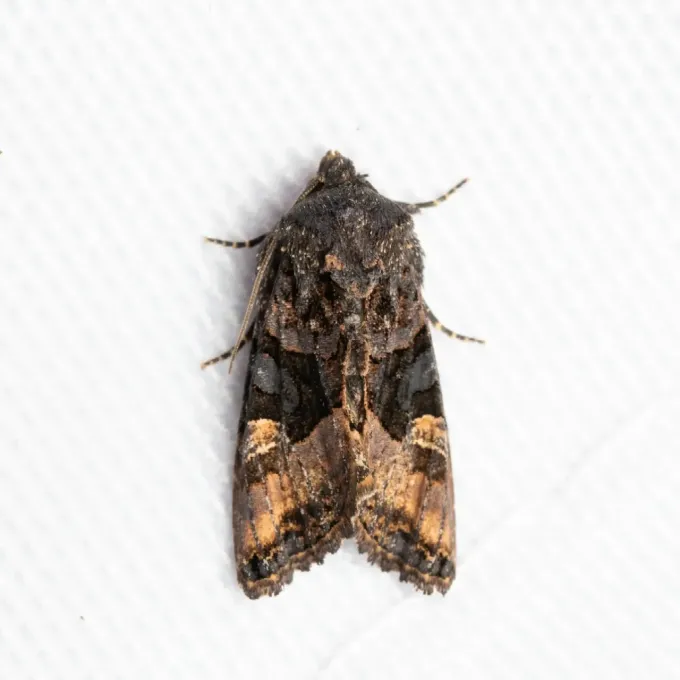
Description
How to identify
Euplexia benesimilis is a member of the Noctuidae family, belonging to the order Lepidoptera. Like many other noctuids, this moth is primarily nocturnal, remaining inactive and hidden during daylight hours.
Adult moths feature cryptic coloration that provides excellent camouflage against tree bark, stones, or decaying organic matter. Their wings display intricate patterns of brown, grey, and green, typical for the species.
Larvae, commonly known as caterpillars, exhibit variable coloration depending on their developmental stage and environmental factors, often featuring light longitudinal stripes for better concealment.
The life cycle undergoes complete metamorphosis, including egg, larva, pupa, and adult stages. The pupal stage is the most common form of overwintering, occurring in the soil or protected leaf litter.
Accurate identification in the field is often aided by the use of pheromone baits or light traps, which allow entomologists to monitor flight patterns and population densities.
What it damages
The larval stage is responsible for all significant agricultural damage. These caterpillars possess strong mandibles designed for consuming a variety of plant tissues, including foliage and buds.
Typical damage includes irregular feeding holes in leaves. Under high-density infestations, larvae can skeletonize entire leaves, leaving only the primary vascular structure behind.
In addition to foliage, caterpillars may target buds during the early stages of growth, which can severely impact the plant's health and potential yield for the season.
The species is polyphagous, meaning it feeds on a diverse range of host plants, including various horticultural crops, ornamental shrubs, and common weeds.
Young plants are particularly vulnerable, as sustained feeding pressure can lead to stunted growth, reduced vigor, and increased susceptibility to secondary plant diseases.
When it appears
The flight of adult moths typically begins in late spring or early summer, synchronized with the warming of nocturnal temperatures, which triggers mating and egg-laying activities.
Caterpillar activity peaks during the mid-to-late summer months. This period is critical, as the larvae consume significant amounts of biomass to fuel their rapid growth and eventual pupation.
Depending on the local climate and latitude, the species may complete one or two generations within a single season, with the second generation often causing more visible damage.
As autumn approaches, mature larvae cease feeding and seek suitable sites for pupation in the soil or under vegetation, where they remain dormant throughout the winter.
Warm, humid conditions generally favor the survival and development of the larvae, potentially leading to increased population pressure if environmental factors remain optimal.
Signs of infestation
The most immediate evidence of an Euplexia benesimilis infestation is the presence of irregular bite marks along the margins of leaves or small, scattered holes within the leaf tissue.
Frass (caterpillar excrement) appearing as small dark pellets on leaves or the ground beneath the plant serves as a reliable indicator of active larval feeding nearby.
During the day, larvae are often found curled up or hidden within folded leaves that they have loosely spun together with silk to provide a protective shelter.
Wilting of newly formed buds or young shoots can also indicate larval feeding, especially if the damage occurs at the sensitive apical meristems of the host plant.
- Irregular holes in leaves.
- Skeletonized foliage tissue.
- Presence of dark larval droppings.
- Folded or webbed leaves.
- Damaged buds and shoot tips.
Control measures
Effective management begins with strict sanitation practices, such as removing debris and weeds that serve as alternate food sources and hiding spots for larvae.
Autumn tilling or soil cultivation helps disrupt the pupation sites of overwintering larvae, significantly reducing the population density for the following season.
Biological control agents, particularly microbial insecticides, are highly effective against young caterpillars and offer a sustainable solution for commercial and home gardens.
Chemical control should be reserved for severe infestations, ensuring that applications are timed carefully and comply with safety guidelines for specific crops.
Regular scouting using light or pheromone traps is recommended to detect the arrival of the pest early, allowing for timely intervention before large-scale damage occurs.
Taxonomy
- Latin name
- Euplexia benesimilis
- Order
- Lepidoptera (butterflies)
- Family
- Noctuidae
- EPPO code
- EUPXBE
Discussion
No discussions yet — be the first.