
Giant house spider
Eratigena atrica
Description
How to identify
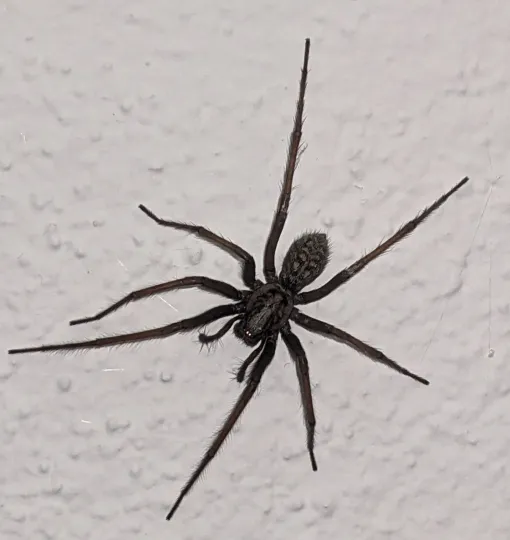
The giant house spider (Eratigena atrica) is a member of the Agelenidae family. Known for its significant size, with leg spans often reaching up to 10 cm, it is a prominent arachnid in various structures.
These spiders are characterized by their funnel-shaped webs. They are primarily nocturnal and seek dark, sheltered corners to construct their webs, which serve as hunting platforms.
The species is a generalist predator. It consumes a wide range of small insects, playing a natural role in controlling insect populations within its habitat.
Life cycle development involves egg sacs which are carefully protected by the female. They thrive in environments with stable temperatures, including greenhouses and agricultural sheds.
It is important for agronomists to distinguish this spider from true plant pests, as its presence is usually indicative of a wider insect population that serves as its food source.
What it damages
The giant house spider does not cause direct damage to plants. It is not a herbivore and does not feed on any parts of the plant, such as leaves, stems, or fruits.
The primary concern in an agricultural setting is the physical presence of webs. In greenhouse production, these webs can interfere with the market quality of ornamental plants.
Indirect damage occurs when these spiders trap beneficial insects. By capturing pollinators or predatory insects used for biological pest control, they disrupt integrated pest management programs.
The accumulation of webbing in technical equipment can cause operational issues. Sensors, cooling fans, and automated watering systems may experience malfunctions due to spider web buildup.
Contamination of harvested produce storage areas is another potential issue, as shed skins and silk can affect the hygiene standards of the facility.
Control measures
Effective management begins with strict sanitation protocols. Regular removal of webs in greenhouses and warehouses is the most efficient way to discourage spiders from settling.
Structural maintenance is crucial. Sealing gaps in walls, doors, and foundations helps prevent spiders from entering production areas from the external environment.
Chemical control is generally unnecessary and discouraged. Instead, focusing on habitat modification, such as reducing interior humidity, can make the environment less suitable for them.
Glue traps placed in strategic locations act as both a monitoring tool and a passive control measure to keep populations at a minimum level.
Keep the perimeter of greenhouses clean by mowing vegetation and removing debris. This eliminates the refuge areas that spiders utilize before moving into buildings.
Taxonomy
- Latin name
- Eratigena atrica
- Family
- Agelenidae
- EPPO code
- TEGEGI
Discussion
No discussions yet — be the first.