
Blueberry leafroller
Epinotia vacciniana
Description
How to identify
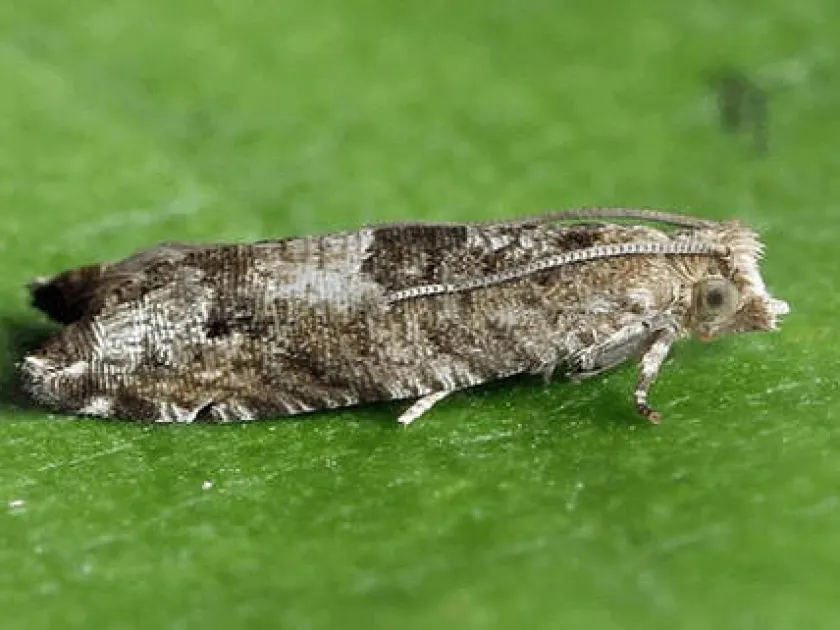
The blueberry leafroller (Epinotia vacciniana) is a moth belonging to the Tortricidae family within the order Lepidoptera. It is a small insect, often overlooked due to its cryptic coloration and nocturnal habits.
The larval stage is the primary cause of concern for growers. These caterpillars possess a soft body and are highly mobile, often retreating into their protective leaf shelters when disturbed. Their life cycle undergoes complete metamorphosis, passing through egg, larva, pupa, and adult stages.
What it damages
The insect primarily feeds on plants within the Ericaceae family, specifically targeting wild and cultivated blueberry (Vaccinium myrtillus) and lingonberry (Vaccinium vitis-idaea).
Feeding damage involves the destruction of leaf tissues, as well as the consumption of flower buds and developing berries. Such damage can significantly reduce the marketable yield and weaken the host plant's vigor during the growing season.
When it appears
Adult moths typically emerge in late spring or early summer, corresponding with the active budding and flowering stages of their host plants.
The overwintering stage usually takes place as a pupa, sheltered within leaf litter or protected sites on the ground. The timing of their life cycle is strictly regulated by environmental temperatures, making early spring a critical monitoring period for professional growers.
Signs of infestation
The most distinct symptom is the presence of rolled or folded leaves, securely tied together with silk webbing produced by the larvae.
Damage to the reproductive parts of the plant, such as chewed flower buds or scarred small fruits, is a clear indicator of infestation. Heavy feeding may result in premature fruit drop and an overall unkempt appearance of the berry bush foliage.
Control measures
Integrated Pest Management (IPM) is highly recommended for controlling Epinotia vacciniana to maintain yield quality while minimizing chemical impact.
- Monitoring moth flights using pheromone traps to time treatments effectively.
- Sanitation practices, such as clearing debris from the base of shrubs to disrupt the pupation environment.
- Application of targeted biological insecticides that specifically impact Lepidoptera larvae.
- Encouraging natural predators and parasitoids that help regulate leafroller populations in the field.
Discussion
No discussions yet — be the first.