
Soybean shoot borer
Epinotia aporema
Description
How to identify
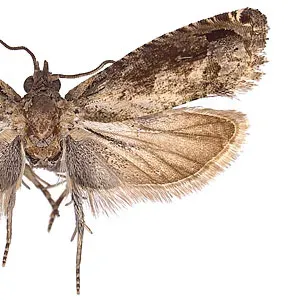
The soybean shoot borer (Epinotia aporema) belongs to the order Lepidoptera, family Tortricidae. The adult is a small moth with a wingspan of approximately 12–15 mm and cryptically colored wings.
The larvae, or caterpillars, are the primary stage causing agricultural damage. They have a characteristic dark head and a pale, yellowish-white to greenish body, adapted for burrowing into plant tissues.
The life cycle is influenced by temperature, typically allowing multiple generations to complete within a single growing season in favorable climatic conditions.
Female moths lay eggs on young leaves and apical buds. The larvae hatch and quickly seek entry points, often boring into the tender parts of the soybean plant shortly after emergence.
Pupation occurs within the stems or in plant debris. This behavior protects the developing pupa from environmental stresses and many natural predators.
What it damages
The soybean shoot borer primarily targets soybean crops. By tunneling into the stems and apical buds, the larvae disrupt the plant's vascular system and development.
Damage to the apical bud inhibits primary stem elongation, causing the plant to produce side branches, which leads to an irregular and stunted canopy structure.
Larval feeding on reproductive structures is particularly damaging. The loss of flower buds and immature pods directly impacts seed set and total yield per hectare.
The entry points created by the larvae serve as infection sites for pathogens, leading to secondary fungal or bacterial rots that further degrade the plant health.
Significant infestations can result in substantial yield losses, sometimes reaching over 30% in high-pressure years if control measures are not implemented effectively.
Signs of infestation
The earliest symptom is the wilting of the terminal shoot or the curling of young leaves. Close inspection reveals entry holes near the petiole attachments.
Infested fields often show patchy development, where individual plants appear shorter or more branched than healthy neighbors due to apical dominance loss.
Dissection of the stem reveals internal tunneling and the presence of frass (larval excrement), which is a definitive sign of an active infestation by the borer.
Presence of fine webbing between leaves or around flower clusters indicates where the larvae have been feeding and creating shelter before burrowing.
Premature abscission of pods or flowers without any visible signs of fungal diseases is a strong indicator of borer activity affecting the plant's reproductive system.
Control measures
Cultural control, such as crop rotation and the destruction of volunteer soybeans and weeds, is vital to reduce the overwintering population of the pest.
Post-harvest deep tillage is highly recommended to bury crop residues, which prevents the survival of pupae and disrupts the insect's life cycle for the following season.
Chemical control requires the use of systemic insecticides during the early larval stage, specifically before the pests have fully bored into the stem tissue.
Pheromone traps are essential tools for monitoring moth flights, allowing agronomists to time applications precisely when larvae are most vulnerable on the plant surface.
Integrated Pest Management (IPM) strategies, including the support of natural biological control agents, should be prioritized to maintain long-term ecosystem health in soybean production.
Discussion
No discussions yet — be the first.