
Epiglaea decliva
Epiglaea decliva
Description
How to identify
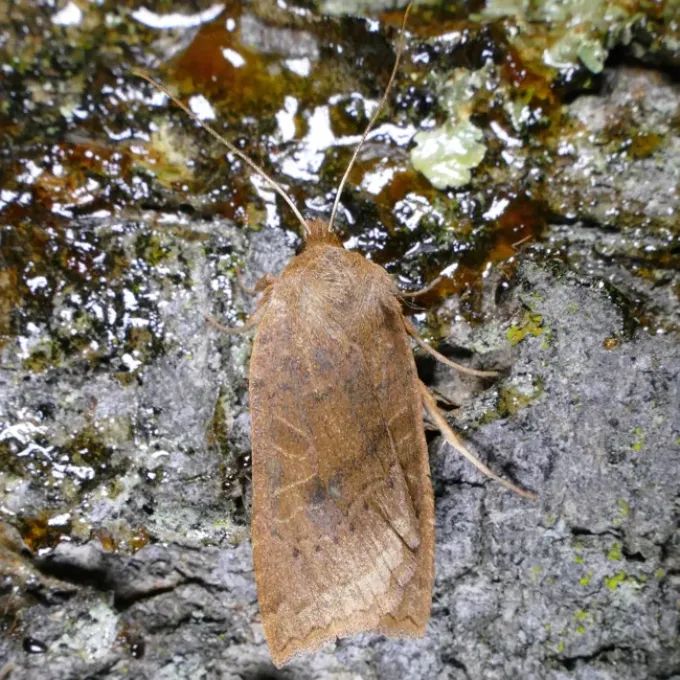
Epiglaea decliva belongs to the Noctuidae family, order Lepidoptera. Adults are medium-sized moths with coloration that provides excellent camouflage against tree bark, making them difficult to spot during the day.
The larvae (caterpillars) of this species show a range of colors, typically varying between brown and grayish-green, which helps them blend into their surroundings while feeding or resting on the host plant.
Identifying adult moths is challenging due to their nocturnal habits. Monitoring programs often rely on light traps or pheromone lures during the autumn flight season to estimate population levels.
The species has a univoltine life cycle, meaning it produces one generation per year. They overwinter primarily at the egg stage, with eggs laid on branches and buds, which ensures survival throughout the cold season.
This species shows significant plasticity in adapting to various horticultural environments, making it a persistent concern for orchard managers who need to maintain healthy fruit production standards.
What it damages
This pest primarily affects pome fruit trees, such as apples and pears, as well as stone fruits like cherries and plums, causing damage to both vegetative and reproductive plant parts.
Young larvae feed on developing buds in early spring, often destroying them before they open, which leads to reduced foliage and poor blossoming performance throughout the orchard.
As the larvae grow, they shift their feeding focus to young leaves and developing fruit, causing holes or deformities that render the produce unmarketable and susceptible to rot.
High infestation levels can lead to significant defoliation, which stresses the trees, inhibits their growth, and reduces their ability to store energy for the subsequent year's fruit set.
Mechanical damage caused by larval feeding also provides entry points for secondary pathogens, such as fungal and bacterial infections, further compromising the tree's overall health.
When it appears
The larvae are most active during the early spring, coinciding with the bud-break and flowering stages of host trees. This period is critical as the plant is highly sensitive to tissue loss.
Adult moths are typically active during the autumn months when mating and oviposition occur. This timing is essential for planning population management and monitoring for the next spring's infestation.
The duration of larval feeding is heavily dependent on weather conditions; warmer spring temperatures often accelerate the larval development cycle, leading to more rapid and severe damage.
By late spring, the larvae finish their development and descend into the soil to pupate. They remain in this protected state throughout the summer until the next cycle begins in autumn.
Understanding these seasonal patterns allows growers to apply protective measures at the most effective times, targeting the pest when it is most vulnerable to control interventions.
Signs of infestation
The first signs of infestation include damaged or hollowed-out buds that fail to sprout correctly in the spring, leading to gaps in the canopy and irregular foliage development.
Ragged holes in the leaves are a primary indicator of larval feeding activity. Because larvae are often hidden during the day, these leaf damages are usually the first warning sign detected.
The presence of frass (larval excrement) on leaves or the ground beneath the canopy indicates an active infestation, warranting a closer inspection of the tree to assess the situation.
Developing fruits with deep feeding cavities are tell-tale signs of caterpillar activity. These wounds often heal with corky tissue or attract secondary pests and diseases, ruining the fruit quality.
During the day, search for caterpillars curled up in leaves or nestled within bark crevices. Finding them confirms the pest's presence and the need for immediate control actions to save the crop.
Control measures
Integrated Pest Management (IPM) is the most effective approach for controlling Epiglaea decliva, utilizing a mix of cultural, biological, and chemical strategies.
Cultural practices, such as autumn soil cultivation beneath the canopy, disrupt the pupation cycle of the pest, effectively reducing the number of adults that emerge in the following season.
Biological control involves fostering natural enemies like predatory insects and birds in the orchard, which can help keep pest populations below the economic threshold naturally.
Chemical control should be implemented only when necessary, using targeted insecticides applied during the peak of larval activity to minimize impact on beneficial species and pollinators.
Regular monitoring through visual inspections and traps is crucial for data-driven decision-making, ensuring that control measures are both effective and environmentally responsible.
Taxonomy
- Latin name
- Epiglaea decliva
- Order
- Lepidoptera (butterflies)
- Family
- Noctuidae
- EPPO code
- EPGLDE
Discussion
No discussions yet — be the first.