
Epiglaea apiata
Epiglaea apiata
Description
How to identify
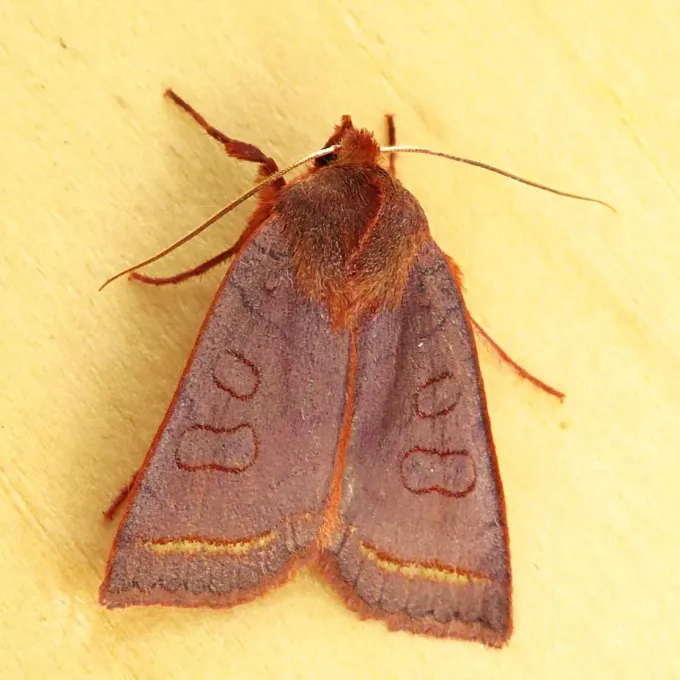
Epiglaea apiata is a moth species belonging to the family Noctuidae. It is recognized as a specific pest of cranberry plantations, known for its cryptic appearance which helps it survive in dense vegetation.
The adult moth has a wingspan of approximately 30–35 mm. Its forewings exhibit shades of brown and reddish-grey, providing camouflage against soil and leaf litter, while the hindwings are generally lighter in color.
The larvae, or caterpillars, undergo several instars, with late-stage larvae reaching up to 40 mm in length. They are typically nocturnal, feeding at night and hiding at the base of plants during the day.
As members of the order Lepidoptera, these moths rely on their natural coloration to avoid detection. Identifying the adult stage often requires the use of light traps to monitor population levels within commercial bogs.
Distinguishing Epiglaea apiata from other noctuid moths can be challenging and often requires expertise in moth morphology or the use of pheromone-based identification protocols.
What it damages
The larvae of Epiglaea apiata primarily damage the cranberry plant (Vaccinium macrocarpon). They act as both foliage feeders and fruit borers, causing substantial economic losses.
Early season damage includes the destruction of developing buds and terminal shoots. This significantly impacts the plant's growth and reduces the potential yield before the flowering stage even begins.
During the fruit development stage, larvae bore into the berries. This damage is particularly devastating as it renders the berries unmarketable and introduces pathogens that cause secondary rotting.
Affected fields often show visible signs of thinning or chlorosis due to the severe foliage destruction caused by high larval populations during the spring development phase.
Economic damage is typically high because even moderate populations can compromise a significant percentage of the harvested yield, requiring strict preventative and reactive measures.
When it appears
The life cycle of Epiglaea apiata is synchronized with the phenology of the cranberry crop. The overwintering stage is the egg, which is laid on fallen leaves and debris.
In spring, as the cranberry plants begin to break dormancy, the eggs hatch. The young larvae immediately begin feeding on the emerging tender shoots and developing buds of the cranberry vines.
The larval feeding period continues throughout late spring. Once they complete their growth, the larvae descend to the soil and leaf litter to pupate, usually around the start of the summer season.
The pupal stage lasts through the summer months. By autumn, the adult moths emerge, mate, and deposit their eggs on the ground, ensuring the survival of the next generation through the winter.
Effective management requires monitoring the timing of egg hatching, as this period offers the most critical window for applying control measures to minimize overall crop damage.
Signs of infestation
Initial signs of an infestation include the presence of chewed or hollowed-out buds during early spring. Inspecting the terminal shoots for feeding scars is a key diagnostic step for growers.
In the summer, the most recognizable sign of a severe infestation is the presence of holes in the berries. Larvae typically bore into the fruit, leaving behind hollowed, rotting shells.
Frass (larval excrement) found at the base of the plants or on the leaves is a strong indicator of recent feeding activity, suggesting that larvae are present in the immediate vicinity.
A nighttime field survey using flashlights can reveal the larvae on the vines, as this is when they are most active. Daytime observations are much less reliable due to their nocturnal habits.
Using a sweep net during the spring months allows for a quantitative assessment of the larval population, helping growers decide if a chemical or biological intervention is necessary.
Control measures
Managing Epiglaea apiata involves an integrated approach combining cultural practices, chemical applications, and biological control methods to protect the cranberry crop.
Cultural control centers on maintaining clean field margins and removing excessive leaf litter, which serves as a primary site for overwintering eggs and reduces the overall pest pressure.
Chemical control should be timed to coincide with early larval emergence in the spring, using selective insecticides that target larvae while minimizing impact on beneficial predatory insects.
Biological control, such as the use of Bacillus thuringiensis sprays, is highly effective and safe for the environment, providing a sustainable way to suppress larval populations without toxic residues.
- Monitor adult moth flights with pheromone traps.
- Maintain sanitary conditions around the cranberry beds.
- Apply targeted, soft-chemistry insecticides during the spring window.
Taxonomy
- Latin name
- Epiglaea apiata
- Order
- Lepidoptera (butterflies)
- Family
- Noctuidae
- EPPO code
- EPGLAP
Discussion
No discussions yet — be the first.