
Eosentomon maryae
Eosentomon maryae
Description
How to identify
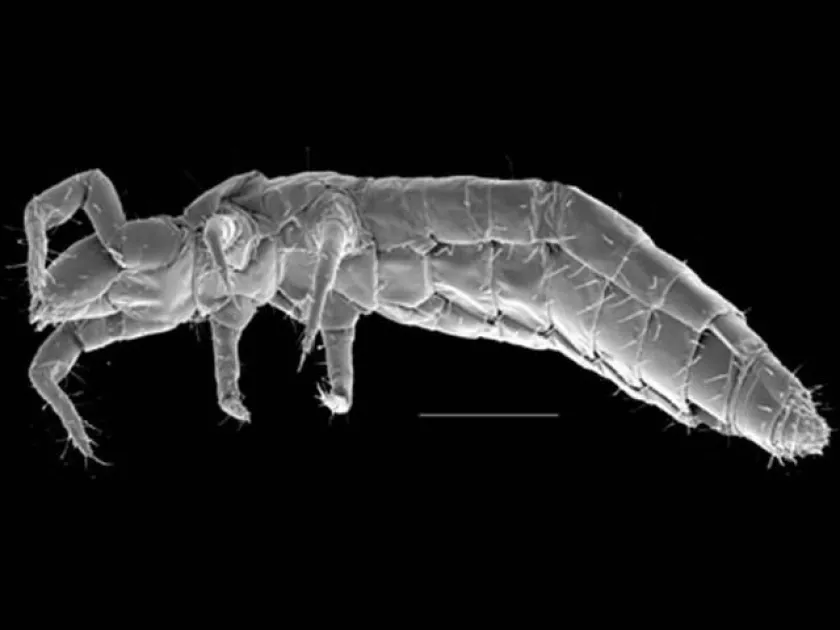
Eosentomon maryae is a species of micro-arthropods belonging to the order Protura, often referred to as coneheads or telsontails, within the family Eosentomidae.
These organisms are extremely small, typically measuring less than a few millimeters in length, and possess a white, elongated body lacking both eyes and antennae.
They are specialized soil inhabitants that rely on their mouthparts to feed on root cell contents and fungal hyphae present in the rhizosphere.
The development of Eosentomon maryae is characterized by anamorphic growth, where the individual adds abdominal segments through successive molting phases.
Because of their subterranean nature and microscopic size, they are rarely observed in the field without the use of extraction methods like the Berlese funnel.
What it damages
This pest primarily affects the root systems of agricultural crops, including seedlings and young plants in various vegetable and grain production systems.
By grazing on delicate root hairs and the root epidermis, they disrupt the plant's ability to uptake water and essential mineral nutrients from the soil.
The damage caused by their feeding creates localized entry points for soil-borne pathogens, often leading to secondary infections and root rot development.
Seedlings are particularly vulnerable, as their limited root mass can be quickly compromised, resulting in stunted growth or total plant mortality.
The impact is often more severe in greenhouses or intensive cultivation systems where soil moisture and organic matter levels remain constantly high.
When it appears
Eosentomon maryae populations typically peak during the spring and autumn months when soil temperatures are moderate and moisture levels are high.
During extreme summer heat or winter cold, these organisms migrate to deeper soil layers, where environmental conditions remain relatively stable for survival.
The primary period of risk for crops coincides with the germination and early establishment phase of roots when the pests are most active near the surface.
Dry soil conditions significantly reduce their activity, as they are highly sensitive to desiccation and require consistent humidity to survive.
In controlled environment agriculture, such as greenhouses, they can maintain year-round activity if the irrigation and soil temperature are kept optimal.
Signs of infestation
Identifying an infestation is difficult because the symptoms are exclusively underground and often mimic other root diseases or nutrient deficiencies.
Key indicators include irregular plant development, patches of stunted growth, and general chlorosis (yellowing) of the lower foliage despite sufficient water.
When carefully examining the root system, one may observe microscopic necrotic spots or a general lack of fine, healthy root hair development.
Often, the presence of the pest is confirmed by the manifestation of root rot symptoms, which may occur more frequently in infested soil patches.
- Uneven crop emergence.
- Stunted plant growth in specific patches.
- Wilting during peak daylight hours despite moist soil.
- General lack of plant vigor compared to healthy crops.
Control measures
Crop rotation is the fundamental strategy to manage populations, as it disrupts the availability of preferred root hosts for the Eosentomon maryae life cycle.
Regular mechanical soil cultivation improves aeration and reduces the concentration of organic matter near the surface, making the soil less suitable for the pest.
Proper water management, including avoiding over-irrigation in greenhouses, is crucial to prevent creating ideal breeding environments for these organisms.
Incorporating biological control agents that target soil-dwelling pests can assist in maintaining population levels below the economic threshold.
Sanitation practices, such as sterilizing potting media or replacing topsoil in severely infested areas, are highly recommended for greenhouse production.
Taxonomy
- Latin name
- Eosentomon maryae
- Family
- Eosentomidae
- EPPO code
- EOSEMA
Discussion
No discussions yet — be the first.