
Ypsillon moth
Enargia ypsillon
Description
How to identify
The Ypsillon moth (Enargia ypsillon) belongs to the Noctuidae family, within the order Lepidoptera.
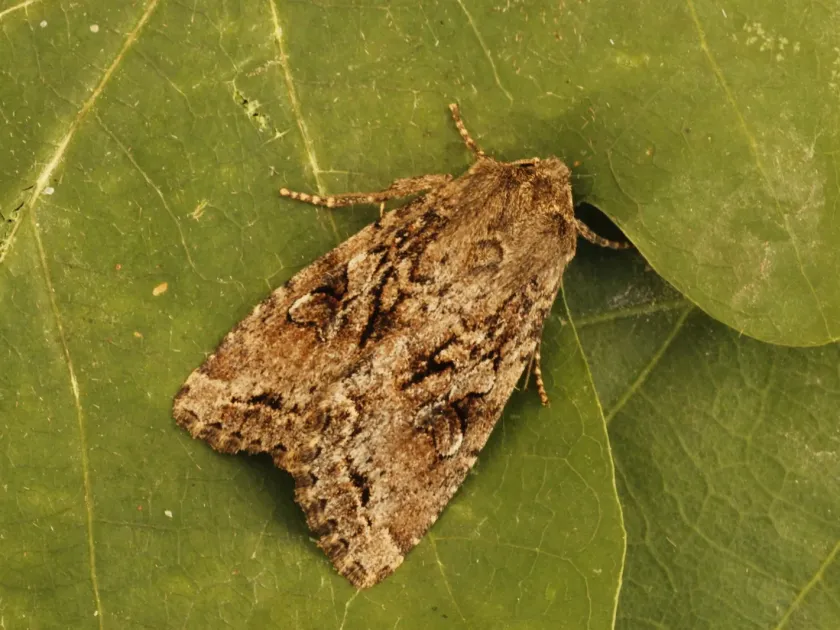
The adult moth has a wingspan ranging from 35 to 45 mm, characterized by yellowish-brown forewings with a distinct "Y"-shaped dark marking.
The larvae are caterpillars with variable coloration, typically exhibiting a greenish hue with longitudinal stripes along their body segments.
The species undergoes complete metamorphosis, consisting of egg, larval (caterpillar), pupal, and adult (imago) stages.
Overwintering occurs primarily at the egg stage, with eggs deposited in bark crevices or near buds of host trees.
What it damages
The primary hosts for the Ypsillon moth caterpillars are deciduous trees, specifically those belonging to the genera Populus (poplars and aspens).
During outbreaks, these pests may migrate to other nearby broad-leaved trees, including willows and certain fruit species.
The larvae are responsible for significant defoliation, consuming leaf tissue and skeletonizing leaves during periods of peak activity.
Impacted trees suffer from reduced photosynthetic capacity, stunted growth, and increased susceptibility to secondary environmental stressors.
Severe infestations can lead to premature leaf drop, weakening the tree's health and vitality for the following growing season.
When it appears
The biological development of this species is synchronized with the phenological cycle of its host trees during the spring.
Caterpillars emerge early in the spring, coinciding with the initial budding of poplar and aspen trees.
Intensive larval feeding occurs primarily throughout late spring and early summer, matching the period of rapid foliage growth.
Pupation takes place mid-summer, typically occurring within a protected shelter of leaves spun together with silk.
Adult moths (imago) are active during the summer months, and mating pairs deposit eggs that remain dormant until the following spring.
Signs of infestation
The most visible sign of infestation is leaves with ragged edges or irregular holes eaten away by feeding larvae.
Tightly webbed or curled leaves often house caterpillars or pupae, providing a clear indication of their presence on the branches.
Accumulated frass (caterpillar excrement) on the ground or lower foliage serves as a reliable marker of an active infestation.
Early defoliation during the summer months, where branches appear partially or completely bare, signifies a high pest population.
Observation of adult moths flying near artificial light sources during mid-summer nights indicates active breeding cycles in the vicinity.
Control measures
Biological control using Bacillus thuringiensis (Bt) sprays is highly effective and safe for managing caterpillar populations without harming beneficial insects.
Chemical intervention with contact insecticides may be necessary during periods of mass egg hatching in the spring to prevent extensive damage.
Pruning and physically removing infested branches during the dormant season can help reduce the number of overwintering eggs.
Encouraging natural predators such as insectivorous birds and parasitic wasps is essential for long-term population balance.
Monitoring adult populations using light traps provides critical data to determine the optimal timing for protective spraying regimes.
Taxonomy
- Latin name
- Enargia ypsillon
- Order
- Lepidoptera (butterflies)
- Family
- Noctuidae
- EPPO code
- ENAGIP
Discussion
No discussions yet — be the first.