
Elaphria nucicolora
Elaphria nucicolora
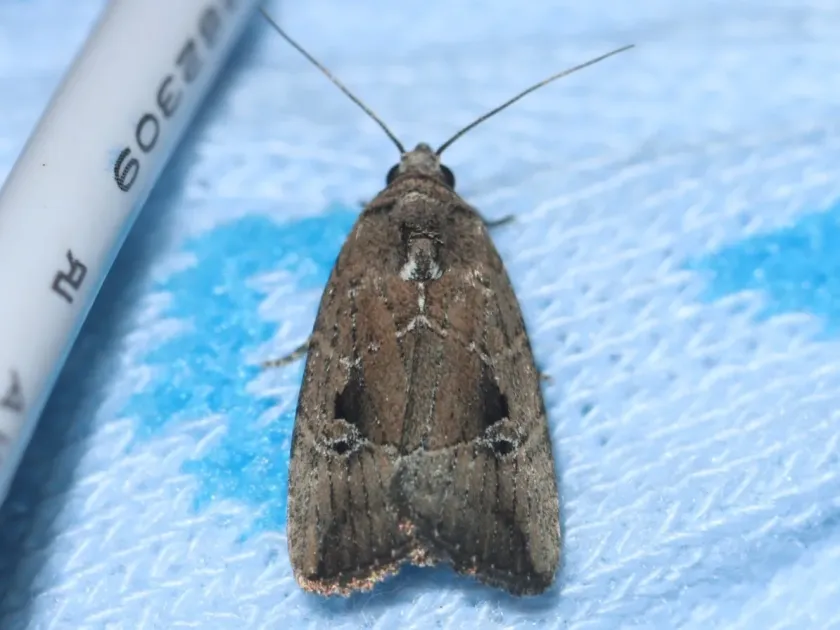
Description
How to identify
Elaphria nucicolora is a species of moth belonging to the family Noctuidae. As a pest, it is primarily known for its larval stage, which can cause significant damage to various agricultural and ornamental plants if populations are not controlled.
The adult moth is relatively small with cryptic coloration, allowing it to blend into tree bark or leaf litter during the day. Their activity cycle is predominantly nocturnal, making them difficult to detect during standard daytime scouting.
The life cycle involves four stages: egg, larva, pupa, and adult. The insect typically overwinters as a pupa, sheltered in the soil or protected under debris, emerging as a moth when environmental conditions are favorable.
Larval development is the most damaging phase. As they grow, larvae transition through several instars, increasing their consumption of foliage as they approach the pupation stage.
Understanding the biology of this pest is crucial for timing interventions. Agronomists often focus on monitoring adult moth flights to predict when eggs will hatch and when protective measures will be most effective.
What it damages
This pest feeds on the foliage of various plants, including vegetable crops and some woody perennials. By skeletonizing leaves, the larvae significantly reduce the photosynthetic capacity of the host plant.
Beyond foliage, larvae can target developing fruits and buds. This leads to direct yield losses and reduces the marketability of the produce due to physical deformities or damaged surfaces.
Heavy infestations can lead to severe defoliation, which stresses the plant. This stress often makes the crop more susceptible to secondary pathogens, such as fungi or bacteria, entering through larval feeding wounds.
The economic impact of Elaphria nucicolora is most pronounced during years with favorable climate conditions that support multiple generations within a single growing season.
Without intervention, large larval populations can rapidly strip young plants of their leaves, potentially causing stunted growth or even plant death in sensitive crop varieties.
Signs of infestation
Visible feeding damage is the primary sign of an infestation. This typically manifests as irregular holes in leaves, often leaving only the major veins intact as the larvae consume the softer tissue.
Frass (larval excrement) found on leaves or at the base of the plant is a strong indicator of an active population. Its presence often helps in locating hidden larvae during daytime inspections.
Wilting of young shoots or premature fruit drop can also signify the presence of this pest, especially if larvae have been feeding on stems or developing buds.
During the evening, a flashlight inspection of the plant canopy can reveal larvae actively feeding, which is the most reliable way to confirm an infestation of this species.
In some cases, larvae may spin light silken webs or fold leaves to create shelters, which provides protection from predators and environmental stressors during the daytime.
Control measures
Effective management begins with integrated pest management (IPM) practices, including sanitation and the removal of host weeds that may serve as alternative food sources during the off-season.
Biological control methods, such as the application of Bacillus thuringiensis (Bt) based products, are highly effective against younger larval stages and have a minimal impact on beneficial insects.
Cultural practices like late-season soil cultivation can help disrupt the pupal stage, significantly reducing the population that emerges in the following spring.
When chemical control is necessary, select selective insecticides that minimize harm to natural enemies such as predatory wasps or beetles, and always rotate modes of action to prevent resistance.
- Monitor moth flight with pheromone traps.
- Implement proper crop rotation.
- Encourage natural predators.
- Apply biological insecticides early.
- Remove crop debris after harvest.
Taxonomy
- Latin name
- Elaphria nucicolora
- Order
- Lepidoptera (butterflies)
- Family
- Noctuidae
- EPPO code
- ELPHNU
Discussion
No discussions yet — be the first.