
Elaphria moth
Elaphria
Description
How to identify
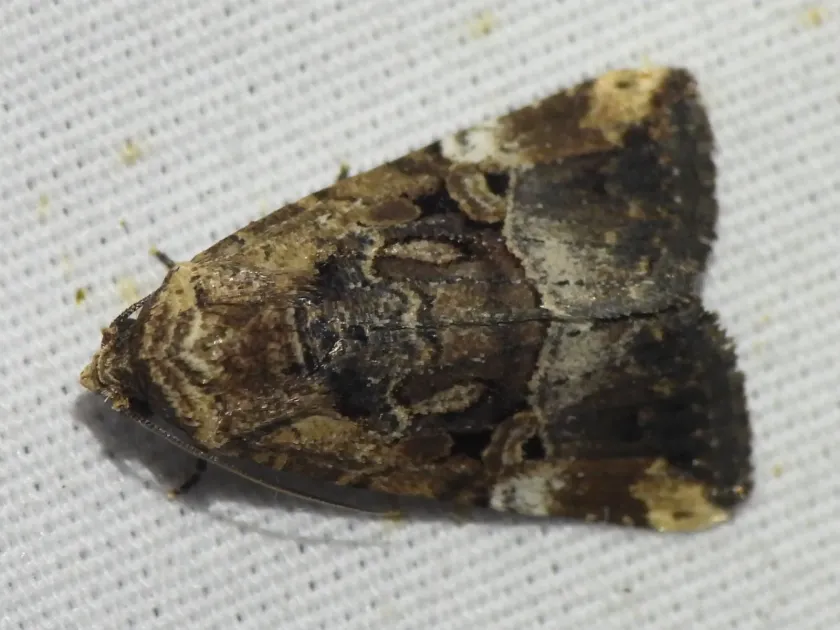
The Elaphria genus belongs to the Noctuidae family within the Lepidoptera order. These moths are characterized by a compact build, typically displaying earth-toned wing patterns that range from light grey to dark brown, serving as excellent camouflage against bark and soil.
The adults are nocturnal, showing high activity during dusk and night hours. They possess specialized sensory organs that help them locate host plants for oviposition based on chemical signatures of the vegetation.
The larvae, or caterpillars, have a robust, cylindrical body structure with well-developed chewing mouthparts. Their skin texture and coloration usually blend perfectly with the host plant leaves, making them difficult to spot during the day.
Pupation occurs within the soil, where the larva constructs a protective earthen chamber. The pupa is dark brown, smooth, and resilient, allowing it to survive various environmental conditions throughout the winter months.
The life cycle stages are distinctly separated: egg, larva, pupa, and adult. Depending on the species and geographical climate, the number of generations per year can vary, impacting the overall pest pressure on crops.
What it damages
Elaphria larvae are polyphagous, meaning they feed on a diverse range of agricultural crops including cereals, vegetables, and ornamentals. This feeding versatility makes them a persistent challenge for commercial farming.
Early-instar larvae typically skeletonize leaves, consuming the green tissue while leaving the veins intact. This behavior reduces the leaf area available for photosynthesis, hindering plant vigor.
As the larvae mature, their voracious appetite leads to large, irregular holes in the foliage. In severe infestations, they may consume entire leaves, significantly stressing the plant's metabolic functions.
The larvae are also known to feed on reproductive structures, including flower buds and immature fruits, which directly decreases the harvest yield and marketability of the produce.
Beyond direct feeding, the tissue wounds created by the larvae serve as entry points for secondary pathogens, such as bacteria and fungi, which can lead to rapid decay of the infested plant tissues.
When it appears
Adult moths emerge in late spring when temperatures are consistently warm enough to support metabolic activity. This emergence usually corresponds with the peak vegetative growth phase of many host crops.
Eggs are deposited in clusters or singly on the undersides of leaves or near the base of the plant. High humidity is a critical factor that increases the survival rate of the eggs and the subsequent larvae.
The peak feeding damage typically occurs during the mid-summer months. This is when the larval population reaches its maximum density and requires high caloric intake for growth.
By late summer, the final larval instar enters the soil to pupate. Some species may undergo a resting stage (diapause) if the environmental conditions become too dry or hot for development.
Overwintering occurs primarily in the pupal stage buried in the soil. The moths wait for the spring soil temperature to reach a threshold (usually 10-12°C) to begin the next generation cycle.
Signs of infestation
The presence of fine, granular frass (excrement) on the leaves is often the first warning sign of an Elaphria infestation. This accumulation is usually found directly below the feeding sites.
Leaf skeletonization, characterized by transparent patches, is a diagnostic sign of early-stage larval activity. As damage progresses, these patches turn necrotic, causing the leaf to wilt prematurely.
Stunted growth or wilting of the entire plant, despite sufficient irrigation, may indicate root or stem-base damage. This is more common in younger, more tender seedlings.
The use of light traps at night can confirm the presence of adult moths in the field. This monitoring technique is essential for timing preventative treatments effectively.
Searching for shed skins and empty pupal cases in the top layer of soil during spring cultivation can provide insight into the potential severity of the upcoming season's population.
Control measures
Deep autumn plowing is a highly effective cultural control method. It exposes pupae to the surface, where they are consumed by natural predators or succumb to harsh winter temperatures.
Maintaining clean fields by eliminating weeds is crucial, as many wild host plants act as bridges for the pest to colonize nearby cash crops early in the growing season.
Chemical intervention should be strategically timed with the egg-hatching period to be most effective. Contact and systemic insecticides are typically used when population thresholds are exceeded.
- Utilizing crop rotation to minimize the availability of preferred host plants.
- Applying biological pesticides like Bacillus thuringiensis, which are selective and safe for beneficial insects.
- Monitoring population trends to optimize the application timing of control measures.
An integrated pest management (IPM) approach, combining mechanical, biological, and chemical strategies, ensures sustainable control while reducing the ecological impact on the farm.
Taxonomy
- Latin name
- Elaphria
- Order
- Lepidoptera (butterflies)
- Family
- Noctuidae
- EPPO code
- ELPHSP
Discussion
No discussions yet — be the first.