
Egira curialis
Egira curialis
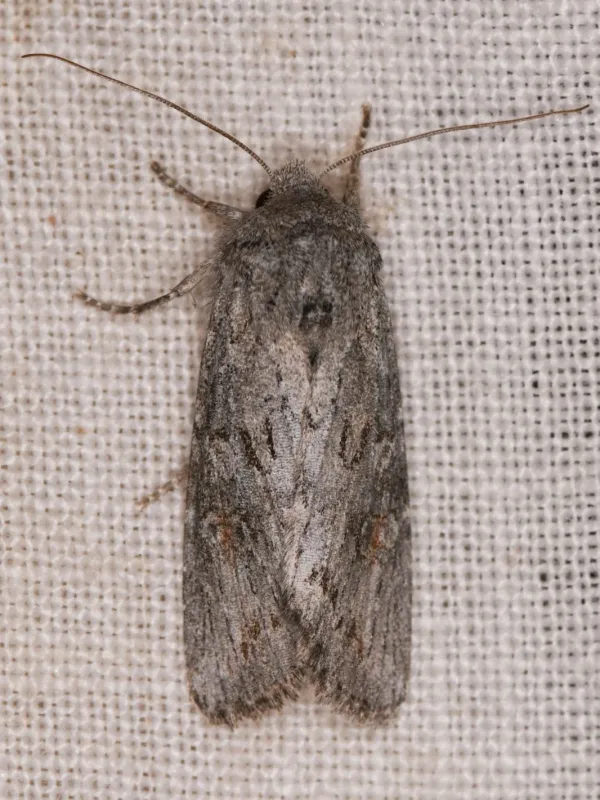
Description
How to identify
Egira curialis is a species of moth belonging to the Noctuidae family, commonly known as owlet moths. This insect is a nocturnal species, which makes it difficult to detect during daylight hours without proper surveying tools.
The adult moth displays a cryptic coloration, featuring various shades of grey and brown. This camouflage allows the moth to blend seamlessly with the bark of trees during the daytime resting period. The wingspan is relatively moderate, typical for this genus.
The larvae, or caterpillars, are the primary stage of concern for agriculturists. They possess a robust body and a chewing mouthpart, capable of consuming significant amounts of plant tissue over a short period.
The lifecycle of Egira curialis is closely synchronized with the early spring phenology of host trees. This ensures that when the larvae hatch, there is an immediate and abundant food supply available.
Monitoring the population of this species can be done using synthetic pheromone traps. Identifying the presence of adults allows growers to anticipate larval emergence and schedule necessary interventions.
What it damages
This pest is primarily associated with fruit trees, particularly those within the Rosaceae family. The damage caused by the larvae can be extensive, especially if the infestation remains uncontrolled during the initial growth stages.
The larvae feed on developing buds, which often results in the loss of flowers and potential fruit sets. This direct impact on the generative organs of the plant leads to immediate yield reduction.
As the season progresses, the larvae consume young foliage. In severe cases, they may defoliate entire branches, which stresses the tree and limits its photosynthetic capacity for the remainder of the season.
Trees that suffer from heavy infestations are often weakened and more susceptible to environmental stressors and secondary infections, including fungal pathogens that enter through feeding wounds.
- Bud consumption in early spring.
- Stripping of foliage leading to defoliation.
- Direct loss of reproductive structures (flowers/fruits).
When it appears
The biological activity of Egira curialis is highly seasonal, with the most critical period occurring during early spring. The lifecycle follows a pattern of hibernation and rapid development.
The insect typically overwinters as a pupa, located within the soil or the leaf litter near the host plants. As temperatures rise in early spring, the adult moths emerge and begin their mating and egg-laying activities.
Larval emergence is timed to coincide with the swelling and opening of buds. This is the period when the plant tissues are softest and most vulnerable to the larvae's feeding habits.
The active feeding phase of the caterpillars lasts for several weeks. Once the larvae reach maturity, they descend to the ground to pupate in the soil, entering a quiescent state until the following spring.
Timing control measures to align with the early larval stages is essential. Once the larvae grow larger, they become more resistant to certain treatments and cause more visible damage.
Signs of infestation
Identifying an infestation starts with checking the health and appearance of the tree buds. Empty or hollowing buds in early spring are a primary indicator that larvae are present.
Visual observation for caterpillars on the leaves or branches during the evening or early morning is another reliable way to detect the pest. Their body color often helps them hide amongst the leaves.
Frass (larval excrement) accumulation on leaves and stems beneath feeding sites is a tell-tale sign of pest activity. Growers should look for these residues when conducting routine field inspections.
Irregular leaf edges and holes in the leaf blades are common signs of late-stage larval feeding. The cumulative effect of these wounds can significantly alter the tree's overall appearance.
Early detection through systematic monitoring of orchard edges, especially those adjacent to woodlands, provides the best opportunity to manage the population before it spreads widely.
Control measures
Effective management of Egira curialis requires an integrated approach that targets the pest's most vulnerable life stages. Timely action is the cornerstone of successful control.
Insecticide applications should be timed to coincide with egg hatching or the appearance of young larvae. Systemic or contact-acting insecticides are generally effective when applied during this window.
Cultural practices, such as autumn soil cultivation in orchards, can help disrupt the pupal stage. By disturbing the soil, the mortality rate of overwintering pupae is increased.
The use of biological controls, such as spraying with microbial agents (e.g., specific strains of bacteria), offers a more environmentally friendly alternative to chemical pesticides.
Maintaining a regular monitoring program with pheromone traps enables the farm management to make data-driven decisions, ensuring that control measures are implemented only when necessary.
Taxonomy
- Latin name
- Egira curialis
- Order
- Lepidoptera (butterflies)
- Family
- Noctuidae
- EPPO code
- PRODCU
Discussion
No discussions yet — be the first.