
Discus rotundatus
Discus rotundatus
Description
How to identify
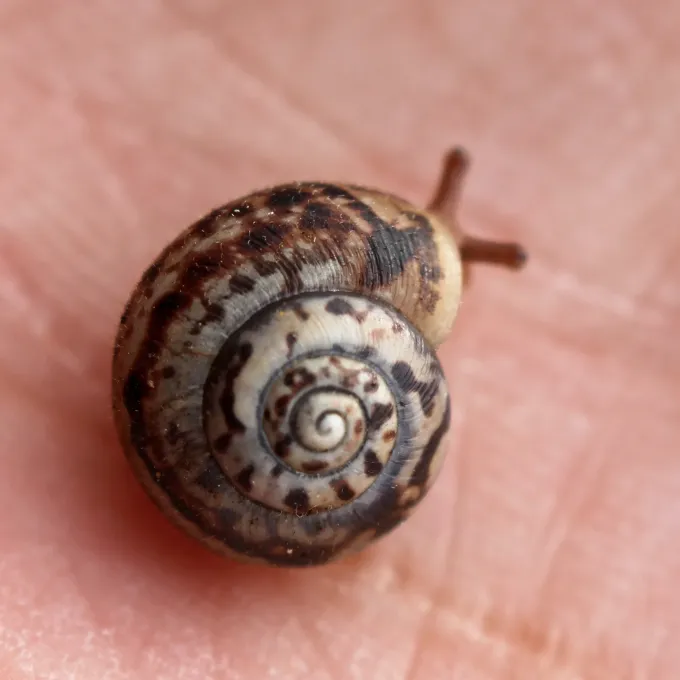
Discus rotundatus, commonly known as the rounded disc snail, is a small species of land snail belonging to the family Discidae. Its shell typically measures 6–7 mm in diameter.
The shell is flattened and discoid with distinct radial ribbing. Its coloration is yellowish-brown to reddish-brown, often featuring darker spots that provide excellent camouflage in leaf litter.
The snail's soft body is light grey or white, creating a noticeable contrast with its dark, patterned shell. It is a moisture-loving species that remains hidden during the day.
As a hermaphrodite, this species can increase its population numbers rapidly when environmental conditions, such as high humidity and sheltered sites, are met.
The lifecycle is typical for small stylommatophoran snails, involving the deposition of eggs in moist soil, followed by the rapid development of juveniles that feed on decaying organic matter.
What it damages
While often considered a detritivore, Discus rotundatus can cause significant damage to young seedlings and delicate ornamental plants when population densities are high.
The snails rasp away leaf tissue, leaving behind irregular, small holes. This damage can severely impact the vigor of young sprouts and hinder the development of vegetable crops.
In addition to physical feeding damage, these snails act as vectors for various plant pathogens, as their slime trails can carry spores of fungi into plant wounds.
Garden vegetables, especially those with foliage near the soil surface like lettuce or strawberries, are most susceptible to feeding damage during wet weather periods.
In greenhouse environments, the controlled moisture levels can lead to outbreaks of the rounded disc snail, resulting in loss of ornamental seedlings and nursery stock.
When it appears
Activity is highly dependent on rainfall and humidity levels. The snails are most active during mild, wet weather in the spring and late summer months.
During dry spells, the snails retreat into deep soil crevices or beneath stones, entering a state of dormancy to prevent desiccation until conditions improve.
The primary breeding period occurs when soil moisture is consistent, often leading to a peak in population abundance by late August and September.
They overwinter in sheltered locations, such as under logs or deep in the soil, effectively surviving cold temperatures in the adult or egg stage.
Early spring emergence occurs as soon as soil temperatures rise above 8-10 degrees Celsius, marking the start of the new feeding and breeding season.
Signs of infestation
The primary evidence of a Discus rotundatus infestation is the appearance of tiny, crisp-edged holes in the lower leaves of susceptible plants.
Shiny, iridescent trails of dried mucus on foliage, stems, or surrounding soil are clear indicators of their nocturnal feeding paths.
Finding small shells under garden debris, damp wood, or stones during the day is a definitive sign of their presence within the garden ecosystem.
Plants showing signs of necrotic patches or rot at the base are often victims of feeding by these snails, which facilitate the entry of opportunistic pathogens.
In heavily infested areas, a large number of empty shells may be found in mulch, indicating high turnover and population density in the local habitat.
Control measures
Good sanitation practices are key: remove piles of boards, stones, and excess leaf litter to eliminate the cool, damp hiding spots preferred by this species.
Apply abrasive barriers around vulnerable plants using crushed eggshells, coarse sand, or wood ash to deter snails from reaching the stems and foliage.
Iron phosphate baits are highly effective and environmentally safe for controlling mollusc populations in both vegetable and ornamental gardens.
Encourage natural predators such as hedgehogs, frogs, and ground beetles to live in your garden, as they will actively hunt and reduce snail populations.
Optimize irrigation systems by avoiding evening watering, which ensures the soil surface dries out overnight and reduces the optimal activity window for the snails.
Taxonomy
- Latin name
- Discus rotundatus
- Order
- Molluscs
- Family
- Discidae
- EPPO code
- GONIRO
Discussion
No discussions yet — be the first.