
Dirofilaria immitis
Dirofilaria immitis
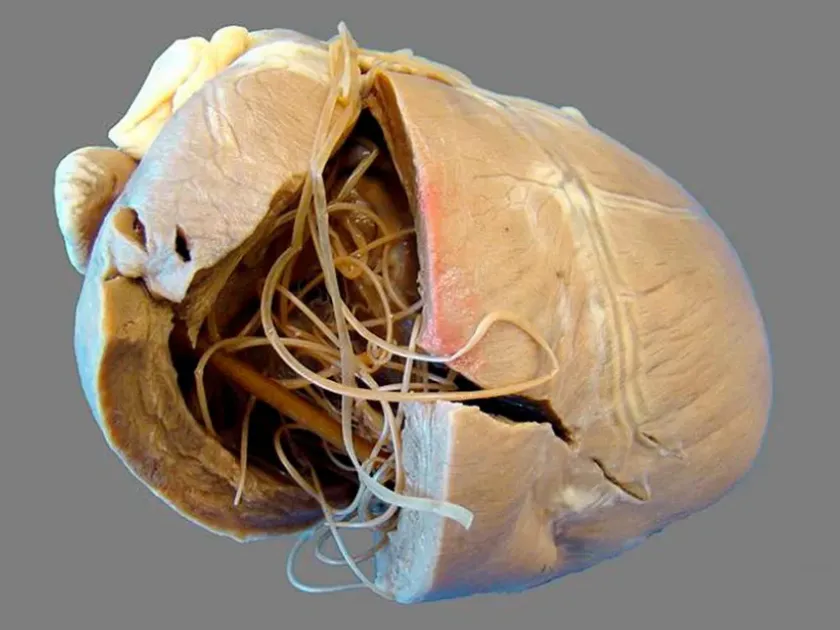
Description
How to identify
Dirofilaria immitis is a species of parasitic nematode that does not impact plant health. It belongs to the family Onchocercidae and is well-known in veterinary medicine as the heartworm.
The life cycle of this parasite requires a mosquito vector, which transmits the larval stage (microfilariae) from one host to another.
Adult worms inhabit the pulmonary arteries and the right ventricle of the heart in dogs, cats, and other susceptible mammals.
Morphologically, these are long, slender worms that have no biological mechanisms to infect plants or damage vegetative tissues.
Scientific classification places this organism strictly within the zoological and parasitological domain, far removed from agricultural botany.
What it damages
There is no record of Dirofilaria immitis causing any damage to agricultural crops, ornamental plants, or forestry resources.
The organism is incapable of feeding on plant cellulose or sucking sap from botanical hosts, as it is an obligate parasite of animals.
Any mention of this parasite in an agricultural context is purely incidental, often related to the general health of working animals on a farm.
As this species does not interact with the plant kingdom, it is not listed in any pest management guidelines for farmers or horticulturists.
Farmers should focus on established plant pathogens and pests, rather than animal parasites, when protecting their crops.
Control measures
Control strategies for Dirofilaria immitis are conducted by veterinary professionals rather than agronomists.
The primary method of prevention involves the administration of anthelmintic medications to pets and livestock as prescribed by a veterinarian.
Integrated Pest Management (IPM) on a farm, focusing on reducing mosquito breeding grounds, can indirectly help by lowering the local population of vectors.
Using repellent products and insect-proof barriers for animals helps prevent the bite of mosquitoes that carry the infective larvae.
Annual health screenings and blood tests for animals in high-risk areas remain the gold standard for managing the health impact of this parasite.
Taxonomy
- Latin name
- Dirofilaria immitis
- Order
- Nematodes
- Family
- Onchocercidae
- EPPO code
- DIROIM
Discussion
No discussions yet — be the first.