
Diphtherophora communis
Diphtherophora communis
Description
How to identify
Diphtherophora communis is a microscopic plant-parasitic nematode belonging to the order Dorylaimida. It is a soil-dwelling organism that utilizes a specialized feeding apparatus to pierce plant root cells and extract nutrients.
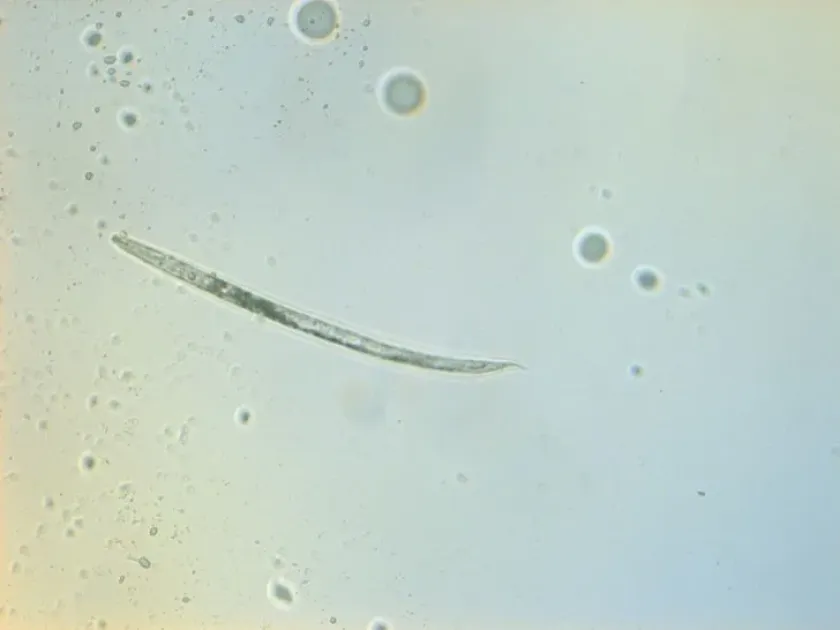
Adult nematodes have an elongated, transparent body typically measuring less than one millimeter in length. Their physiological structure is adapted for efficient movement through soil pores and thin layers of moisture surrounding root systems.
The life cycle includes multiple larval stages followed by adulthood, with development occurring primarily in the rhizosphere. High soil moisture levels and organic matter content create ideal conditions for their population growth.
These pests are cryptic in nature, meaning they are difficult to detect without specialized laboratory extraction techniques such as the Baermann funnel method.
Population density is highest in the root zone during the peak growing season, making detection during the early vegetative stage crucial for effective management.
What it damages
Diphtherophora communis primarily targets the root systems of various crops, including cereals and vegetables. By feeding on root cells, the nematode causes direct physical trauma to the plant’s nutrient-absorbing organs.
The mechanical damage disrupts the integrity of the root epidermis, leading to impaired uptake of essential water and mineral nutrients from the soil, causing significant physiological stress.
Furthermore, the physical wounds created by the nematode act as entry points for secondary soil-borne pathogens, including bacteria and fungi, which can exacerbate the total damage to the crop.
Severe infestations often result in stunted plant growth, chlorosis, and a drastic reduction in total yield potential, which significantly affects the profitability of agricultural production.
During critical growth phases, the plant's inability to maintain efficient nutrient uptake due to root damage can lead to crop failure or premature wilting in sensitive cultivars.
Signs of infestation
Symptoms of infestation often appear as irregular patches of stunted plants within a field, often accompanied by general yellowing of the leaves (chlorosis).
An examination of the root system reveals a lack of healthy root hairs and lateral roots. The roots may appear darkened, necrotic, or structurally deformed as a result of continuous feeding.
Affected plants exhibit a reduced capacity to withstand moisture stress, leading to noticeable wilting during the middle of the day even when soil moisture is adequate.
Growth indices such as stalk height, leaf size, and fruit quality are generally lower in infested areas compared to healthy zones within the same field.
Root systems may appear truncated or show symptoms of tissue collapse, which is the most reliable indicator for field diagnosis of nematode-induced damage.
Control measures
Effective management begins with robust crop rotation strategies, as changing host plants disrupts the life cycle and reduces the population density of the nematode.
Cultivation practices that improve soil drainage and aeration can reduce the habitat suitability for these pests, while the incorporation of green manures can help promote natural soil enemies.
Biological control agents, such as specific fungi that parasitize nematodes, are gaining traction as environmentally friendly alternatives to conventional synthetic chemical treatments.
Chemical control via soil nematicides is an option in high-value production systems but must be conducted in strict adherence to local environmental regulations.
- Implementing crop rotation with non-host species.
- Sanitation of agricultural equipment to prevent spread.
- Regular soil testing for nematode identification.
Taxonomy
- Latin name
- Diphtherophora communis
- Order
- Nematodes
- Family
- Diphtherophoridae
- EPPO code
- DPHTCO
Discussion
No discussions yet — be the first.