
Diloba
Diloba
Description
How to identify
Diloba, commonly known as the Figure of Eight moth (Diloba caeruleocephala), is a moth belonging to the Noctuidae family. The adult moth is known for its distinct markings that provide excellent camouflage against the bark of trees during the day.
The adult moth features brownish-grey forewings with prominent pale markings, often resembling a figure of eight, which gives the species its common name. The wingspan typically ranges from 35 to 45 millimeters.
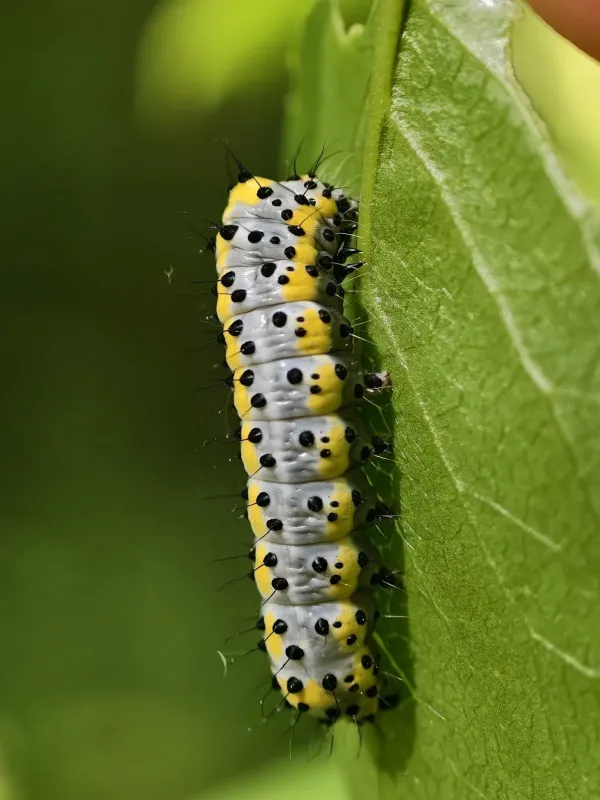
The larvae, or caterpillars, are easily recognizable by their yellowish-white body covered in black spots and lines. A key identifying feature is the bright blue head, which distinguishes them from other similar caterpillar species found on fruit trees.
The life cycle consists of the egg, larval, pupal, and adult stages. This moth completes one generation per year, with the species overwintering as eggs attached to host plants.
Diloba is widely distributed across Europe and parts of Asia, often found in woodland areas, hedgerows, and commercial orchards where its preferred host plants are abundant.
What it damages
The species primarily feeds on the foliage of deciduous trees and shrubs. It shows a strong preference for members of the Rosaceae family, making it a potential concern for fruit growers.
Key agricultural crops affected include apple, pear, plum, and cherry trees. Additionally, the caterpillars are frequently found on hawthorn, blackthorn, and other related ornamental shrubs.
Young caterpillars begin their feeding activity by skeletonizing the leaves, which involves consuming the soft tissue and leaving behind a lace-like structure of veins.
As the larvae mature, they consume entire leaf blades, leading to significant defoliation of the host plant. This damage can stress the tree and reduce its overall vitality throughout the growing season.
In cases of high infestation, the caterpillars may also feed on young buds and developing fruitlets, causing direct damage that results in reduced fruit yield and lower quality harvest.
When it appears
Adult moths are nocturnal and active during the autumn months, typically from September through October, when mating and egg-laying occur.
The species survives the winter stage as eggs. Females deposit these eggs in small clusters, usually on the twigs or near the buds of host trees, where they remain dormant until spring.
Larval hatching coincides with the spring budburst, usually occurring between April and May. This timing ensures that the emerging caterpillars have immediate access to fresh, tender foliage.
The feeding period of the caterpillars spans approximately two months. By late June or July, the larvae are fully grown and descend from the canopy to find suitable sites for pupation.
Pupation takes place within a tough silken cocoon. These cocoons are often hidden in bark crevices, forks of branches, or among leaf litter at the base of the tree, where they await the autumn emergence.
Signs of infestation
One of the earliest signs of infestation is the damage observed on spring buds. If the buds appear eaten or stunted as they begin to open, it may indicate early larval feeding.
The most reliable sign is the presence of the blue-headed caterpillars on the leaves. They are relatively conspicuous and can often be found resting on the surface of the foliage during the day.
Leaves that are partially consumed, leaving only the veins (skeletonization), are a classic indicator of Diloba caterpillar activity in the orchard.
The presence of frass (caterpillar excrement) on leaves beneath the feeding sites provides further evidence of an active colony within the tree canopy.
Reduced growth rates of young shoots and localized thinning of the tree foliage are typical symptoms observed in areas where the pest population is high.
Control measures
Managing Diloba requires a balanced approach that focuses on monitoring and minimizing chemical interventions to protect beneficial insects and overall garden health.
In home orchards, hand-picking the caterpillars is a simple and highly effective method for small infestations, particularly during the early larval stages.
If population levels exceed economic thresholds, growers may apply selective insecticides that target larvae while minimizing impacts on pollinators and natural predators.
Biological control using Bacillus thuringiensis (Bt)-based products is highly recommended, as it is effective against caterpillars and safe for other garden wildlife.
- Winter cleaning of tree trunks to remove pupal cocoons hidden in bark.
- Encouraging natural predators such as birds and parasitic wasps in the orchard.
- Maintaining proper tree pruning and nutrition to boost natural resistance to defoliators.
Taxonomy
- Latin name
- Diloba
- Order
- Lepidoptera (butterflies)
- Family
- Noctuidae
- EPPO code
- DILBSP
Discussion
No discussions yet — be the first.