
Opossum
Didelphis
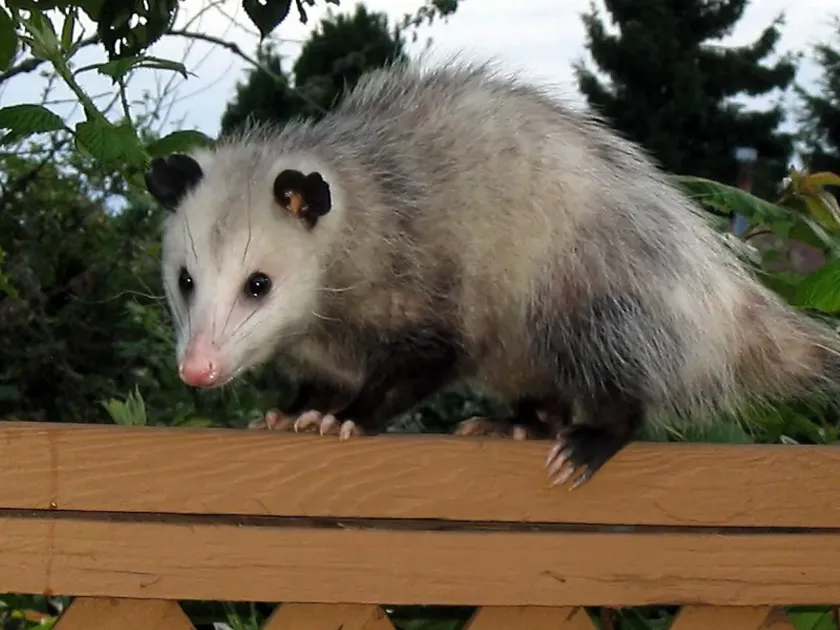
Description
How to identify
Opossums of the genus Didelphis are medium-sized marsupials belonging to the Didelphidae family. They are primarily nocturnal and crepuscular, which makes them difficult to spot during routine garden checks.
These animals possess a prehensile tail and sharp teeth adapted for an omnivorous diet. An adult opossum typically reaches the size of a domestic cat and is characterized by a pointed snout and dense fur, making them easily identifiable when encountered at night.
The biology of the opossum is marked by extreme adaptability. They often reside in abandoned burrows, under garden structures, or within dense shrubs, building nests from dry leaves and twigs.
Opossum reproduction is rapid, allowing populations to recover quickly after control measures are implemented. Females produce multiple litters per year, carrying their offspring in a pouch.
As potential carriers of parasites and diseases, it is essential to handle any sightings or evidence of their presence on your property with appropriate caution.
What it damages
In agronomic terms, opossums are considered pests due to their habit of damaging fruit and berry crops. Their diet includes ripe fruits, berries, vegetables, and nuts, causing direct financial losses to farmers.
They pose a particular threat to vineyards, orchards with stone and pome fruits, and vegetable plots. Opossums do not just consume the produce; they often damage the integrity of the fruits, rendering them unsuitable for storage or market sale.
Beyond plant matter, these animals may raid poultry coops, consuming eggs and chicks, which disrupts the balance of the farm ecosystem. Furthermore, they forage for soil insects, inadvertently damaging the roots of young seedlings.
Mechanical damage to the bark of young trees, caused by climbing or scent-marking, creates entry points for fungal infections and other tree diseases.
In times of food scarcity, opossums may transition to feeding on young corn shoots or other grain crops, causing significant damage during the early stages of vegetation.
When it appears
Opossum activity intensifies during the harvest season. From mid-summer through late autumn, when gardens and orchards are full of ripe produce, these animals reach their peak foraging activity.
During winter, in temperate regions, their activity slows down, but they do not enter true hibernation. In search of food, they may visit compost piles or areas where vegetables are stored.
The spring season coincides with their peak breeding time, when females with young are aggressively seeking accessible resources. During this period, they show high interest in young, succulent plant sprouts.
Their feeding cycle is strictly tied to the availability of carbohydrate-rich food. If fruit trees are present, opossums will return to them daily until the crop is completely harvested or destroyed.
Observations show that in dry years, opossums visit gardens more frequently, as succulent crops provide them with essential moisture.
Signs of infestation
The primary sign of an opossum presence is bitten fruit left on branches or on the ground. Unlike insect damage, the bite marks are deep, wide, and clearly visible.
The presence of droppings, which resemble canine feces but have a strong, pungent odor, often indicates the areas where they frequently travel or nest.
Damaged lower branches, torn garden netting, or claw marks on tree bark are direct indicators of their presence. Opossums often utilize existing holes in fences to gain entry.
Nocturnal sounds such as rustling in the canopy or disturbances near storage sheds are frequent signs that these nocturnal visitors are active on your property.
Spoiled supplies in sheds and food remains in unexpected locations are further proof of an infestation.
Control measures
Effective defense begins by limiting access to food resources. It is highly recommended to remove fallen fruit from the ground and harvest produce immediately upon maturity to prevent over-ripening.
Installing fencing with fine mesh, buried at least 10-15 cm into the ground, creates a reliable barrier. It is crucial to trim tree branches that overhang roofs or fences to deny them entry paths.
The use of ultrasonic deterrents and motion-sensor lighting can provide temporary relief. However, opossums adapt quickly to consistent stimuli, so methods should be rotated periodically.
Clearing the property of debris, old boards, and brush piles removes the natural cover opossums use, forcing them to find a more suitable habitat elsewhere.
If the population becomes unmanageable, humane live traps are recommended. After trapping, the animal should be relocated to a forest area far from agricultural land, following local wildlife regulations.
Taxonomy
- Latin name
- Didelphis
- Family
- Didelphidae
- EPPO code
- DIDESP
Discussion
No discussions yet — be the first.