
Merveille du Jour
Dichonia aprilina
Description
How to identify
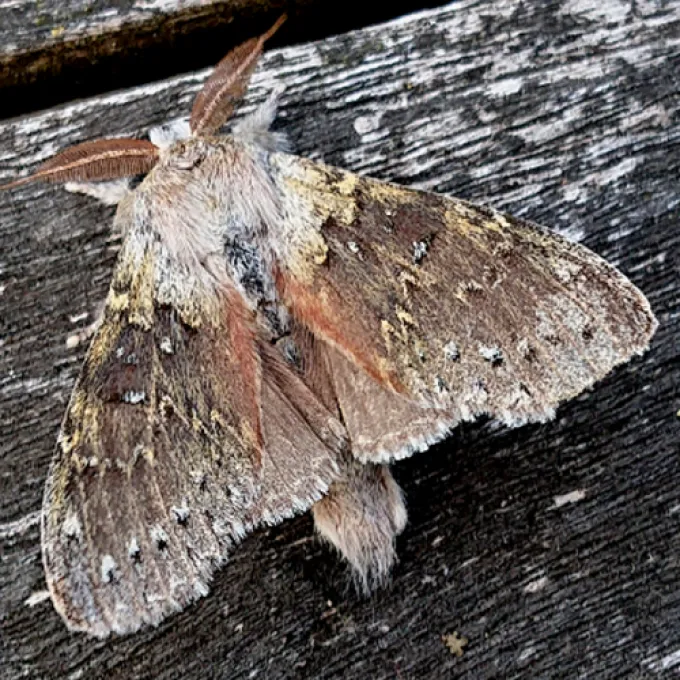
The Merveille du Jour Dichonia aprilina is a moth belonging to the Noctuidae family, notable for its exceptional camouflage that resembles moss-covered oak bark.
Adult moths have a wingspan ranging from 40 to 50 mm, featuring intricate green and grey patterns that allow them to blend perfectly with trees during the day.
The larvae are stout caterpillars that grow up to 45 mm in length, possessing a pale to brownish body with distinctive dark diamond-shaped markings along the dorsum.
As a member of the Lepidoptera order, this species undergoes complete metamorphosis: egg, larva, pupa, and adult, with one generation produced annually.
The species overwinters in the egg stage, which are laid securely on the twigs of host plants, awaiting the arrival of spring temperatures.
What it damages
The primary hosts for the Merveille du Jour larvae are oak species, making it a common sight in deciduous woodlands and mature parklands.
In the spring, larvae feed predominantly on developing buds, which can lead to significant growth delays and reduced foliage production for the season.
As the leaves mature, the caterpillars transition to feeding on the leaf blades, creating ragged edges and skeletonizing the foliage by consuming all but the main veins.
Heavy infestations can cause localized defoliation, which places stress on the host tree and increases susceptibility to opportunistic pathogens and secondary pests.
While usually considered a minor forest pest, under favorable conditions, their numbers can rise, causing aesthetic damage and weakening individual trees.
When it appears
Adult moths emerge in the autumn, typically peaking in September and October, when they mate and lay eggs for the next generation.
Eggs hatch in early spring, precisely synchronized with the budburst of oak trees, ensuring that the larvae have immediate access to high-protein food.
The larval stage is active during April and May, during which time the insects grow rapidly before reaching their final instar.
By late spring or early summer, the mature caterpillars descend to the ground to pupate within subterranean cocoons.
The pupae remain in diapause within the soil throughout the entire summer, waiting for the cycle to begin anew in the following autumn.
Signs of infestation
Early symptoms of an infestation include the presence of chewed or hollowed-out buds on oak branches in early spring, often before leaves have fully opened.
As the season progresses, leaves display characteristic notches and holes, often with entire sections removed by the feeding activity of the caterpillars.
The presence of larval frass (droppings) on the ground underneath tree canopies serves as a clear indicator of a high population density in the upper branches.
Direct observation can be achieved at night when the larvae become active and move across the foliage to feed, as they tend to hide during daylight hours.
Visible thinning of the canopy and premature leaf drop in late spring are also indicators that the tree has been subjected to larval feeding pressure.
Control measures
Encouraging natural predators such as insectivorous birds is a sustainable way to manage population numbers, as they rely on caterpillars during the nesting season.
Biological control using Bacillus thuringiensis sprays can be highly effective against young larvae without disrupting the wider ecosystem balance.
In ornamental or highly valuable trees, systemic or contact insecticides may be applied during the larval peak if defoliation thresholds are exceeded.
Cultural management, including the disturbance of soil around the base of trees, can destroy the pupae and reduce the population for the following year.
Monitoring adult flight periods using light traps can help arborists determine the necessity of intervention and time management actions effectively.
Taxonomy
- Latin name
- Dichonia aprilina
- Order
- Lepidoptera (butterflies)
- Family
- Noctuidae
- EPPO code
- DCHNAP
Discussion
No discussions yet — be the first.