
Diarsia intermixta
Diarsia intermixta
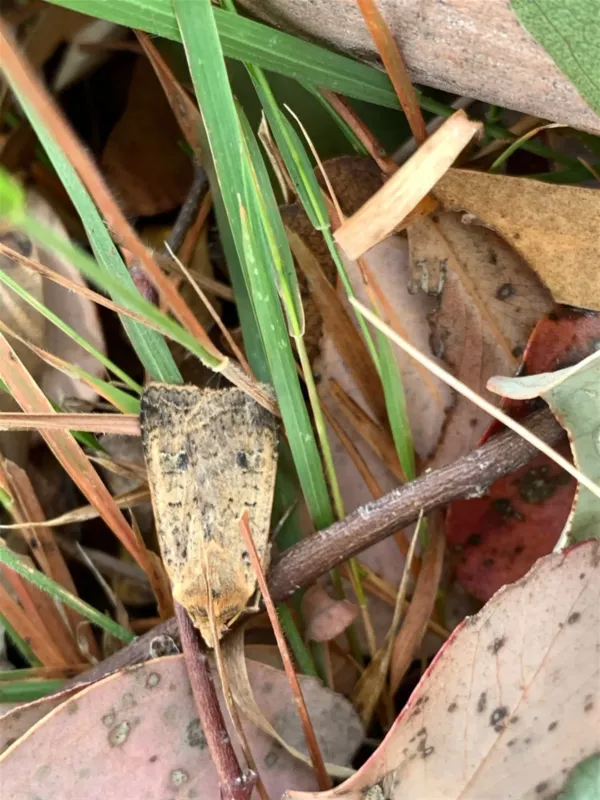
Description
How to identify
Diarsia intermixta is a species of moth belonging to the family Noctuidae, order Lepidoptera. The adult moth typically features a wingspan of 35–40 mm with brownish-grey forewings decorated with distinct spots and bands that provide effective camouflage.
The larvae, known as caterpillars, are stout and exhibit earth-toned coloration, allowing them to remain hidden in the topsoil or under leaf litter during the daylight hours.
The life cycle encompasses four metamorphic stages: egg, larva (instars), pupa, and adult. The species generally completes one or two generations per year depending on the climate.
Overwintering occurs in the larval stage; mature caterpillars burrow into the soil, entering a state of diapause to survive cold temperatures until spring.
Adults are nocturnal insects, primarily active during twilight hours, feeding on nectar from various flowering plants, which facilitates their dispersal.
What it damages
Diarsia intermixta is considered a polyphagous pest, capable of damaging a broad spectrum of crops, including cereals, vegetables, and technical industrial plants.
The primary damage is inflicted by the larvae, which skeletonize leaves during early instars and progress to consuming entire leaf surfaces as they mature.
During outbreak years, caterpillars may cause severe damage to seedling stages by severing plant stems at the soil level, leading to thinning of crop stands.
Beyond leaf tissue, the larvae may infest the reproductive organs or fruits of vegetables, significantly reducing the marketable quality and quantity of the harvest.
The presence of dense weed populations in or near the field often exacerbates the damage as these serve as alternative hosts for the pest population.
When it appears
The emergence of the first generation of adults typically occurs in late spring or early summer, following the stabilization of nocturnal temperatures.
The peak feeding activity of the larvae occurs in the spring after overwintering and again in the late summer, coinciding with the rapid growth phase of many crops.
In regions with mild, humid autumns, a partial second generation may emerge, posing a threat to newly planted winter cereals.
Moisture plays a critical role in the pest's biology; periods of high soil and air humidity generally correlate with increased survival rates of larvae.
The timing of the pest's life cycle is strictly dependent on the accumulation of degree-days, which determines the transition between developmental stages.
Signs of infestation
The initial signs of infestation include irregular holes appearing in leaves, which expand rapidly as the larvae increase in size and consumption rate.
The presence of dark, pellet-like frass on the soil surface around the base of plants is a clear indication of nocturnal feeding activity by the caterpillars.
Visible thinning of plant stands or the presence of wilted, severed stems at ground level are critical warning signs of a high larval population density.
Adult moth activity can be monitored using light traps or pheromone-baited traps, which serve as an early warning system for the start of the egg-laying period.
Careful inspection of the soil beneath debris near affected plants during the day often reveals the curled-up larvae hiding from light.
Control measures
Cultural control practices, such as deep autumn plowing, are highly effective as they expose overwintering larvae to predators and unfavorable environmental conditions.
Aggressive weed management is essential to eliminate reservoirs for the pest and limit the potential for migration from field borders to crop plants.
Chemical control should be implemented when population thresholds are exceeded, utilizing systemic insecticides applied during late evening hours when the larvae are actively feeding.
Biological control using Bacillus thuringiensis-based products offers an environmentally friendly alternative, particularly effective against younger larval instars.
Integrated pest management (IPM) requires regular monitoring and trap usage to ensure that pesticide applications are timed accurately for maximum impact and minimal usage.
Taxonomy
- Latin name
- Diarsia intermixta
- Order
- Lepidoptera (butterflies)
- Family
- Noctuidae
- EPPO code
- DIRSIN
Discussion
No discussions yet — be the first.