
Deladenus
Deladenus
Description
How to identify
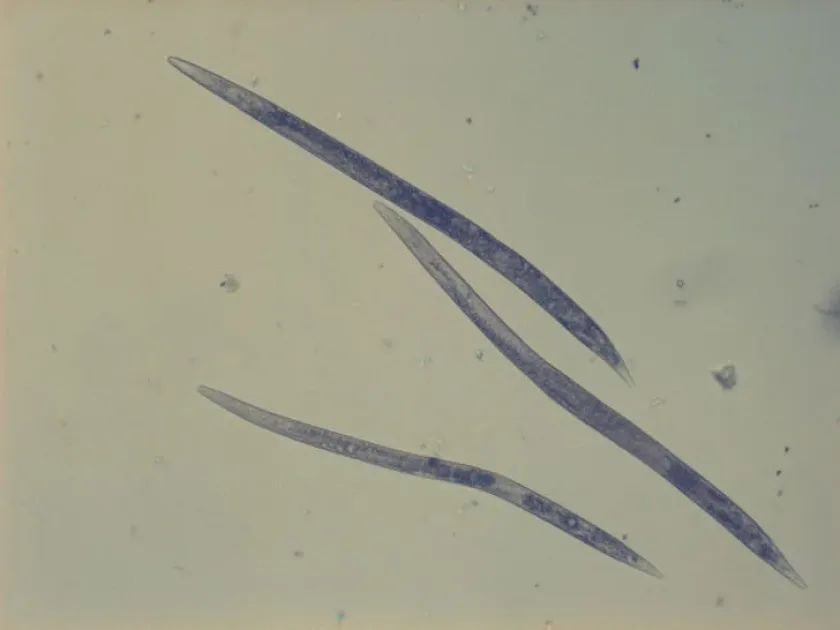
The genus Deladenus belongs to the order Tylenchida and the family Neotylenchidae. These are microscopic roundworms known for their complex biological cycles and parasitic traits.
These nematodes exhibit dimorphism, switching between a free-living form that feeds on fungal hyphae and a parasitic form that colonizes insects, primarily those associated with mushroom cultivation.
The free-living stage possesses a delicate body and a specialized stylet used to penetrate and consume the mycelium of mushrooms. The parasitic stage undergoes morphological changes to thrive within a host.
Due to their minute size, Deladenus cannot be seen without specialized equipment. Identification typically requires extraction from substrate samples followed by high-magnification microscopic analysis.
The taxonomic position of the genus highlights a unique evolutionary bridge between fungal pathogens and insect vectors, making them particularly difficult to manage in commercial agriculture.
What it damages
The primary crop damaged by Deladenus is the cultivated mushroom. The nematodes feed directly on the vegetative mycelium, drastically reducing its density and overall viability.
Beyond feeding, they serve as vectors for various bacterial and fungal pathogens, indirectly causing rot and structural degradation of the mushroom fruit bodies.
Severe infestations lead to the complete cessation of mushroom production, leaving parts of the substrate devoid of healthy mycelium and prone to secondary infections.
By utilizing fungus gnats as transport hosts, these nematodes can spread rapidly across a mushroom house, infecting trays or shelves far from the initial point of infestation.
Financial losses occur due to decreased yields, the cost of disposing of infested compost, and the necessary downtime for deep cleaning and sanitation of the growing rooms.
When it appears
Deladenus thrives in the controlled environmental conditions typical of mushroom farms, with optimal temperatures between 16 and 22 degrees Celsius.
Under indoor cultivation systems, the life cycle remains active year-round as long as food sources, such as mycelium or host insects, are available to the population.
The most significant outbreaks occur when ambient humidity and substrate moisture levels are kept excessively high, facilitating the movement of nematodes through the compost.
The duration of the generation cycle is temperature-dependent, often resulting in rapid population explosions when production hygiene protocols are breached.
Persistent infestations often result from poor raw material management, where initial contaminants are not eliminated during the composting or pasteurization phases.
Signs of infestation
The most prominent sign of an infestation is a noticeable decline in mycelial vigor. The substrate, once white and dense, becomes thin, patchy, and weak.
- Reduced colonization rate of the compost after spawning.
- Deformed, stunted, or small mushrooms with damaged stipes.
- Presence of empty, mycelium-free zones in the growing trays.
- Increased population of fungus gnats or shore flies in the production area.
A foul, acidic smell often emanates from the compost, indicating that the damage by nematodes has allowed secondary bacterial rot to proliferate throughout the affected beds.
Confirmation of the presence of Deladenus requires microscopic examination of the soil or compost extract to distinguish it from other non-pathogenic nematode species.
Control measures
Proper pasteurization of the compost is the primary defense strategy. Heating the substrate to 60-65 degrees Celsius effectively kills both the nematodes and their reproductive cysts.
Rigorous sanitation protocols, including the disinfection of equipment, tools, and clothing, are essential to prevent the cross-contamination of different growing rooms.
Integrated pest management (IPM) focusing on the control of fungus gnats is vital, as these insects act as the primary vectors for spreading Deladenus within the farm.
In cases of infestation, affected trays must be immediately isolated and removed from the facility to prevent further spread, followed by a thorough sterilization of the area.
Monitoring programs using regular sampling and microscopy help detect population buildups early, allowing for targeted intervention before major yield losses occur.
Taxonomy
- Latin name
- Deladenus
- Order
- Nematodes
- Family
- Neotylenchidae
- EPPO code
- DELASP
Discussion
No discussions yet — be the first.